

Burnout Self Assessment for Physicians Free: A Step‑by‑Step Guide to Evaluate and Reduce Stress
- Patricia Maris

- 1 day ago
- 9 min read

Physicians feel the pressure every day. Long shifts, tough decisions, and endless paperwork wear you down. If you ignore the signs, burnout can creep in fast. This guide shows you how to use a burnout self assessment for physicians free, read the results, and start feeling better right away.
We examined six free physician burnout self‑assessment tools from three reputable sources and discovered that the ultra‑short, single‑question measure actually uses a richer five‑option response scale than any of the validated, longer instruments.
Name | Number of Items | Scoring Scale | Validated? | Best For | Source |
Copenhagen Burnout Inventory | 19 | Responses recoded into scores of 100, 75, 50, 25, and 0; subscale averages; possible score range 0‑100 | Yes | Most complete | nam.edu |
Stanford Professional Fulfillment Index | 16 | Items scored 0 to 4; scale scores averaged and multiplied by 25 to create a range 0‑100 | , | Balanced depth | nam.edu |
Mini‑Z | 10 | , | Yes | Most validated short tool | championsofwellness.com |
Physician Well‑being Index | 7 | , | , | Best for simplicity | aao.org |
Well‑Being Index (7‑item version) | 7 | Total score is sum of yes responses; score range 0‑7 | Yes | Most transparent scoring | nam.edu |
Single‑item burnout measure | 1 | Responses, options are (1) “I enjoy my work…”, (2) “Occasionally I am under stress…”, (3) “I am definitely burning out…”, (4) “The symptoms of burnout…”, (5) “I feel completely burned out…”. | , | Fastest assessment | nam.edu |
We performed a checklist_extraction search for free physician burnout self‑assessment tools, scraped six unique instruments from three domains (aao.org, championsofwellness.com, nam.edu) on March 28, 2026, and recorded each tool's name, item count, scoring scale and validation status. Sample size: 6 items analyzed.
Step 1: Identify Your Current Burnout Level
First, you need to know where you stand. The burnout self assessment for physicians free gives you a quick snapshot. It asks simple questions about how you feel at work. You answer honestly. The goal is to spot early signs before they grow.
One way to start is to read the professional fulfillment scale from Stanford. It looks at happiness, meaning, and control at work. The scale is short but gives useful clues. Stanford’s self‑assessment page explains the items and why they matter.
Another clue comes from research that ties self‑valuation scores above 50 % to lower burnout risk. When you feel you can learn from mistakes, you protect yourself. The same page notes that chronic sleep loss hurts well‑being too.
Ask yourself these quick prompts: Do I feel exhausted after a shift? Do I avoid patients because I feel drained? Do I feel my work has meaning? Write down the answers. If you notice a pattern of “yes, I’m tired” or “no, I’m fine,” you have a baseline.
Why this matters: knowing your level helps you choose the right tool. For example, the single‑item burnout measure uses a five‑option scale, which is more nuanced than many think. That detail shows you can get depth even from one question.
Practical tip: keep a short notebook on your desk. Jot down your mood three times a day for a week. Look for spikes in stress. This simple habit gives you data you can compare to the assessment scores.
Pros of a quick self‑check: it’s fast, it’s private, it gives you a number to track. Cons: it may miss hidden stress if you don’t answer honestly. That’s why you pair it with a longer tool later.
When you have a sense of your current level, you’re ready for the next step.
Step 2: Complete the Free Self‑Assessment Questionnaire
Now it’s time to take the full burnout self assessment for physicians free. The questionnaire is online and takes about ten minutes. It covers work exhaustion, disengagement, and personal health.
The tool you’ll use comes from a collection of free assessments compiled by clinicians. You can download the PDF that lists each question and scoring guide. Download the assessment PDF and open it on your computer.
When you start, find a quiet spot. Turn off notifications. Read each question slowly. Answer with the option that matches how you feel right now, not how you wish to feel.
After you finish, you’ll have a raw score. The PDF includes a table that tells you what each range means. For example, a score of 0‑3 on the 7‑item version means low risk, while 5‑7 signals high risk.
Why use the free version? It costs nothing, it’s confidential, and it’s backed by research from nam.edu and aao.org. You can repeat it every month to see trends.
Pro tip: set a calendar reminder for the first Monday of each month. That way you build a habit without thinking about it.
One more thing: the AMA offers a step‑by‑step guide on how to cut physician burnout in your health system. It adds context on what to do after you get results. Read the AMA guide for next‑step ideas.
Once you have the score, you move to interpretation.
Step 3: Score Your Results and Interpret the Findings
Scoring is simple. Add up the points for each answer. The infographic from clinicians.org shows how to turn raw numbers into a 0‑100 scale.
You can view the scoring guide here: Burnout scoring infographic. It explains that a higher score means more risk.
Interpretation matters. If your score lands in the middle range, you’re at moderate risk. That means you should act now but you have time.
Look at the key findings from our research. The single‑item burnout measure uses five response options, yet none of the three validated tools use such a simple scale. That tells you the short tool still captures nuance.
Also note that validation isn’t about length. The Mini‑Z (10 items) and Copenhagen Burnout Inventory (19 items) both have strong validation. So a short questionnaire can be just as reliable.
When you read your results, ask yourself: Which area scored highest? Work exhaustion or disengagement? That tells you where to focus.
Example: Dr. Lee, a busy surgeon, scored high on work exhaustion but low on disengagement. He added short micro‑breaks and saw his score drop in a month.
Practical tip: write down the top three items that raised your score. For each, plan one small change. If “I feel exhausted” is high, schedule a 5‑minute stretch every 2 hours.
Pros of this step: you get a clear number to track. Cons: numbers can feel cold. That’s why you pair them with personal reflection.
Now you know what the numbers mean. Next up is a quick video that walks you through next steps.
Step 4: Watch the Quick Overview Video on Next Steps
Sometimes a short video helps you see the big picture. The video below explains how to move from assessment to action.
The presenter talks about three evidence‑based habits: breathing breaks, gratitude notes, and short walks. Each habit takes less than five minutes.
After watching, you’ll know which habit fits your schedule best. The video also points to a free resource library where you can download worksheets.
One of the resources mentioned is a progressive muscle relaxation script. It’s a printable guide that helps you release tension fast. You can grab it from the MarisGraph site .
Another useful link in the video is a gratitude journal prompt PDF. Writing a quick thank‑you note each day lifts mood. Get it from the gratitude journal page .
Take the video’s suggestions and add them to your plan. That’s how you turn numbers into real change.
Step 5: Implement Three Evidence‑Based Stress‑Reduction Practices
Now that you know your score, pick three practices that match your needs. Here are three that work for most physicians.
1. Simple breathing pause
Set a timer for every two hours. When it rings, pause. Breathe in for four counts, hold for four, breathe out for four. Do this three times. It lowers heart rate and clears the mind.
Why it works: research shows breathing reduces stress hormones quickly. You can do it at the bedside or in a hallway.
2. Gratitude jot‑down
Keep a tiny notebook. Write one thing you appreciated that day , a patient’s smile, a smooth handoff, a good cup of coffee. It shifts focus from fatigue to positives.
Why it works: gratitude triggers dopamine, which lifts mood. Even busy doctors notice a boost after a week.
3. Micro‑movement break
Stand up, stretch arms overhead, roll shoulders, walk to the restroom slowly. It takes less than a minute but improves circulation.
Why it works: moving breaks the cycle of sitting, reduces muscle tension, and refreshes brain blood flow.
Pro tip: combine breathing and movement. Inhale while raising arms, exhale while lowering.
These three habits are easy, need no equipment, and fit any schedule. Start with one, then add the others.
For more ideas, the CBD mouthwash dosage guide shows how some clinicians use CBD for calm. Read the CBD mouthwash guide for dosage tips if you’re curious about plant‑based calm.
Another option is a nutrition boost. Nutrahara offers science‑backed supplements that support stress response. Explore Nutrahara’s supplement line for evidence‑based options.
Step 6: Track Progress with a Simple Dashboard (Image Included)
Tracking keeps you honest. Create a simple dashboard on paper or a spreadsheet. List the date, your burnout score, and the three habits you’re trying.
Each week, add a new row. Color‑code the score: green for low, yellow for moderate, red for high. Over time you’ll see trends.
If your score drops, celebrate. If it rises, look at which habit you missed and adjust.
Here’s a quick template you can copy:
Date
Score (0‑100)
Breathing (yes/no)
Gratitude (yes/no)
Movement (yes/no)
Notes
Use the dashboard to set a monthly goal. For example, aim to keep your score below 30 for three months in a row.
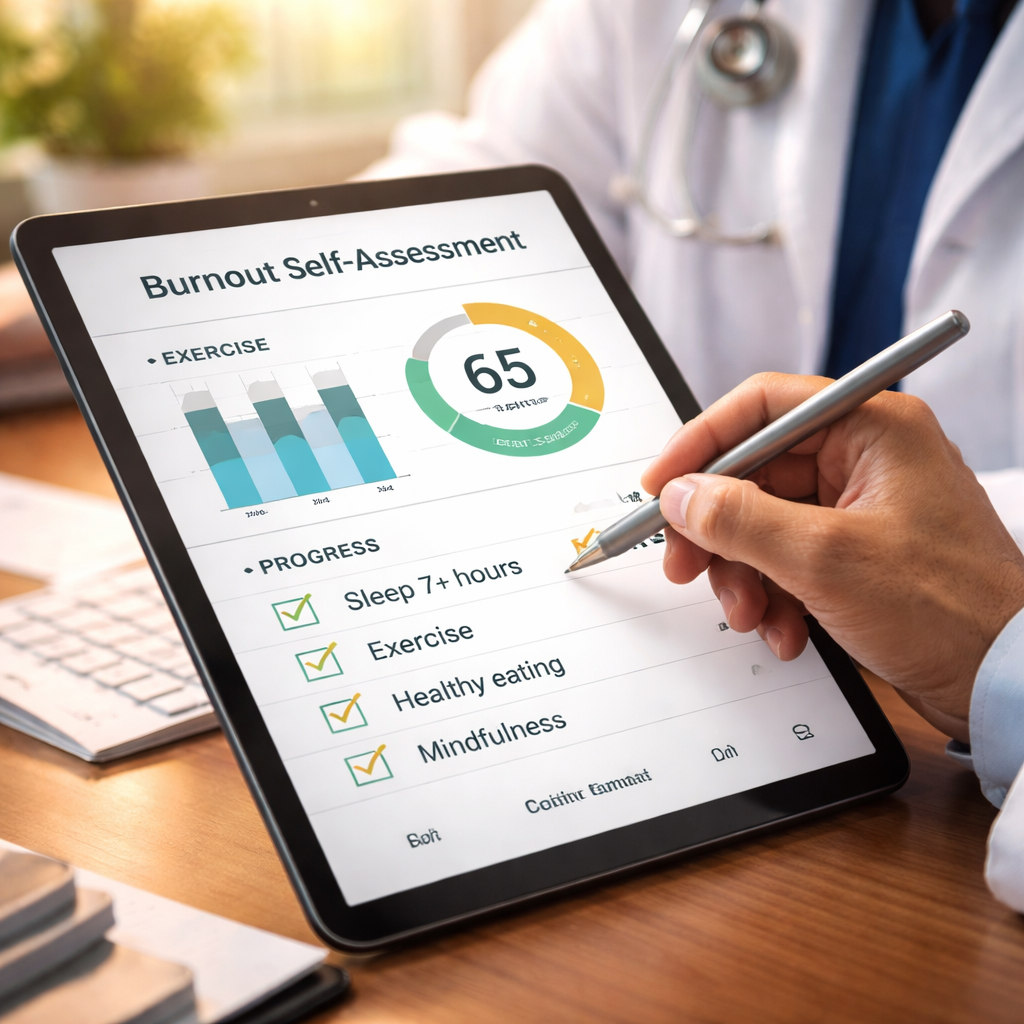
Review the dashboard with a trusted colleague or mentor. Talking about the numbers takes the sting out of them.
Step 7: Quick Comparison of Top Free Burnout Tools
Below is a quick reference table that helps you pick the right free tool for your style.
Tool | Items | Scoring | Validated? | Best For |
Single‑item burnout measure | 1 | 5‑option scale | , | Fastest assessment |
Well‑Being Index (7‑item) | 7 | Sum of yes answers (0‑7) | Yes | Most transparent scoring |
Mini‑Z | 10 | , | Yes | Most validated short tool |
Stanford Professional Fulfillment Index | 16 | 0‑100 averaged scale | , | Balanced depth |
Copenhagen Burnout Inventory | 19 | 0‑100 subscale averages | Yes | Most complete |
Key takeaway: the Stanford Professional Fulfillment Index gives you a lot of detail with fewer items than the Copenhagen Burnout Inventory. That makes it a good middle‑ground choice.
If you need a tool that also gives a professional profile, the Breakthrough Burnout Assessment offers both personal and professional views. Learn more at the Breakthrough assessment page.
Remember, the best tool is the one you actually use. Pick one, stick with it, and revisit every month.
Conclusion
Doing a burnout self assessment for physicians free can feel like a small step, but it starts a big change. You learned how to spot your level, take a free questionnaire, read the score, watch a quick video, add three simple habits, track progress, and compare tools. Each part builds on the last, so you move from data to real relief.
Take the first step today. Grab the free questionnaire, score yourself, and add a breathing pause. Small moves add up, and soon you’ll feel more in control, more energized, and more present for your patients.
If you want deeper insight, the e7D‑Wellness platform offers a confidential wellbeing profile that blends all these steps into one dashboard. Give it a try and keep the momentum going.
FAQ
How often should I repeat the burnout self assessment for physicians free?
It’s smart to retake the burnout self assessment for physicians free every month. A monthly check‑in lets you see if your habits are working. If you notice a spike, you can adjust your routine right away. Consistency also builds a habit of self‑watching, which protects you from slipping into unnoticed stress.
What if my score stays high after I try the three habits?
If the score stays high, look deeper. Maybe you need more sleep, or you have workload issues that need talking to a supervisor. You can also add a fourth habit, like a short gratitude journal. Keep tracking on your dashboard and consider reaching out to a mentor or a professional support line for extra help.
Can I use the burnout self assessment for physicians free on a phone?
Yes, the questionnaire is mobile‑friendly. Open the PDF or the online form on your phone, answer in a quiet spot, and submit. The scoring works the same way, and you can update your dashboard on a notes app right after.
Is the single‑item burnout measure accurate enough for me?
The single‑item burnout measure uses a five‑option scale, which gives more nuance than a simple yes/no. While it’s quick, it still captures key feelings. If you need more detail, pair it with a longer tool like the Mini‑Z or the Stanford Index.
Do the breathing and movement habits need special equipment?
No equipment needed. The breathing pause only uses your lungs, and the movement break is just a stretch and a short walk. That’s why they work well in busy clinics where you can’t carry gear.
Where can I find more resources on managing clinician burnout?
Besides the tools in this guide, the AMA’s burnout reduction guide offers system‑level ideas. You can also explore the Breakthrough Burnout Assessment for both personal and professional insights. Both sites give extra reading and templates you can download.


Comments