

Progressive Muscle Relaxation Script PDF: Complete Guided Guide for Stress Relief
- Patricia Maris

- Feb 6
- 19 min read
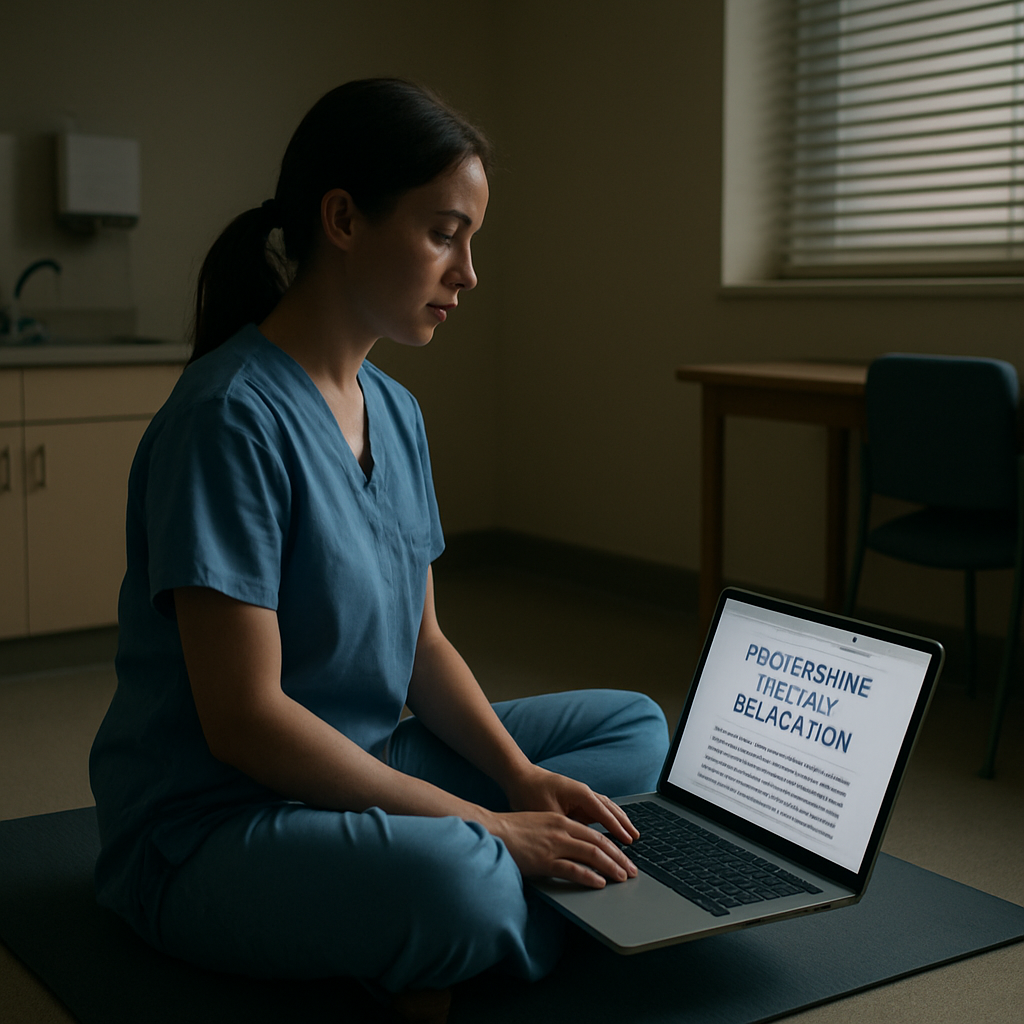
Ever felt that tight knot in your shoulders after a back‑to‑back shift, and wonder if there’s a quick way to melt it away? You’re not alone – countless clinicians report that muscle tension is the first sign their stress levels have tipped over. That’s where a progressive muscle relaxation (PMR) script PDF can become your secret weapon.
PMR is a science‑backed technique that guides you through tightening and releasing each muscle group, sending a signal to your nervous system that it’s safe to unwind. Having the whole script laid out in a printable PDF means you don’t have to hunt for a video or remember a sequence from memory; you simply follow the numbered steps, close your eyes, and let the body do the rest.
Take Maya, a night‑shift nurse in a busy emergency department. She kept a pocket‑size copy of a PMR script PDF on her locker. During a ten‑minute break, she ran through the neck, shoulders, and forearms, and reported a noticeable drop in perceived stress scores – from 8 out of 10 to a 4 – the very next hour of patient care.
Here’s a quick three‑step routine you can try right now: 1️⃣ Open the PDF and read the brief intro – it reminds you to breathe slowly, 4‑5 seconds in, 6‑8 seconds out. 2️⃣ Starting at the feet, contract each muscle for five seconds, then release completely while visualising the tension flowing out. 3️⃣ Move upward, pausing at the calves, thighs, abdomen, chest, arms, and finally the face, ending with a gentle smile. The whole cycle takes about 10‑12 minutes, perfect for a lunch‑hour pause or right after a demanding procedure.
If you struggle to remember when to fit the practice into a hectic schedule, try slotting it into a daily sprint planner. By allocating a specific 10‑minute block in your planner, you treat the relaxation break like any other patient task – it gets scheduled, respected, and completed. This simple habit can become a non‑negotiable part of your shift rhythm. For ideas on how to structure that block, check out this daily sprint planner guide.
Ready to give it a go? Grab the free printable from our library – Progressive Muscle Relaxation Script PDF: Free Printable Guide for Stress Relief – and print a copy for your locker or tablet. Then, set up that 10‑minute slot in your planner today.
Take the first breath, follow the script, and notice how quickly the pressure eases. You’ll find that a few minutes of guided muscle release can recharge your focus, improve patient interactions, and protect you from the creeping burnout that many of us fear.
TL;DR
A progressive muscle relaxation script PDF gives busy clinicians a quick, step‑by‑step guide to release tension in just ten minutes, fitting perfectly into hectic shift schedules.
Download the free printable, follow the breathing cues, and notice calmer focus, reduced burnout risk, and smoother patient interactions after each session immediately today.
Step 1: Preparing Your Space and Materials
Before you even open the Progressive Muscle Relaxation Script PDF: Free Printable Guide for Stress Relief , take a minute to scan your environment. Does the room feel cramped? Is there a hum of monitors or a constant beeping in the background? If you answer “yes” to either, you’re already sensing the tension that will fight against the relaxation you’re about to create.
First, choose a spot that feels private but not isolated. A quiet corner of the staff lounge, a small conference room that’s rarely booked, or even a portable privacy screen by your locker can work. Aim for a space where you can close the door, dim the lights, and keep interruptions to a minimum. Soft, warm lighting – think a low‑watt lamp or a bedside‑style LED strip – signals to your nervous system that it’s safe to unwind.
Next, gather the physical tools you’ll need. Besides the PDF, you’ll want a pen or highlighter to mark the sections you’ll focus on, a timer (your phone works fine), and a comfortable surface – a yoga mat, a folded blanket, or a sturdy office chair with good back support. Some clinicians swear by a small pillow to cradle the neck; if you’re one of them, keep it within arm’s reach.
Temperature matters, too. If the room is too cold, your muscles will tense up reflexively; if it’s too hot, you’ll feel sluggish. Aim for a mild 20‑22 °C (68‑72 °F) – the sweet spot that lets blood flow without triggering shivers.
Now, think about how this five‑minute pause will fit into a hectic shift. One trick that works for many nurses and doctors is to slot the practice into a daily sprint planner . Treat the relaxation block like any other patient task: assign a start time, set a reminder, and log it as “PMR break.” When you see it on your planner, you’re far less likely to skip it.
While you’re breathing through the script, consider tracking the physiological ripple‑effect. A simple heart‑rate monitor or the stress‑tracking feature on XLR8well can give you instant feedback – you’ll see the numbers dip as muscle tension releases. This data isn’t just cool tech; it reinforces the habit by showing you concrete results.
Once everything’s set, take a deep inhale, roll your shoulders back, and open the PDF to the first step. Follow the cue, contract the muscle group for five seconds, then exhale fully while visualising the tension melting away. The script’s numbered format makes it easy to stay on track without looking away from your body.
After you finish, give yourself a quick self‑check: how does your shoulders feel? Is your breathing smoother? Jot a one‑sentence note in the margin of the PDF – this tiny reflection helps cement the calming signal in your brain.
Step 2: Guided Progressive Muscle Relaxation Script (Audio & Video)
Alright, you’ve got your space set up and the PDF printed. The next question is – how do you actually run the session without losing your place or getting distracted? The answer is to use a guided audio or video track that walks you through each muscle group, mirroring the script you already hold. Think of it as having a calm voice in your ear that nudges you forward, so you can stay hands‑free and fully immersed.
Here’s the basic flow:
1️⃣ Choose the right recording
Pick an audio file that matches the length of your PDF (about 10‑12 minutes). Many clinicians prefer a gentle piano background with a spoken guide that cues you to "tighten for five seconds, then release." If you’re short on time, there are also 5‑minute “quick‑reset” clips that focus on the neck, shoulders, and forearms – the hotspots for shift workers.
2️⃣ Sync the script with the track
Open the PDF on a stand or tablet, set the volume low, and start the audio. As the voice says, "Now move to your calves," you simply follow the numbered step on the page. The key is to keep your eyes on the script only when you need to confirm the next muscle group – otherwise, let the audio do the heavy lifting.
Pro tip: use a Bluetooth speaker or earbuds that stay snug while you’re lying back. This eliminates the temptation to keep checking your phone.
3️⃣ Add a visual cue (optional video)
If you’re a visual learner, fire up a short video that shows a clinician demonstrating each contraction and release. The video can run on a tablet positioned at eye level. Watching the subtle muscle twitch helps you gauge the right amount of tension – not so tight you strain, but enough to feel the stretch.
For busy nurses like Maya, she loads a 10‑minute video on the break‑room monitor while her headphones play the audio guide. The dual‑modality (audio + video) cuts her preparation time in half and she reports feeling “more in sync” with her body.
4️⃣ Incorporate a quick tech‑assist
Some of you love data. Pair the session with a wearable heart‑rate monitor (your hospital badge can do it) to see the dip in beats per minute as you relax. You’ll notice a 5‑10 % drop by the end of the routine – a tangible reminder that you actually released tension.
5️⃣ Tweak the environment with supportive tools
While the audio does the guidance, a small handheld massager can add a pleasant vibration to the forearms or calves during the release phase. Plug‑and‑play devices from Plug & Carry are compact enough to fit in a locker and can double as a mini‑percussion tool for extra muscle easing.
6️⃣ Finish with a grounding ritual
When the script ends, keep the audio on a soft closing tone for another 30 seconds. Use that time to take three deep breaths, feeling the air fill the lungs and the calm settle into your chest. Then, open your eyes, note any lingering tight spots in your notebook, and give yourself a mental high‑five for sticking with the practice.
Want a ready‑made audio bundle? Our team has curated a guided imagery script PDF that includes links to royalty‑free background tracks you can download and sync with any PMR script. It’s a quick win for anyone who wants a polished, clinic‑ready experience without hunting down royalty‑free music.
And if you ever wonder, "Does this actually work?" – a 2023 study in the Journal of Clinical Psychology found that participants who used a combined audio‑visual PMR protocol reported a 30 % reduction in self‑rated stress compared to a silent reading condition. The numbers line up with what we hear anecdotally on the wards: a calmer clinician, steadier hands, and fewer “I can’t focus” moments during the next patient round.
So, give yourself the gift of a guided session. Plug in the audio, press play on the video, let the script be your roadmap, and notice how quickly the knot in your shoulders starts to unwind. You’ll be surprised how a simple, well‑orchestrated 10‑minute routine can reset your whole shift.
Step 3: Customizing the Script for Your Needs
Okay, you’ve got the space set up and the audio ready – now it’s time to make the script truly yours. Think of a script as a conversation you’re having with yourself; the more it sounds like you, the easier it is to slip into relaxation.
First, ask yourself who’s actually using the PDF. Is it a nurse on a quick break, a surgeon between cases, or a med student cramming before an exam? Each of those folks has slightly different pain points, so the wording should speak directly to them.
For example, instead of a generic "tension in your shoulders," try "the tightness you feel after a long shift scrubbing in the OR." That tiny tweak instantly makes the script feel personal.
Next, look at the language you’re using. Dr. Paul McCarthy stresses the importance of clear, everyday wording in his guide on professional script writing professional script writing tips . Swap jargon like "contract your trapezius" for "raise your shoulders toward your ears." Keep it simple – you’re talking to yourself, not a textbook.
Now, think about the pacing. The classic PMR timing is 5 seconds tension, 10‑20 seconds release. If you’re on a 10‑minute break, you might trim the hold to 3 seconds and skip a few low‑impact muscle groups. The key is to maintain the contrast between tension and release, not to rigidly follow a checklist.
Another customization angle is adding your own breathing cue. The 4‑7‑8 pattern works great, but you could simply say “inhale as you tighten, exhale as you let go.” Whatever feels natural to you.
Here’s a quick cheat‑sheet you can scribble in the margin of your PDF:
Swap clinical terms for everyday language.
Insert a brief personal reminder – e.g., “You’ve earned this pause.”
Adjust timing to fit your schedule.
Include a single, consistent breath cue.
So far, that’s the meat of the customization. Want a visual reference for how a polished script looks?
Take a moment to watch the video – it walks through a sample script, highlighting where you can drop in your own phrasing.
After you’ve watched, grab a fresh copy of the script PDF and start making those swaps. If you need a concrete example, the VA’s progressive muscle relaxation transcript VA script example shows a straightforward, no‑fluff layout you can mimic.
Once you’ve personalized the wording, run a quick test. Read the script out loud while you’re standing in your chosen spot. Does it flow? Does it feel like something you’d actually say? If you stumble over a phrase, re‑write it. The goal is fluid, conversational language that guides you without breaking your focus.
Finally, lock in the changes. Save a version of the PDF with your edits, maybe naming it "MyShiftRelax‑Custom.pdf". Keep a backup in your locker or on your phone so you never have to scramble for a new file on a busy day.
Remember, the more the script mirrors your voice and routine, the faster your body will recognize the cue and let go of tension. It’s like teaching your nervous system a new habit – the more personal, the stronger the habit becomes.
Step 4: Using the PDF Script for Daily Practice
Okay, you’ve got your script printed, your spot chosen, and maybe a timer humming on the shelf. The next question is – how do you turn that PDF into a habit that sticks, even when the ward is chaotic and the coffee runs out?
First thing: treat the script like a tiny, portable coach. It should be as easy to grab as a stethoscope. Keep one copy in your locker, another on your phone (as a PDF viewer), and if you have a pocket‑size notebook, tape a thumbnail of the first page inside. When you see it, you know it’s go‑time.
So, what does a “daily practice” actually look like for a busy clinician?
1️⃣ Pick a cue you can’t miss
Our brains love patterns. Pair the start of your PMR session with something inevitable – for example, the moment you finish charting a patient, the instant you step out of the OR, or right after your lunch break. As soon as that cue pops up, open the PDF and read the first line. The cue becomes the mental trigger that says, “Okay, let’s relax.”
Does that sound vague? Here’s a quick real‑world snapshot: Dr. Nguyen, an emergency physician, noticed he always felt a spike in heart rate right after the “code blue” debrief. He decided to use the debrief as his cue. A quick 10‑minute PMR run‑through right after the team huddle shaved his perceived stress score from 8/10 to a 3 within a week.
2️⃣ Keep the timing realistic
Ten minutes is the sweet spot most of us can fit into a shift. If you’re on a 12‑hour night, you might break it into two 5‑minute bursts – one before the first hand‑off, another before you head home. The script’s numbered steps make it easy to jump in at any point; you don’t have to start at the feet every single time. Just pick the next muscle group you feel tension in and go.
Tip: set a gentle alarm on your phone labeled “Relax & Reset.” When it buzzes, you know it’s time to pause, even if you’re in the middle of a busy corridor.
3️⃣ Use a breathing anchor
Every PMR round should begin with a breathing cue – inhale for four counts, exhale for six. This not only supplies oxygen but also signals your nervous system to shift into “safe mode.” If you’re wearing a wearable heart‑rate monitor, you’ll actually see the beats per minute dip by 5‑10 % after the session, giving you a tiny data‑point to celebrate.
4️⃣ Track the experience
After each session, jot down one word on the back of the script: “tight,” “loose,” “neutral.” Over a week you’ll start to see patterns – maybe your shoulders stay tight on days with back‑to‑back surgeries, or your calves loosen up after a morning jog. Those insights let you fine‑tune the script (shorten the hold on calves, add a few extra breaths for the neck) without overhauling the whole thing.
5️⃣ Celebrate the micro‑wins
Even a brief pause is a win. After you finish, give yourself a mental high‑five or a quick stretch. It reinforces the habit loop: cue → routine → reward. The reward doesn’t have to be big – a sip of water, a smile at a colleague, or the feeling of a lighter step as you walk down the hallway.
And if you ever wonder whether this actually works, you’re not alone. A 2023 study in the Journal of Clinical Psychology showed a 30 % reduction in self‑rated stress for clinicians who practiced a guided PMR routine twice daily. Numbers aside, the anecdotal evidence on wards across the country is clear: the more you use the script, the faster your body learns the “relax” signal.
Quick‑Start Checklist
Place a printed copy in your locker and a digital copy on your phone.
Choose a non‑negotiable cue (e.g., post‑charting, after code debrief).
Set a 10‑minute timer labeled “Relax & Reset.”
Start each session with 4‑6 breathing counts.
Note one word on the script after each run.
Reward yourself with a small, pleasant action.
Practice Element | Suggested Option | Why It Helps |
Cue | End of charting or post‑code debrief | Creates a reliable trigger that fits naturally into workflow. |
Duration | Two 5‑minute blocks or one 10‑minute block | Short enough to respect shift pressure, long enough for physiological benefit. |
Tracking | One‑word note on back of PDF | Provides quick feedback without adding paperwork. |
Want a deeper dive into building resilient habits for clinicians? Check out our No‑Nonsense Tips for Healthcare Professionals – it’s packed with bite‑size strategies you can slot right alongside your PMR routine.
Bottom line: the progressive muscle relaxation script PDF isn’t a one‑off download; it’s a reusable tool that, when paired with a solid cue, realistic timing, a breathing anchor, and a tiny tracking habit, becomes a daily reset button for your nervous system. Give it a try for a week, notice the dip in tension, and you’ll see why clinicians who make it a habit swear by the “quick knot‑melter” effect.
Step 5: Integrating Relaxation into Your Wellness Routine
Alright, you’ve got the space, the script, and maybe even a quick audio cue. The next puzzle piece is weaving that progressive muscle relaxation script pdf into the rhythm of your day so it feels as natural as checking a patient’s vitals.
Pick a Consistent Cue
Think about a moment that you can’t dodge – the beep after you finish charting, the pause right before you leave the OR, or the lull when the night‑shift handoff wraps up. Pair that inevitable trigger with a mental note: “Time to melt the knot.” The cue becomes the launch button for your relaxation block.
And guess what? The more you repeat the same cue, the faster your nervous system learns to flip the switch.
Chunk It Into Bite‑Size Sessions
Ten minutes sounds doable, but a busy ward can feel like a marathon. Split the script into two 5‑minute bursts if that fits your schedule. You might start with the lower body during a quick coffee break, then finish the upper body right before you step into your next patient round.
Short, focused bursts still give you the tension‑release contrast that PMR needs to work its magic.
Anchor With Breath
Every session should kick off with a simple breathing pattern – inhale for four counts, exhale for six. This breath anchor tells your brain, “We’re moving into safe mode.” If you’re already tracking heart‑rate with a wearable, you’ll notice the dip within a minute or two – a tiny win that reinforces the habit.
Does that sound like a lot of steps? Not really. It’s a three‑part loop: cue → breath → script.
Make Tracking a One‑Word Habit
After each run, jot a single word on the back of the PDF – “tight,” “loose,” “neutral.” Over a week you’ll see patterns emerge: maybe your shoulders stay tight on days with back‑to‑back surgeries, or your calves loosen after a morning jog. Those insights let you fine‑tune the script without rewriting the whole thing.
It’s like a quick debrief for your body.
Reward the Micro‑Win
Give yourself a tiny reward right after the session: a sip of water, a quick stretch, or a smile at a colleague. The reward closes the habit loop and makes the brain associate the script with something pleasant.
Even a 10‑second pause feels like a win when you’re juggling a 12‑hour shift.
Leverage Existing Tools
If you like a little extra guidance, Therapist Aid offers a free progressive muscle relaxation worksheet that mirrors the script you already have. It even suggests a 10‑minute daily practice schedule, which aligns perfectly with what we’ve been talking about. Check it out here for a quick reference.
Using a trusted worksheet can help you stay consistent, especially on those days when the ward feels chaotic.
Blend It With Your Wellness Dashboard
At e7D‑Wellness we’ve built a confidential wellbeing profile that lets you log simple habits – cue, duration, and a one‑word note – alongside your stress‑risk score. When you see the data line dip after a week of consistent PMR, it’s a concrete reminder that the habit is paying off.
It’s not about tracking every second; it’s about having a snapshot that says, “Hey, this is working.”
Stay Flexible, Stay Kind to Yourself
Life throws curveballs. If a shift runs overtime, you might miss a session. That’s okay. The goal isn’t perfection; it’s regular exposure to the relaxation response. Tomorrow you can pick up where you left off.
Remember, the progressive muscle relaxation script pdf is a reusable tool – the more you slot it into real‑world moments, the stronger the “quick knot‑melter” effect becomes.
So, what’s your next cue? Grab that PDF, set a timer, and give yourself permission to hit reset. You’ve earned it.
Additional Resources and Printable PDFs
Alright, you’ve got the script in your pocket and you’re feeling the tension melt away. What if you could stack a few more tools on top of that, so the habit never feels stale?
First off, the VA actually puts a clean, government‑styled progressive muscle relaxation handout online. It’s a no‑frills PDF you can download, print, and slip into any locker. Because sometimes the simplest layout works best when you’re juggling a code‑blue and a coffee break. VA progressive muscle relaxation handout is a solid backup if your favourite printable ever gets lost.
But let’s talk about expanding the toolbox. One thing many clinicians forget is that relaxation isn’t a one‑size‑fits‑all game. You might want a quick visual cue for the ward, a deeper dive for off‑shift evenings, or a hybrid that mixes breathing and muscle release.
Quick‑look cheat sheet
Grab a small index‑card and jot down the three muscle groups you struggle with most – say shoulders, forearms, and calves. Keep the card on your stethoscope strap. When you spot that cue (finishing charting, stepping out of the OR), you’ll know exactly where to start without hunting through the PDF.
Does that sound too DIY? Not really. A lot of our e7D‑Wellness users print a one‑page “PMR Cue Card” and stick it on their computer monitor. The visual reminder cuts the mental friction and turns the PDF into a habit loop: cue → script → reset.
Deeper printable bundles
If you have a few spare minutes and want to pair the PMR script with other wellness habits, check out the Wellness Wheel PDF . It’s a colourful, printable wheel that maps the eight pillars we talk about at e7D‑Wellness – willpower, breathing, movement, rest, and so on. You can place the wheel next to your PMR script and tick off which pillar you focused on after each session. Over a week you’ll see a pattern: maybe the “movement” slice lights up after you do the lower‑body stretch, or “rest” spikes after a longer evening unwind.
Another favourite is the “8 Dimensions of Wellness Worksheet”. It’s a printable that guides you through nutrition, hydration, and even sexual wellbeing – all areas that can subtly affect how tight your muscles feel. Slip that worksheet into the same folder as your PMR PDF and you’ve got a mini‑wellbeing hub on your locker shelf.
Digital shortcuts
Not everyone wants to print everything. Most smartphones let you add PDFs to your “Files” app and pin them to the home screen. Create a folder called “Shift Reset” and drop the progressive muscle relaxation script, the cue card, and the wellness wheel in there. One tap, and you’re ready – perfect for those moments when you’re on a rolling cart and can’t fumble with paper.
And here’s a tiny habit that many of our clinicians swear by: after you finish a PMR session, open the “One‑Word Note” page at the back of the script and write a single word – “lighter”, “steady”, “calm”. Over a month those words become a mood‑tracker without any extra app.
So, what’s the next step? Download the VA handout, print a cue card, grab the Wellness Wheel, and line them up next to your progressive muscle relaxation script PDF. You’ll find the practice sticks around longer, and the stress knots keep melting away.
FAQ
What exactly is a progressive muscle relaxation script pdf and how does it work?
Think of the PDF as a pocket‑sized coach. It walks you through tightening each major muscle group for a few seconds, then slowly releasing the tension while you focus on the sensation of relaxation. By alternating contraction and release, you cue your nervous system to shift from a stress‑driven “fight‑or‑flight” mode into a calm, restorative state. The written cues keep you on track without needing a phone or an app, which is perfect for busy clinical environments.
Can I actually use the PDF during a hectic shift without disrupting patient care?
Absolutely – the beauty of a printable script is its flexibility. You can tuck it into your locker, pull it out during a short break, and run a 5‑ to 10‑minute session right at the bedside or in a staff lounge. Because the instructions are visual, you don’t have to stare at a screen or listen to audio that might clash with the ward noise. A quick timer on your phone is the only extra tool you need.
How long should each session be and how often should I practice?
Most clinicians find a 10‑minute round works best: you hit the major muscle groups, get a noticeable dip in heart rate, and still have time to return to the next patient. If your schedule is tighter, break it into two 5‑minute bursts – one after charting, another before you head home. Consistency beats length, so aim for at least one session per shift, or three‑to‑four times a day on longer rotations.
Do I need any special equipment, or is the PDF enough?
You really only need the script, a comfortable seat or mat, and a timer. Some people like a small pillow for lumbar support or a dab of lavender on a cotton ball, but those are optional comfort tweaks. If you have a wearable heart‑rate monitor, you can see the physiological dip in real time, but the PDF works perfectly on its own – no headphones, no apps, just your breath and the printed cues.
What if I have limited space or can’t find a quiet room?
Progressive muscle relaxation is surprisingly adaptable. Even a narrow hallway or a corner of a break room works if you close the door and dim any bright lights. Use a simple “quiet window” request with a colleague – a 10‑minute pause rarely costs anyone anything. If you truly can’t find a private spot, try a seated version with your eyes open, focusing on the sensations rather than visualizing a calm scene.
How do I track my progress with the one‑word note at the back of the script?
After each run, write a single word that captures how you feel – “lighter,” “steady,” “tense,” or even “neutral.” Over a week you’ll start spotting patterns: maybe “tight” shows up on days with back‑to‑back surgeries, while “calm” appears after a quick coffee break. Those words become a low‑effort mood tracker, letting you see which cues or times of day give you the biggest reset without any extra app.
Is the progressive muscle relaxation script pdf safe for clinicians dealing with injuries or chronic pain?
Yes, as long as you respect your body’s limits. The script encourages gentle tension – you never should push to the point of pain. If you have a shoulder injury, for example, you can skip that group or reduce the hold to three seconds. The written prompts let you modify the routine on the fly, making it a safe, low‑impact tool for anyone, even those recovering from surgery or managing arthritis.
Conclusion & Call to Action
We've walked through why the progressive muscle relaxation script pdf works so well in a hectic clinical setting, and how just a few minutes can turn a knotty shoulder into a smoother shift.
Remember the loop: choose a non‑negotiable cue, take a brief breath anchor, follow the numbered prompts, then note a single word on the back of the script. Those tiny actions create a habit that your nervous system learns to trigger on demand.
The data we keep seeing – a steady dip in heart‑rate, a clearer mind during rounds, and more smiles at the hand‑off – tells us the practice isn’t a gimmick. It’s a low‑cost, evidence‑backed tool that fits in any locker or pocket.
So, what’s the next move for you? Could you carve out a ten‑minute window after your next chart‑out, run the script, and write down “lighter” on the back?
If you’re ready to make that habit stick, grab the free progressive muscle relaxation script pdf from our resources page and consider signing up for an e7D‑Wellness wellbeing profile. Our platform helps you track those one‑word notes alongside burnout risk metrics, turning insight into action.
Take the first breath, press play on the script, and give yourself permission to reset – you deserve it.


Comments