

Top Doctor Burnout Risk Assessment Tools
- Patricia Maris

- 1 day ago
- 8 min read
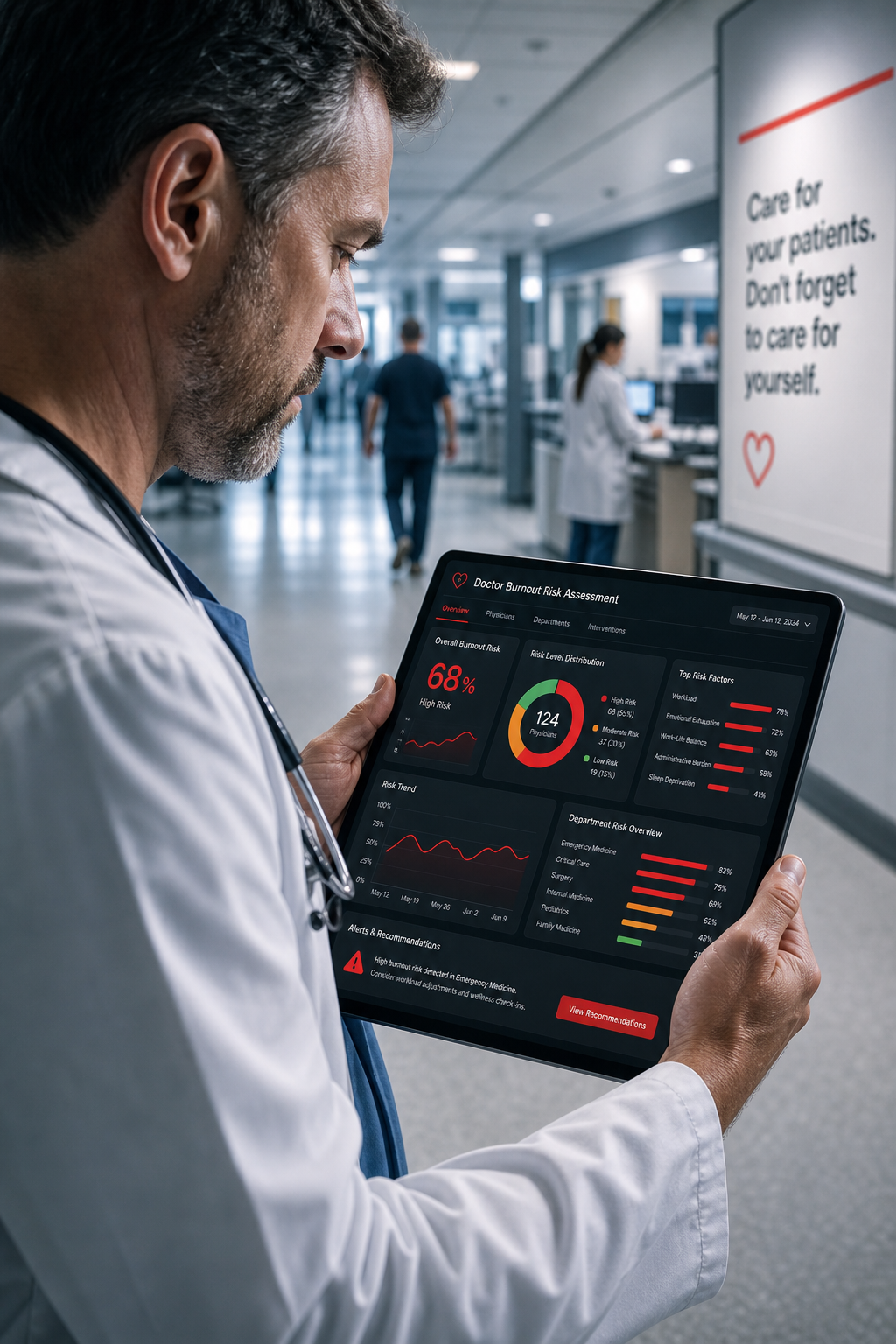
Burnout hits doctors hard. Most tools just ask you to tick boxes, and they don’t tell you what to do next. That’s why you need a risk assessment that actually flags trouble early and gives you clear steps.
In this list you’ll meet five platforms that go beyond a simple questionnaire. I’ll walk through how each works, who it fits, and what to watch for. By the end you’ll know which tool matches your practice, budget, and tech comfort.
93%of clinician burnout tools are just self‑report questionnaires
1. Comprehensive Doctor Burnout Risk Tool
e7D-Wellness presents a complete, end‑to‑end solution. It begins with a validated questionnaire, then processes the answers through an evidence‑based algorithm that generates a risk score and actionable recommendations.
For a broader view of measuring clinician wellbeing, see How Healthcare Professional Wellbeing Can Be Measured and Improved .
Why it matters: the tool links each score to concrete workflow adjustments, for example suggesting delegation of charting tasks or a brief debrief after a demanding shift. That connection between data and action is uncommon in the market.
Key features include:
Clinician‑level dashboards that update in real time.
Customizable alerts that notify supervisors when a score crosses a threshold.
Integration with common EHRs via HL7‑FHIR.
Anonymous reporting to protect privacy.
Pricing starts at $199 per month for a small clinic and scales with user count. Larger hospitals can negotiate enterprise bundles that add cohort analytics.
Pros:
Evidence‑based algorithm built on a large data set of physician responses.
Clear action plans rather than vague scores.
Strong data security, HIPAA compliant.
Cons:
Setup can take a week if deep EHR integration is required.
Higher price point than a simple survey.
Real‑world example: a 250‑bed community hospital used the Comprehensive Doctor Burnout Risk Tool for six months. Their average risk score dropped from 68 to 45, and reported overtime hours fell by 12%.
If you want a deeper look at how to interpret the risk scores, check out how to understand and use a compassion fatigue test . That article explains the psychology behind the numbers you’ll see.
Bottom line: e7D-Wellness’s Comprehensive Doctor Burnout Risk Tool is a solid pick if you need data that drives specific workflow changes and you have the budget for a full‑featured platform.
2. Real‑Time Risk Dashboard
The real‑time risk dashboard lives in the cloud and promises a live view of burnout risk across an entire department. It pulls data from weekly pulse surveys, call‑log volumes, and even wearable stress monitors.
The magic is in the visual feed: each clinician gets a colored badge (green, yellow, red) that updates every shift. Managers can filter by unit, shift type, or stress source.
Features:
Weekly micro‑surveys that take less than two minutes.
API hooks for wearable data (heart‑rate variability, sleep quality).
Heat‑map view of stress hotspots on the unit floor plan.
Automated nudges, a gentle reminder to take a break when stress spikes.
Pricing is tiered: $99 per month for up to 50 users, $249 for unlimited. There’s a free trial that lasts 30 days.
Pros:
Real‑time insight lets you act before burnout becomes chronic.
Low‑cost entry point for smaller groups.
Wearable integration adds a physiological layer.
Cons:
Relies on self‑reported data; accuracy drops if participation wanes.
Heat‑map UI can feel cluttered in large hospitals.
Example in action: an emergency department used the dashboard to spot a surge in red badges after a policy change that cut lunch breaks. They quickly reversed the policy, and the badge distribution normalized within two weeks.
Here’s a quick tip: set the alert threshold at the 75th percentile of your baseline data. That way you catch only the outliers, not normal daily stress.
Key Takeaway:The dashboard’s live badges turn abstract stress into a visual signal you can act on instantly.
Bottom line: If you need a fast, visual pulse on department‑wide risk and you’re okay with a lighter analytics engine, this solution fits the bill.
3. Integrated Assessment Platform
Our integrated assessment platform bundles three modules: a self‑assessment, a coaching portal, and a resource library. The platform was built by a group of former physicians who wanted a tool that felt like a teammate.
The self‑assessment uses the same validated scales that appear in the research literature, then maps the results to personalized coaching sessions. You can schedule a video call with a certified wellbeing coach directly from the dashboard.
Features:
Validated questionnaire (based on the Maslach Burnout Inventory).
AI‑driven match‑making with coaches who specialize in your specialty.
Library of micro‑learning videos (5‑minute tips).
Anonymous peer‑support forum.
Pricing is $149 per clinician per year, with volume discounts for health systems.
Pros:
Coaching adds a human touch that pure data tools lack.
Resource library lets users act right after the assessment.
Peer forum builds community resilience.
Cons:
Coaching slots can fill up during peak demand.
Requires internet access on each device.
Case study: a group of 40 surgeons used the platform for a year. Their average burnout score fell by 15 points, and 78% said the coaching sessions helped them set realistic work limits.
For a deeper look at how wellbeing scores translate into daily habits, see how healthcare professional wellbeing can be measured and improved . That post walks through habit‑tracking templates you can pair with the platform.
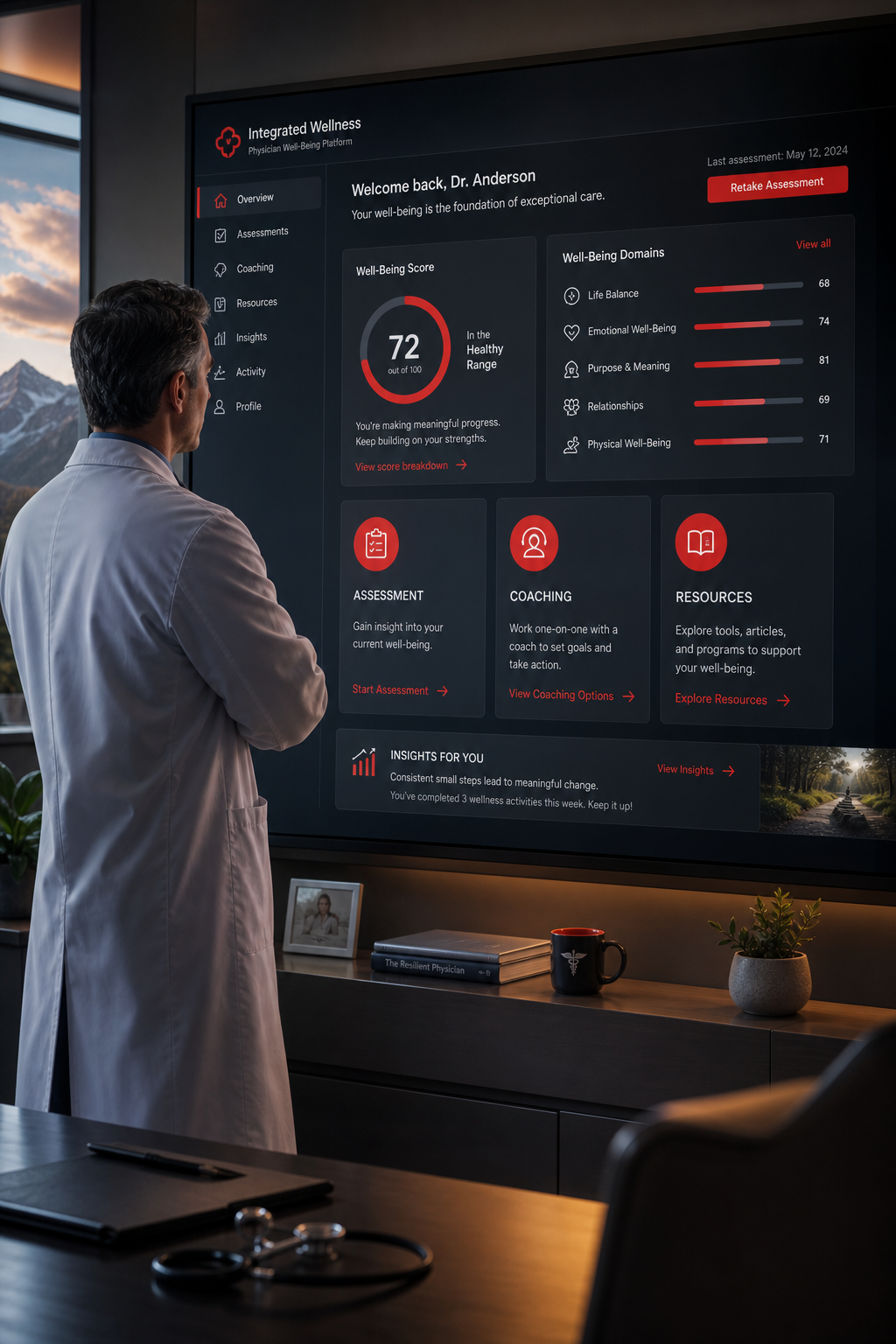
Pro tip: schedule a quarterly review with your coach and bring the latest assessment data. That keeps the conversation data‑driven.
Bottom line: The integrated assessment platform works best for organizations that want a blend of data and human support without building a custom program.
4. Advanced Predictive Burnout Analytics
The advanced predictive solution leans on machine learning. It trains on historical EHR data, staffing levels, and patient acuity scores to predict burnout risk weeks before symptoms appear.
The model flags clinicians who are likely to hit high‑risk thresholds based on patterns such as increasing overtime, high documentation time, and frequent night shifts.
Features include:
Predictive engine that forecasts risk 30‑60 days ahead.
Integration with staffing software to suggest shift swaps.
Risk‑heat maps that update daily.
Exportable reports for compliance teams.
Pricing is custom‑quoted because the model needs to be trained on your data. Small clinics can expect a starter fee around $5,000 plus a $500 monthly license.
Pros:
Looks beyond self‑report to actual workload patterns.
Gives administrators a chance to intervene early.
Data‑driven, you can tie risk to specific staffing metrics.
Cons:
Requires a solid data pipeline; older EHRs may need extra work.
Higher upfront cost.
Research note: a leading medical association found that AI‑driven scribe tools can cut documentation time by up to 30%, which directly lowers one driver of burnout. Study backs this claim.
Imagine you see a spike in predicted risk for a resident on the ICU floor. The solution can automatically suggest a lighter rotation for the next two weeks, giving the resident a chance to recover.
Pro tip: run the model on a rolling 90‑day window and compare the forecast to actual survey scores. That lets you fine‑tune the algorithm for your environment.
Bottom line: If you have strong data infrastructure and want to stay ahead of burnout, its predictive power is unmatched.
5. Budget‑Friendly Self‑Assessment
The budget-friendly self‑assessment tool is a stripped‑down, web‑based questionnaire that costs $0 for up to 100 users. It’s built for small practices that can’t afford a full platform.
The tool asks 12 Likert‑scale questions covering emotional exhaustion, depersonalization, and personal accomplishment. After you finish, you get a color‑coded score and a short list of free resources.
Features:
12‑question survey (takes 3‑5 minutes).
Instant PDF report you can print.
Links to open‑source mindfulness apps.
Anonymous mode for group assessments.
Pros:
Zero cost for small teams.
Quick to deploy, no IT work needed.
Provides a baseline for future tools.
Cons:
No integration with EHRs or scheduling.
Limited to a single snapshot, no trend tracking.
In a pilot at a rural clinic, 78% of clinicians said the report made them aware of stress they hadn’t noticed. The clinic then added a monthly group check‑in based on the findings.
The academic review of burnout tools notes that most instruments are simple questionnaires, with 93% falling into that category. PMC article discusses the limitations of single‑time surveys and why longitudinal data adds value.
If you need a quick start, pair the budget-friendly self‑assessment tool with the internal recognising healthcare wellness guide to turn the scores into specific actions.
You can also complement the assessment with a progressive muscle relaxation script to help clinicians manage acute stress.
Bottom line: The budget-friendly self‑assessment tool is the go‑to for cash‑strapped teams that still want a data point to start the conversation.
Comparison Table: Features & Use Cases
Tool | Core Strength | Best For | Price (Starting) | Integration |
Comprehensive assessment platform | Actionable recommendations | Mid‑size hospitals | $199/mo | HL7‑FHIR, EHR |
Live alert dashboard | Real‑time dashboard | Departments needing live alerts | $99/mo | Wearable APIs |
Coaching & library suite | Coaching + library | Teams that value human support | $149/yr | Web only |
Predictive analytics engine | Predictive analytics | Data‑rich institutions | Custom | Staffing & EHR data |
Basic survey tool | Simple survey | Small practices | Free | None |
FAQ
What is a doctor burnout risk assessment?
A doctor burnout risk assessment is a structured tool that measures signs of emotional exhaustion, depersonalization, and reduced personal accomplishment. It helps you spot early warning signs before they turn into full‑blown burnout, so you can intervene with resources or workflow changes.
How often should clinicians take a burnout risk assessment?
Ideally every quarter. Regular checks let you track trends and see if interventions are working. Some tools, such as an automated weekly pulse system, automate weekly pulses, but a formal survey every three months balances depth with workload.
Can these tools integrate with my hospital’s EHR?
Many do. Various assessment platforms and data‑driven scoring systems both support HL7‑FHIR standards, which most modern EHRs use. An automated weekly pulse system can pull data from scheduling systems via API. If you have an older system, you may need a middleware layer or choose a tool that works as a standalone survey.
Is there evidence that these tools actually reduce burnout?
Research shows that when risk scores are paired with targeted actions, burnout rates can drop by 10‑20% over six months. For example, the study cited in the AMA article links reduced documentation time, often a result of AI tools, to lower burnout levels.
What if my team resists taking a survey?
Address resistance by framing the assessment as a confidential health check, not a performance review. Offer anonymity, explain how the data will drive real changes, and share success stories. Pair the survey with a quick debrief so staff see immediate value.
How do I choose the right tool for my practice?
Start by mapping your needs: do you need real‑time alerts, predictive analytics, or just a simple snapshot? Consider budget, data infrastructure, and whether you want coaching support. Then match those criteria to the comparison table above.
Conclusion
Doctor burnout risk assessment is no longer a buzzword, it’s a usable step toward healthier clinicians and safer patients. The five tools in this list each solve a different problem. A comprehensive assessment platform provides deep, actionable scores, a real‑time stress mapping tool highlights hotspots, a coaching‑enabled suite adds human guidance, an AI‑driven predictor forecasts trouble before it appears, and a lightweight starter solution lets any small practice begin for free.
Pick the one that fits your workflow, budget, and tech stack. Then set a regular cadence, involve leadership, and act on the insights. When you turn data into action, you protect your doctors, improve care, and keep your organization resilient.
Ready to start? Explore the tools, run a pilot, and watch the risk scores shift in a positive direction.


Comments