

Physician Burnout Self Assessment: A Step‑by‑Step Guide
- Patricia Maris

- 2 days ago
- 7 min read
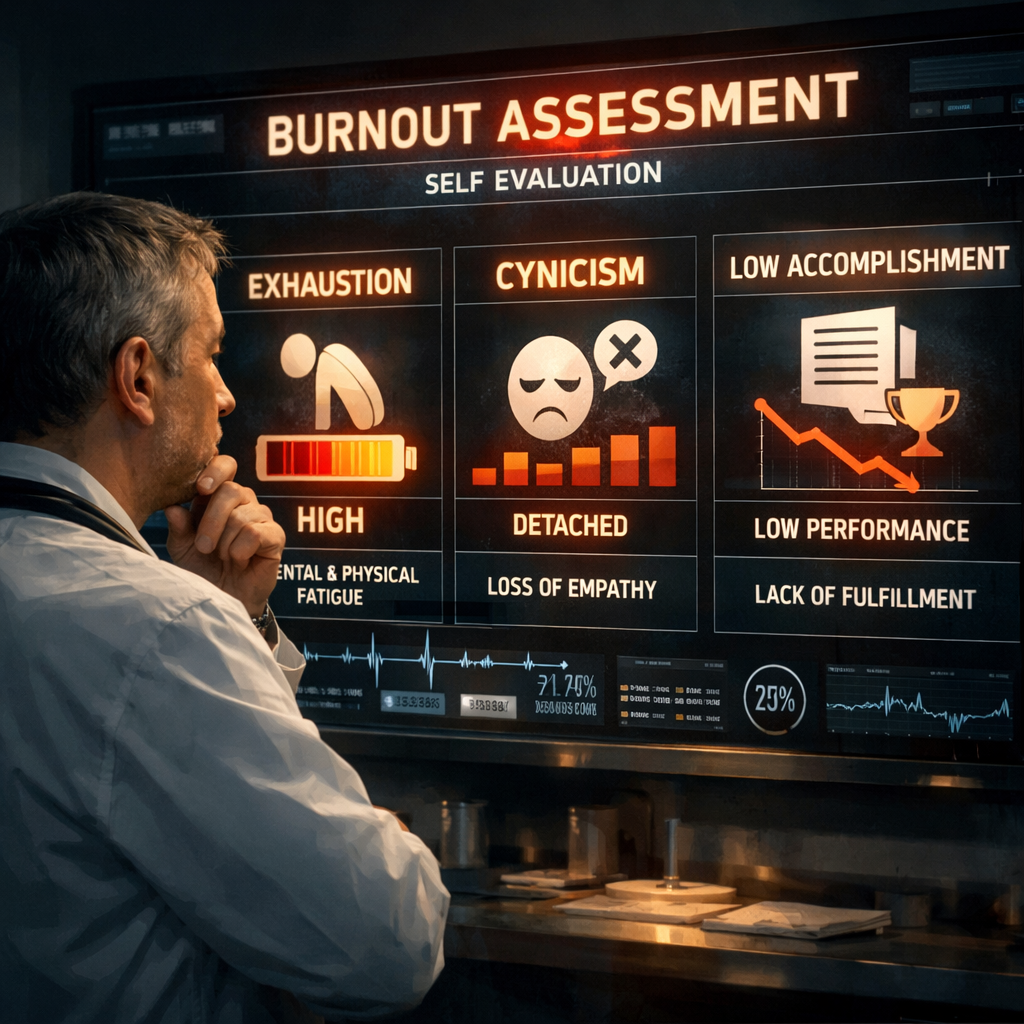
Feeling drained after a long shift? You’re not alone. Many doctors hit a hidden burnout cliff before they even notice it. This guide walks you through a quick self‑check, shows you how to pick the right tool, and gives you tiny actions you can start right now.
By the end you’ll know the warning signs, have a validated questionnaire in hand, and a set of micro‑renewal habits to keep your energy up.
Step 1: Recognize Key Signs of Burnout
Burnout isn’t just being tired. It shows up as emotional exhaustion, a sense of detachment from patients, and a feeling that you aren’t making a difference. Research shows that emotional exhaustion is more than physical fatigue , it’s a deep‑seated loss of emotional stamina ( Trockel et al., 2018 ).
Typical signs include:
Constant irritability or short‑fused reactions with colleagues or family.
Skipping meals, losing sleep, or waking up feeling “wired” but still exhausted.
Feeling cynical about patient outcomes or questioning the value of your work.
Physical aches, headaches, or a lingering sense of fatigue that won’t go away with rest.
Ask yourself these quick questions after a shift:
Do I feel drained even before I finish my day?
Do I avoid patient interactions because they feel like a chore?
Do I notice a drop in my personal sense of accomplishment?
If you answered “yes” to most, you’re likely on the burnout curve. The good news is that spotting these signs early lets you act before performance drops.
Pro Tip:Keep a small notebook in your pocket. Jot down one symptom you notice each day. After a week you’ll see patterns that point to burnout.
Another red flag is the “borrowed performance” trap , you keep showing up at work, but the energy you’re using is borrowed from home, sleep, or hobbies. When that borrowed reserve runs out, the crash hits hard (AMA STEPS Forward toolkit).
Beyond the emotional signs, look for changes in self‑valuation. Clinicians who score higher than 50 % on self‑valuation scales tend to have a lower burnout risk ( Trockel et al., 2019 ).
Key Takeaway:Spotting emotional exhaustion, cynicism, and reduced personal efficacy early is the first defense against burnout.
Seeing these signs is only the start. The next step is to pick a tool that lets you measure how deep the issue runs.
Recognising Healthcare Wellness and Addressing Burnout offers usable checklists that align with the signs listed above.
Step 2: Choose a Validated Self‑Assessment Tool
Not all questionnaires are created equal. The gold‑standard Maslach Burnout Inventory (MBI) has 22 items and solid research backing, but it costs $15 per clinician and $200 for a group ( Trockel et al., 2018 ). For busy doctors, a shorter tool often works better.
Here are three evidence‑based options:
Oldenburg Burnout Inventory (OLBI), 16 items, free, measures both exhaustion and disengagement. It has been validated across many professions, including physicians (NovoPsych).
Single‑Item Burnout Measure, one question that asks how often you feel burnt out. It’s ultra‑short and free, ideal for quick screen‑ins.
Wellbeing Profile Self‑Assessment, the only fully digital, clinician‑focused tool. It’s built for doctors, nurses, and allied health staff and gives immediate feedback.
When picking a tool, ask yourself:
How many items can I realistically answer after a shift?
Do I need a detailed sub‑scale (exhaustion vs disengagement) or just a quick flag?
Is the tool free or does my department have a budget for it?
Most clinicians find the 1‑ to 3‑item screens easy to fit into a coffee break, while the OLBI offers richer data without costing a penny.
19%of burnout tools have 1‑3 items, showing a trend toward ultra‑short screens
Our own Introducing the MarisGraph Wellbeing Tool blends the OLBI’s depth with a digital interface, so you can complete it on any device and get instant scores.
Remember, a tool is only useful if it’s reliable. Look for published validation studies , the OLBI, for example, has Cronbach’s alpha values between .74 and .87 for its subscales, indicating solid internal consistency.
Pro Tip:Save the questionnaire link in your phone’s “favorites” folder. One tap and you’re ready to answer.
Once you’ve chosen a tool, the next step is to make sure the assessment runs smoothly.
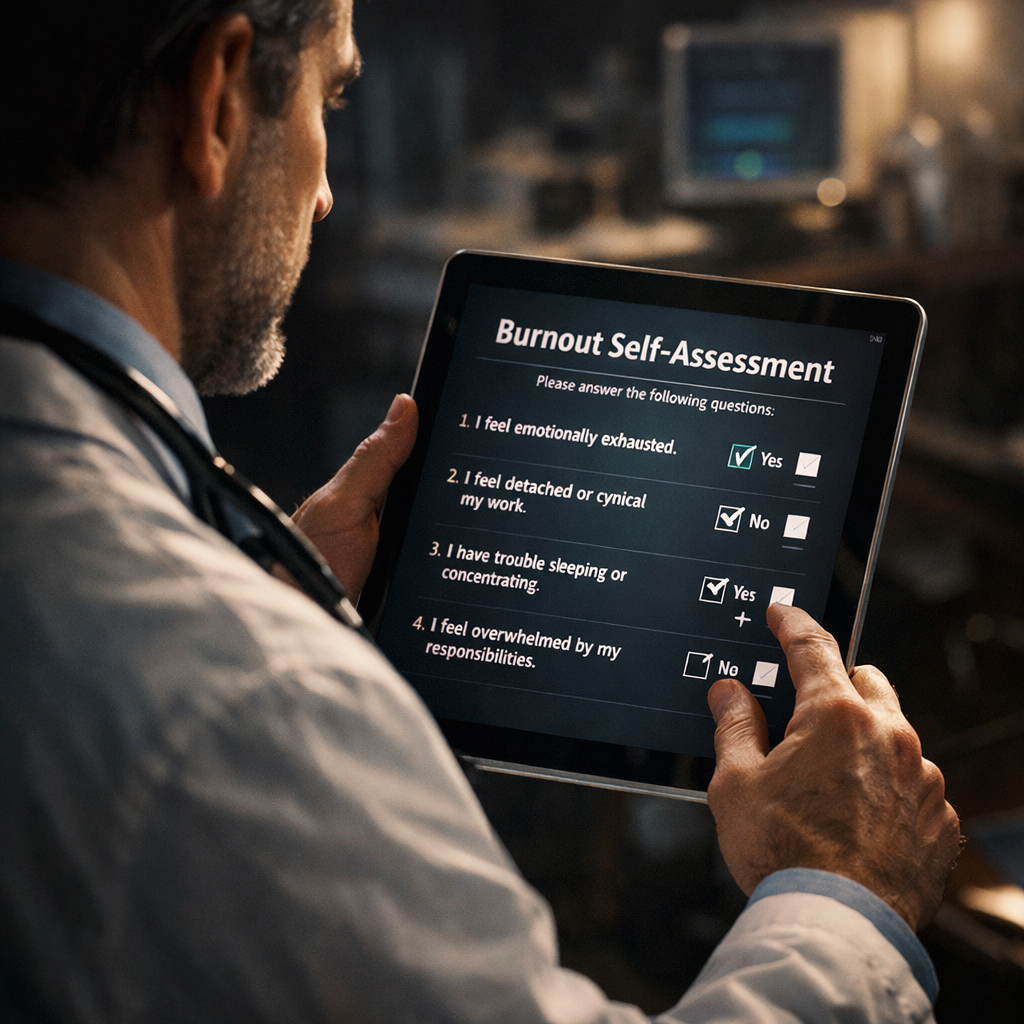
Step 3: Administer the Assessment Efficiently
Even the best questionnaire can flop if the rollout is chaotic. Here’s a simple five‑step process to get reliable data without adding paperwork.
Pick a quiet 10‑minute window.Avoid peak charting times. Early mornings or lunch breaks work well.
Use a digital platform.The AMA’s STEPS Forward toolkit recommends online surveys for speed and anonymity (AMA).
Guarantee confidentiality.Explain that results stay private and are only used for personal insight.
Set a reminder.A calendar alert ensures you don’t skip the assessment.
Collect data once a quarter.Regular check‑ins catch trends before they become crises.
Below is a quick comparison of paper vs. digital administration:
Aspect | Paper | Digital |
Time to complete | 5‑10 min | 2‑5 min |
Data entry errors | High | Low |
Anonymity | Moderate | High |
Scalability | Limited | Unlimited |
When you launch the survey, send a brief email that explains why you’re doing it, how long it will take, and the confidentiality promise.
How to Understand and Use a Compassion Fatigue Test offers a template for that email.
Below is a short video that shows how a simple digital form looks on a smartphone. Watch it to see the flow.
After the assessment, export the results as a CSV file. Look for three key metrics: total burnout score, exhaustion sub‑score, and disengagement sub‑score. High scores on exhaustion usually signal the need for immediate micro‑renewal actions, while high disengagement points to organizational issues.
Key Takeaway:A quiet 10‑minute digital window, clear communication, and quarterly repeats give you reliable burnout data.
Now that you have numbers, it’s time to turn them into action.
No‑Nonsense Tips for Healthcare Professionals includes a quick‑scan template for interpreting scores.
Step 4: Interpret Results & Plan Micro‑Renewal Practices
Scoring looks intimidating, but it’s actually simple. Most tools use a 0‑100 scale. Scores above 44 on the OLBI, for example, flag clinically significant burnout (NovoPsych).
Break the results into three buckets:
Low (0‑30):You’re doing fine. Keep your current habits.
Medium (31‑44):Early warning. Add a micro‑renewal practice each day.
High (45+):Immediate action needed. Pair personal habits with organizational support.
Micro‑renewal means tiny, repeatable actions that fit into a busy shift. Here are six evidence‑based ideas:
30‑second breathing reset: inhale for 4 seconds, exhale for 6 seconds.
One‑minute “treat yourself like a dog” pause , give yourself a quick mental pat on the back after completing a task.
Grab a glass of water and stand up for a quick stretch.
Write one gratitude note on a sticky note after each patient encounter.
Set a 5‑minute “walk‑out” when you finish charting , walk down a hallway, notice the light, reset your brain.
Schedule a 10‑minute peer debrief once a week to share wins and challenges.
Why these work: short bursts trigger the parasympathetic nervous system, lowering cortisol and improving focus ( EMPR study ).
Pro Tip:Use a timer app set to 30 seconds. When it beeps, pause, breathe, and reset.
If your score lands in the high range, consider talking to a wellness officer or a mental‑health professional. The AMA notes that organizational actions, like workload redesign and EHR optimization, often have a bigger impact than individual self‑care alone.
Combine personal micro‑renewals with system‑level fixes for the best result.
Key Takeaway:Match your burnout score to a tiered action plan and embed 30‑second habits into every shift.
For a deeper look at building a personal renewal routine, see Understanding and Addressing Moral Injury in Healthcare . It explains how values‑mismatch can amplify burnout and offers specific steps to restore meaning.
FAQ
What is the fastest way to spot burnout in a busy schedule?
The quickest method is a single‑item screen that asks, “How often do you feel burnt out?” If you answer “often” or “always,” you should follow up with a longer questionnaire like the OLBI or the Wellbeing Profile. Pair the answer with a brief self‑check of sleep quality, irritability, and sense of purpose. This combo gives you a reliable snapshot without taking more than two minutes.
Can I use a free tool and still get accurate results?
Yes. The Oldenburg Burnout Inventory and the Single‑Item Burnout Measure are both free and have been validated in multiple peer‑reviewed studies. Their scores correlate well with the proprietary Maslach Burnout Inventory, so they’re a solid choice for clinicians who need a quick, cost‑free option.
How often should I repeat the self‑assessment?
Most experts recommend quarterly repeats. This cadence captures seasonal workload changes and gives you enough data points to spot trends. If you’re in a high‑stress rotation, a monthly check‑in can help you intervene before burnout spirals.
What if my department doesn’t have a Chief Wellness Officer?
Start by forming a small peer‑support group. Share your assessment results anonymously and discuss usable fixes, like adjusting shift patterns or delegating administrative tasks. Even a grassroots effort can create momentum for larger organizational change.
Are micro‑renewal practices enough on their own?
Micro‑renewals are a vital first line, but research shows that system‑level changes, such as reducing unnecessary inbox time or improving EHR usability, have a larger impact on long‑term burnout reduction. Pair personal habits with advocacy for workflow redesign for the best outcome.
How do I interpret a high disengagement score?
A high disengagement score means you feel detached from your work or patients. Try re‑connecting through brief gratitude notes after each patient, or schedule a short mentorship chat with a senior colleague. If disengagement persists, bring it up with leadership; it often signals a need for role‑adjustment or workload redistribution.
Is the Wellbeing Profile Self‑Assessment safe for confidential use?
Yes. The tool is built to keep your responses private and stores data only on encrypted servers. You can complete it anonymously, and the results are presented in a personal dashboard that you alone can view.
Can I combine multiple tools for a more complete picture?
Absolutely. Some clinicians start with the single‑item screen for a quick flag, then follow up with the OLBI for detailed sub‑scale data, and finally use the digital Wellbeing Profile for longitudinal tracking. The layered approach gives you both breadth and depth.
Conclusion
Physician burnout isn’t inevitable. By learning the key warning signs, choosing a validated self‑assessment, administering it efficiently, and turning the numbers into tiny, repeatable habits, you can protect your stamina and keep your practice rewarding.
Start today: recognize one symptom, pick a free questionnaire, set a 10‑minute slot next week, and try a 30‑second breathing reset after your next patient. Small steps add up, and over time they create a buffer against the burnout cliff.
If you need a guided, digital experience, the MarisGraph Wellbeing Tool offers a confidential, evidence‑based self‑assessment plus a library of micro‑renewal resources tailored for clinicians.
Take control now. Your patients, your family, and your future self will thank you.


Comments