

How to Use a Clinical Burnout Risk Score Tool
- Patricia Maris

- 2 days ago
- 4 min read
Burnout can sneak up on any clinician, and the warning signs often hide in plain sight. This guide shows you how to run a clinical burnout risk score tool, read the numbers, and turn them into a real plan that protects your health.
"A score is only useful if you act on it. Use the data, then build the change."
Step 1: Complete the e7D‑Wellness Clinical Burnout Risk Self‑Assessment
The first move is to take the self‑assessment that e7D‑Wellness offers. It asks about workload, sleep, emotional strain, and a few other key wellness pillars. You answer on a scale from “never” to “always,” and the tool scores each area.
Why start here? Because a baseline gives you a clear picture of where you stand. The assessment is built on the Occupational burnout definition from Wikipedia , so the questions match what researchers consider core burnout factors.
Once you finish, you’ll get a raw score and a short report. The report highlights the strongest risk drivers and suggests which of the eight wellness pillars need the most attention.
Tip: Keep the assessment private and honest. The more truthful you are, the sharper the insights.
For deeper guidance on interpreting the numbers, you can also read the Compassion fatigue test guide , which explains how similar scales work for clinicians.
Step 2: Enter Your Data into the Risk Score Calculator
Next, log into the e7D‑Wellness portal and open the risk score calculator. It’s a simple web form that mirrors the self‑assessment questions.
Copy each answer exactly as you marked it. The calculator will automatically sum the values and generate a composite burnout risk score ranging from low to high.
Watch the numbers change as you adjust answers, this visual feedback can help you see which habits move the needle.
When you’re ready, hit “Calculate.” The tool flashes a color‑coded gauge: green for low risk, amber for moderate, red for high.
Embedding a short walkthrough video can make the process even clearer:
After the video, double‑check that every field matches your assessment. A single typo can shift the score enough to change the risk tier.
Step 3: Interpret Your Score and Identify Risk Levels
Now you have a number. What does it mean?
e7D‑Wellness maps the score onto three risk bands:
Low (0‑33): You’re managing well. Keep an eye on any rising trends.
Moderate (34‑66): Warning signs appear. Time to act before stress climbs.
High (67‑100): Burnout is looming. Immediate interventions are needed.
The CDC’s NIOSH division notes that healthcare workers face chronic stressors like staffing shortages and stigma, which can push scores into the moderate or high range (source). Understanding where you fall helps you prioritize actions.
Look at the breakdown by pillar. If “Sleep” scores low, that’s a clear target. If “Emotional exhaustion” spikes, consider peer support or counseling.
Key Takeaway:The score is a map, not a verdict. Use the pillar details to decide which habit changes will move you toward a lower risk band.
Remember, the score reflects a snapshot in time. Re‑assessment later will show if your plan works.
Step 4: Build a Personalized Action Plan with e7D‑Wellness Resources
With the risk bands in hand, craft a plan that targets the weakest pillars. e7D‑Wellness offers a library of evidence‑based resources: short videos, printable worksheets, and guided meditations.
Start with one pillar at a time. For example, if “Physical activity” is low, schedule a 10‑minute stretch routine at the start of each shift. If “Emotional resilience” needs work, try the gratitude journal prompts to boost positive affect.
Set SMART goals, Specific, Measurable, Achievable, Relevant, Time‑bound. Write them down in a notebook or the e7D‑Wellness app.
Pro tip: Pair each goal with a built‑in reminder in your phone calendar. The habit sticks when you get a prompt right before a shift change.

Check back with the resource library weekly. New modules drop regularly, so you’ll always have fresh tools to try.
Step 5: Monitor Progress and Reassess Regularly
Any plan needs tracking. Return to the e7D‑Wellness portal every month and redo the self‑assessment. Compare the new score to your baseline.
If your score drops, celebrate the win and keep the habit. If it stays the same or rises, revisit the pillars that didn’t improve.
Document your observations in a simple log: date, score, what you did that week, and how you felt. Over time you’ll see patterns, maybe night shifts spike “Fatigue” or certain patient cases raise “Emotional exhaustion.”
When you notice a plateau, try a different resource. The progressive muscle relaxation script can break tension that builds after long procedures.
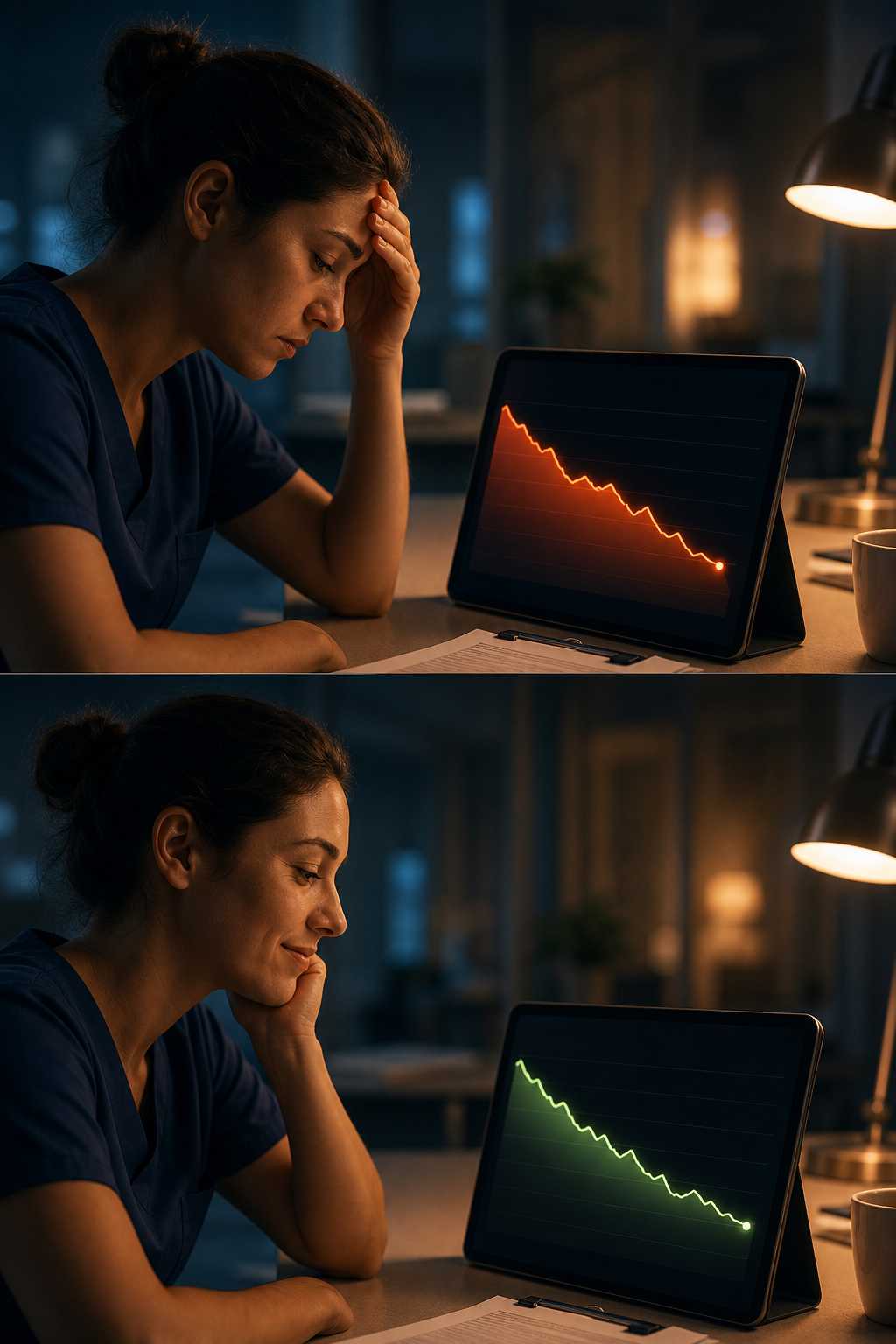
Regular reassessment turns a one‑time test into an ongoing health check, keeping you ahead of burnout before it becomes a crisis.
FAQ
What is a clinical burnout risk score tool?
A clinical burnout risk score tool quantifies the likelihood that a healthcare professional will experience burnout by scoring factors like workload, sleep, and emotional strain.
How often should I take the e7D‑Wellness assessment?
Take it at least once every month, or after a major schedule change, to catch shifts in risk early.
Can I use the tool if I’m a medical student?
Yes, the assessment works for any health‑care professional, including students, because it measures universal stress drivers.
What do the colors in the risk gauge mean?
Green means low risk, amber signals moderate risk needing attention, and red flags high risk that requires immediate action.
Is my data private?
e7D‑Wellness stores all responses securely and does not share them with third parties without your consent.
Where can I find more resources to lower my score?
The e7D‑Wellness platform offers videos, worksheets, and guided practices that target each burnout pillar.
For broader strategies on preventing clinician burnout, see the healthcare burnout prevention guide.
If you’re dealing with moral distress, the moral injury guide explains how to recognize and address those deeper conflicts.
Conclusion
Start with the e7D‑Wellness self‑assessment today, turn the score into a focused action plan, and track your progress each month. Taking these steps now keeps burnout at bay and lets you stay effective for the patients who need you.
Ready to put this into practice? e7D-Wellness was built for exactly this.


Comments