

Burnout Self Test: A Simple 4‑Step Guide to Identify Your Stress Levels
- Patricia Maris

- Mar 23
- 8 min read

Imagine you’re a night‑shift nurse named Maya. She’s just finished a 12‑hour rotation, her feet ache, and she feels a hollow buzz in her chest. She checks her phone and sees an email from her hospital asking her to take a “burnout self test” before the end of the week. Maya wonders if the test will really tell her anything. She’s tired of vague surveys that feel like busy‑work. She wants a tool that shows her where the stress lives, so she can act fast and feel less drained. That’s the exact spot where a solid burnout self test can make a difference. It can turn a vague feeling of exhaustion into clear numbers, and those numbers can point to real steps you can take today. In this guide we’ll walk you through a four‑step process that takes the mystery out of the burnout self test, helps you set up the right space, shows you how to fill it out, and teaches you how to turn the scores into an action plan. You’ll get practical tips, a handy comparison table, an image to spark ideas, and even a short video that walks you through a popular tool. Let’s get started.
Step 1: Choose a Validated Burnout Self Test Tool
First thing you need is a test that actually measures what you feel. Not every questionnaire is built the same. Some are old, some are new, and some have been checked in research studies. Picking a validated burnout self test tool means you’ll trust the numbers you get.
Here are three well‑known tools you can consider. All of them have research backing their reliability and validity.
Tool | Key Features | Typical Use |
Burnout Assessment Tool (BAT) | 33 items; four core dimensions (exhaustion, mental distance, cognitive & emotional impairment); secondary symptoms | Hospitals, universities, large organisations |
Copenhagen Burnout Inventory (CBI) | Measures personal, work‑related, and client‑related burnout; simple Likert scale | Healthcare settings, client‑service jobs |
Oldenburg Burnout Inventory (OLBI) | 16 items; covers exhaustion and disengagement; works in many cultures | Research, small clinics, mixed occupations |
Why does this matter? A study of 431 Serbian medical students found the BAT had a Cronbach’s alpha of 0.946 – that’s excellent reliability ( PMC12896602 ). The same paper also shows the CBI’s flexibility across student groups ( same source ).
How to pick the right one for you
Look at the length. If you only have 10 minutes, the CBI’s 19 items may feel lighter than the BAT’s 33.
Check the dimensions. Want to see cognitive impairment? BAT includes it.
Consider the language. The OLBI has been validated in many languages, which helps non‑English speakers.
For a quick start, the How to Understand and Use a Compassion Fatigue Test article walks you through selecting a tool that matches your role. Another solid read is the Nurse Burnout Statistics 2024: Key Insights and Resources page, which also lists these tools.
Step 2: Prepare Your Environment and Mindset
Now that you have a burnout self test, set yourself up for honest answers. A noisy ward or a cluttered desk can pull your mind away from the questions.
Find a quiet spot
Pick a room where you won’t be interrupted. Close the door. Turn off notifications on your phone. If you work from home, a spare bedroom works well. If you’re in the hospital, ask for a break room for 15 minutes.
Set the right mindset
Tell yourself this is a check‑in, not a quiz you must pass. You’re looking for clues, not a grade. Be honest, even if the answer feels uncomfortable. You’ll thank yourself later when the results point you to the right help.
For more on creating the right mental space, the Burnout Self‑Assessment Tools PPT offers a printable checklist. The Preparing for a Stress Test guide also shares calming techniques you can try before you start, like a few deep breaths or a short stretch.
Here are three quick actions to boost focus:
Set a timer for 20 minutes and commit to the test only during that window.
Place a glass of water nearby – staying hydrated keeps brain fog at bay.
Write down one word that describes how you feel right now; keep it on the page as a reminder.
When you feel ready, open the chosen burnout self test on your laptop or tablet. The next step shows you how to fill it out without losing track.
Step 3: Complete the Test and Record Your Scores
With the environment set, it’s time to take the burnout self test. Follow these simple actions to get clean data.
Read each item carefully
Don’t skim. The OLBI, for example, asks about “I feel worn out at the end of the workday.” If you’ve felt that three times a week, mark the answer that fits best. Remember, the test uses a Likert scale – usually 1 = never to 5 = always.
Answer honestly, not how you think you should answer
It’s easy to downplay fatigue because you want to appear strong. Resist that urge. The more accurate your answers, the clearer the picture.
The OLBI scoring guide explains that total scores above 44 suggest clinically significant burnout (NovoPsych OLBI page). You’ll also find subscale scores for exhaustion and disengagement.
For a visual walk‑through, watch the short video below. It shows a clinician filling out the OLBI on a tablet, then exporting the results.
After you finish, save the raw numbers in a spreadsheet. Write down:
Total score
Exhaustion subscale
Disengagement subscale
Date and time of the test
Keeping a record helps you spot trends over weeks or months. If you notice the score creeping up, you know it’s time to act.
Need another reliable tool? The Effective Nurse Burnout Interventions page lists apps that can auto‑calculate OLBI scores for you. Also, the Understanding the Maslach Burnout Inventory article explains another scoring method you might compare against.
Step 4: Analyze Results and Create an Action Plan
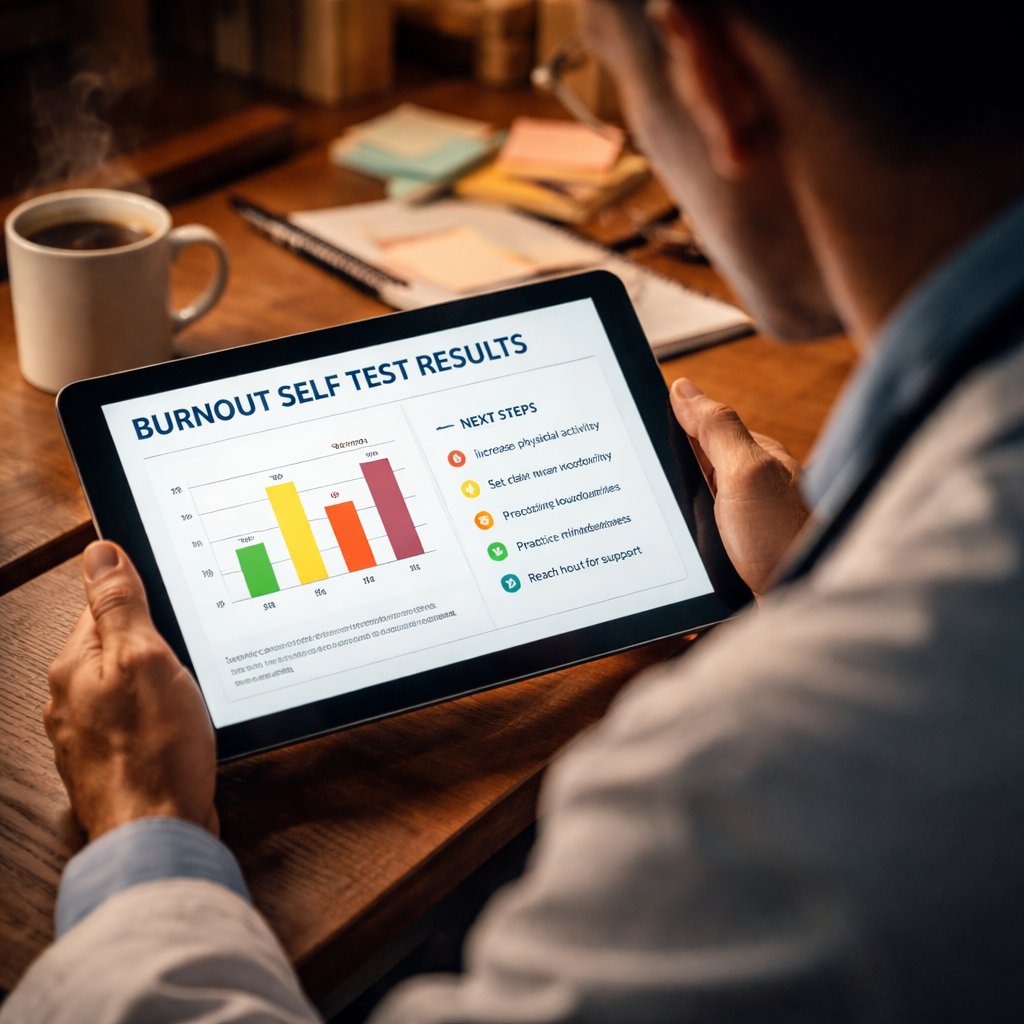
Numbers on a page are only useful if you turn them into steps. This section shows you how to read the burnout self test results and build a plan that fits your schedule.
Interpret the scores
Look at the total score first. If it’s below 30, you’re likely in the low‑risk zone. Scores between 30 and 44 signal moderate risk. Anything above 44 points to high risk. Next, compare the two subscales. A high exhaustion score but lower disengagement suggests you’re physically worn out but still care about the job. A high disengagement score may mean you feel detached and need to reconnect with purpose.
Set three SMART goals
SMART = Specific, Measurable, Achievable, Relevant, Time‑bound. Example:
Specific: “Walk 15 minutes during my break.”
Measurable: Track steps with a phone app.
Achievable: I have a 30‑minute break each shift.
Relevant: Reduces physical exhaustion.
Time‑bound: Do it for the next two weeks, then reassess.
Write these goals in a notebook or a digital tracker. Review them each Friday. Adjust if you hit a snag.
The Using Burnout Assessment Tools summary provides a template for a recovery plan. The Burnout Recovery Plan article adds tips on how to keep the plan realistic, like scheduling short “re‑charge” blocks and seeking peer support.
Here’s a quick three‑step template you can copy:
Record current scores and note the highest subscale.
Pick one habit that targets that subscale (e.g., a 5‑minute mindfulness break for exhaustion).
Set a check‑in date (7 days later) and compare new scores.
When the habit feels easy, add another. Over time you’ll see the total burnout self test score dip, and you’ll feel more in control.
Conclusion
Doing a burnout self test can feel like another task on a long list, but it’s really a shortcut to knowing what hurts and what helps. By picking a validated tool, setting a quiet space, answering honestly, and turning the scores into three clear goals, you give yourself a roadmap that fits your busy life. Remember to track scores over time, adjust goals, and lean on resources like the recovery plan PDFs linked above. If you need more guidance, the e7D‑Wellness platform offers a confidential wellbeing profile that builds on the same data you’ve gathered. Take the first step today, and you’ll start to see the fog lift.
FAQ
How often should I take a burnout self test?
It’s best to retake the burnout self test every 4–6 weeks, especially after a busy rotation or a major change at work. This timing lets you see trends without overwhelming yourself with data. Mark the date in your calendar, and compare the new total and subscale scores to the previous ones. If you notice a steady rise, it’s a sign to act sooner rather than later.
What if my burnout self test score is low but I still feel stressed?
A low score on the burnout self test means you’re not in the high‑risk range, but it doesn’t erase everyday stress. Use the test as a baseline, then add other self‑care tools like short walks, breathing exercises, or a quick chat with a colleague. Keep a simple stress diary alongside the test results to spot patterns that the test alone might miss.
Can I share my burnout self test results with my manager?
Yes, you can share the results if you feel safe doing so. Present the numbers as a conversation starter, not a complaint. Explain which subscale is high and suggest one concrete change—like a scheduled break or a workload tweak. Managers who see clear data are often more willing to support adjustments that improve team wellbeing.
Do burnout self tests work for all healthcare roles?
Most validated burnout self tests, such as the BAT, CBI, and OLBI, were designed for a range of occupations, including nurses, physicians, therapists, and support staff. The language is generic enough to apply to any clinical setting, but some tools have specialty versions. Check the tool’s description to ensure it matches your role before you start.
What should I do if my burnout self test shows severe risk?
If the burnout self test flags severe risk (total score above 44 on the OLBI, for example), treat it like a health alert. Talk to a mental‑health professional, explore employee assistance programs, and consider a short leave if possible. Pair the test results with the recovery plan from Burnout Recovery Plan to structure your next steps.
How can I track progress after I create an action plan?
Use a simple spreadsheet or a wellness app to log your burnout self test scores each month. Add columns for each SMART goal you set, and tick off when you complete them. Review the chart at the end of a quarter; a downward trend in total scores means your plan is working. If scores stay flat, tweak the goals—maybe increase the frequency of a habit or add a new one.
Are there free burnout self test resources online?
Yes, several organizations offer free, evidence‑based burnout self tests. The e7D‑Wellness site provides a confidential questionnaire that aligns with the BAT and CBI frameworks. You can also find the OLBI for free on the NovoPsych website. Just make sure the version you use is the latest and has been validated in research.
Can a burnout self test replace professional therapy?
No. The burnout self test is a screening tool, not a treatment. It helps you spot warning signs early, but if you feel overwhelmed, depressed, or anxious, reach out to a therapist, counselor, or your employee health service. Combining professional help with the insights from your test gives you the best chance to recover fully.


Comments