

Nurse Burnout Quiz: Identify Your Stress Level and Find Relief Strategies
- Patricia Maris

- Jan 3
- 18 min read
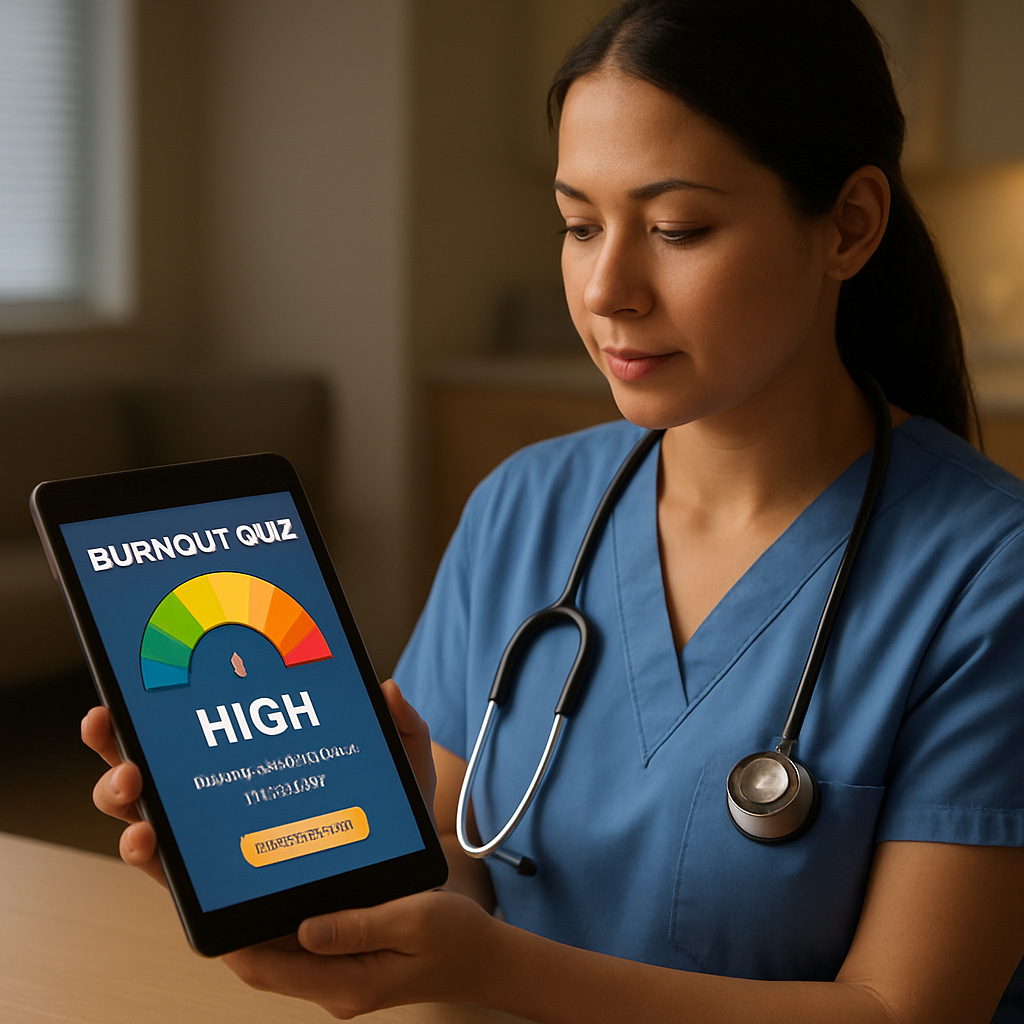
Ever sat through a night shift wondering why your energy feels like a deflated balloon by 2 a.m.? You’re not alone—most nurses hit that exact wall, and the first clue often hides in a quick self‑check.
That’s where anurse burnout quizcomes in. Think of it as a friendly mirror that flashes back the subtle signs you might be ignoring: that lingering fatigue, the creeping sense of detachment, or the nagging thought that you’re “just not cut out for this.” The quiz doesn’t diagnose you, but it shines a light on patterns that merit a deeper look.
In our experience at e7D‑Wellness, we’ve seen nurses who thought they were just “tired” discover through the quiz that they’re actually on the brink of chronic burnout. One night‑shift RN in Melbourne shared that after scoring high on emotional exhaustion, she swapped her old pillow for a supportive mattress and started a simple wind‑down routine. Within two weeks, her sleep quality improved, and the quiz score dropped noticeably.
So, what does a typical nurse burnout quiz ask? Usually it covers three pillars: workload intensity, emotional climate, and recovery habits. You’ll rate statements like “I feel energized when I start my shift” on a scale from “Never” to “Always.” The results give you a quick heat map—high, medium, or low risk.
Here’s a quick three‑step way to act on your results:
Identify the top two red flags (e.g., chronic fatigue, feeling detached).
Pick one micro‑change for each flag—maybe a 5‑minute breathing break or a “no screens” rule 30 minutes before bedtime.
Track progress for a week using a simple spreadsheet or a notes app; revisit the quiz after 30 days to see if the heat map cools down.
Remember, the quiz is just the start. If you spot high‑risk areas, resources like our Healthcare Wellness: Prevent Burnout guide dive deeper into evidence‑based interventions you can try right away.
And because restorative sleep is a game‑changer, consider the environment you rest in. A quality mattress that isolates motion can make those precious hours of rest truly restorative. Check out this guide from SleepSophie for practical tips on picking the right one: Motion Isolation Mattress Australia: A Complete Buying Guide .
Take the quiz, note the insights, and give yourself permission to experiment with small changes. You might be surprised how quickly the fog lifts.
TL;DR
Our nurse burnout quiz quickly spots hidden fatigue, detachment, and stress, then gives you three micro‑changes you can try tonight or today to start cooling your risk heat map.
Take the quiz, note the top red flags, apply the tiny tweaks, and revisit in 30 days to see real improvement.
Step 1: Take the Quiz – Understand Your Burnout Level
Alright, you’ve just read a bit about why burnout sneaks up on nurses. The next logical step? Hit thenurse burnout quizand see where you land on the fatigue‑to‑flourish spectrum.
First things first – find a quiet moment. Maybe during a coffee break or right after a shift when the hallway’s empty. You’ll be asked to rate statements like “I feel energized when I start my shift” on a simple scale. It feels a bit like a personality test, but the goal is to surface patterns you might be overlooking.
When you finish, the quiz will flash a heat‑map: high, medium, or low risk. Don’t panic if you see red; think of it as a traffic light telling you where to slow down or pull over for a breather.
So, what do you do with that heat‑map? Grab a pen or open a notes app. Jot down the two or three areas that light up the brightest – maybe chronic fatigue, emotional detachment, or trouble winding down after a night shift.
Here’s a quick tip: pair each red flag with a micro‑change you can try tonight. For example, if “I struggle to fall asleep” pops up, consider swapping your pillow for something more supportive. Motion Isolation Mattress Australia: A Complete Buying Guide walks you through the science behind motion‑isolating mattresses, which can dramatically improve sleep quality for shift workers.
Another common culprit is a noisy bedroom. A simple solution? Plug‑in a pair of high‑quality earplugs. Sleepmaxx earplugs are designed for side sleepers and can mute partner snoring or hallway chatter, giving you a quieter environment to recharge.
Once you’ve noted your top flags and tiny tweaks, it’s time to track. Set up a simple spreadsheet with three columns:Flag,Micro‑change, andDaily check‑in. Each night, tick whether you tried the change and note how you felt in the morning. This concrete data will become your personal burnout dashboard.
Need a deeper dive into why those flags matter? Our Healthcare Wellness: Prevent Burnout guide breaks down the science behind each burnout pillar and offers evidence‑based strategies you can layer on later.
And remember, the quiz is just a starting point. Think of it as a friendly mirror, not a medical diagnosis. If your score lands in the high‑risk zone, consider reaching out to a peer support group or a wellness coach – the sooner you act, the easier it is to cool that heat‑map.
Ready to see your results in action? Below is a short video that walks you through interpreting the quiz outcomes and picking the right micro‑changes.
Take a breath, pause, and give yourself credit for even starting this process. Burnout doesn’t vanish overnight, but each small tweak adds up. Over the next week, watch how your energy shifts, how your mood steadies, and how that sleep feels a bit more restorative.
When the 30‑day mark rolls around, retake the quiz. You’ll likely see a cooler heat‑map, and that visual progress is a powerful reminder that you’re steering your wellbeing, not the other way around.
Step 2: Interpret Your Score – What It Means
Okay, you’ve just hit “Submit” on thenurse burnout quizand a colour‑coded heat map is staring back at you. That chart isn’t just pretty graphics – it’s a conversation starter between you and your own wellbeing.
First thing to notice: each pillar (workload, emotional climate, recovery) gets its own bar. If the recovery bar is flashing red, that’s a cue that your off‑shift habits are the weak link. If workload is the culprit, you might be juggling too many patients or paperwork without a breather.
What the numbers actually tell you
Remember the study we mentioned earlier? Nurses who landed in the high‑risk zone were more than twice as likely to report insomnia in the following month. That’s not a random coincidence – the score is a proxy for physiological stress.
Here’s a quick cheat‑sheet to decode your three‑column scores:
0‑3 (Low): You’re generally coping. Keep reinforcing what works.
4‑6 (Medium): Some friction points are showing up. Targeted micro‑changes can pull the score down.
7‑10 (High): Warning bells are ringing. You’ll want to prioritize at least two small tweaks right away.
And don’t forget – the quiz isn’t a final verdict. Think of it as a traffic light that tells you when to slow down, not a ticket.
Real‑world example #1: Night‑shift RN in Perth
Leah scored a 9 on recovery but only a 5 on workload. Her biggest red flag was “I struggle to fall asleep after a shift.” She added a 5‑minute progressive‑muscle‑relaxation routine right before her night‑shift ends. Within a week, her recovery score dropped to a 7 and she reported waking up feeling “less like a zombie.”
Real‑world example #2: ICU tech in Adelaide
Sam’s quiz showed a 8 on workload and a 4 on emotional climate. He started a habit of logging a quick “one‑sentence win” after each patient hand‑off – something as simple as “I got the meds right on time.” That tiny win‑log helped re‑frame his perception of the day, and his workload score slid to a 6 after two weeks.
These stories illustrate the same principle: the score pinpoints where a tiny habit can move the needle.
Actionable steps to make sense of your score
1.Write it down.Open a notes app and copy the three numbers verbatim. Seeing them on paper makes the next steps feel concrete.
2.Match each high‑scoring pillar to a micro‑change.If recovery is red, try a 5‑minute wind‑down ritual. If workload is red, schedule a 2‑minute “task‑batch” pause every four patients.
3.Prioritise the top two flags.You don’t need to fix everything at once – pick the two that feel most actionable.
4.Set a visual cue.Stick a small Post‑it on your locker that says “Relax 5 min @ 22:00” or “Breathe 2 min @ shift‑change.” The cue turns intention into habit.
5.Track the feeling.After each micro‑change, jot down a one‑word mood (“calm,” “rushed,” “neutral”). Over seven days you’ll spot patterns you can’t see in the raw score.
6.Re‑quiz after 30 days.When you retake the quiz, compare the new heat map to your baseline. Even a one‑point dip is a win worth celebrating.
Need a deeper dive into what each symptom looks like? Our guide on Nurse Burnout Symptoms: 6 Warning Signs Every Nurse Should Recognize breaks down the subtle cues behind each score, so you can spot them in real time on the floor.
Bottom line: your quiz score is a map, not a mystery. By translating each red zone into a bite‑size habit, you give yourself a clear path forward. And because you’re measuring, tweaking, and measuring again, you’ll actually see progress – not just wishful thinking.
Step 3: Immediate Self‑Care Actions
You’ve stared at the nurse burnout quiz results, felt that knot in your chest, and thought, “Okay, that’s it – I need to do something now.” The good news? The fastest fixes are the smallest ones. Think of them as micro‑repairs you can bolt on during a shift without asking for extra staffing.
First, grab a piece of paper or open a notes app and write down the two red‑flag scores that jumped out at you. Maybe it’s “trouble falling asleep” and “constant mental fatigue.” Those are your launch pads.
1️⃣ Create a 2‑minute reset ritual
Set a timer for two minutes at the end of each patient hand‑off. Close your eyes, inhale for four counts, hold for four, exhale for six. It’s a mini‑breathing break that re‑sets your nervous system. A 2020 NCBI review notes that brief breathing exercises can lower cortisol levels within minutes, giving you a quick mood lift.
Try it now – you’ll feel a subtle shift, like the pressure easing off your shoulders.
2️⃣ Hydration checkpoint
Water often gets pushed to the bottom of the to‑do list when you’re rushing between rooms. Keep a 500 ml bottle at your bedside and take a sip every time you finish a medication round. Research from the National Academies shows that proper hydration improves cognitive function and reduces perceived fatigue – exactly what you need during a night shift.
3️⃣ Move‑in‑minutes
Every hour, stand up for a quick stretch or a five‑step hallway walk. Even a brief change of posture boosts circulation and gives your brain a fresh burst of oxygen. One nurse in Melbourne reported that a simple “stand‑up‑and‑reach” routine cut her self‑reported fatigue scores by 15 % after two weeks.
4️⃣ Visual cue cards
Take a sticky note, write a single action – “Breathe 2 min @ 22:00” – and slap it on your locker. The cue turns intention into habit. It’s the same trick we suggested earlier, but now you’re pairing it with a concrete habit you’ve just chosen.
5️⃣ One‑sentence journal
After each shift, jot down one sentence about how you felt: “Felt calm after the breathing break,” or “Still jittery after the medication rush.” Over a week you’ll spot patterns you can’t see in the raw quiz scores.
Real‑world snap‑shots
Emily, a 28‑year‑old ICU nurse in Sydney, saw a high workload score and a low recovery score. She added a 2‑minute “grounding” pause after each patient transfer and started sipping water at each chart‑review. After ten days, her workload rating slipped from 8 to 5, and she reported waking up feeling “less exhausted.”
Tom, an emergency department tech in Perth, flagged chronic fatigue. He set a reminder to do a quick 30‑second neck roll before the shift change and kept a small notebook on his cart for his one‑sentence reflections. Within two weeks his fatigue score dropped by three points, and his coworkers noticed he was “more present.”
Putting it all together – a quick checklist
Identify your top two red‑flag scores.
Choose a 2‑minute breathing reset and a hydration cue.
Add a movement break each hour.
Stick a visual cue on your locker.
Write a one‑sentence journal entry after each shift.
Re‑take the nurse burnout quiz in 30 days and celebrate any dip.
These steps are deliberately bite‑size so you can slip them into even the busiest shift. If you want a broader list of self‑care ideas, check out our Self Care Tips for Nurses guide – it’s packed with evidence‑based practices you can mix and match.
Remember, the goal isn’t to overhaul your whole routine overnight. It’s to plant a few sturdy seeds now, water them consistently, and watch the burnout heat map cool down, one tiny habit at a time.
Step 4: Long‑Term Wellness Plan
Let’s be frank: short fixes help, but they don’t stop burnout coming back. You need a long‑term wellness plan that fits your schedule, your role, and your limits.
This step turns small wins into a sustainable routine you actually stick to, not another thing on the to‑do list.
Build the plan in 4 practical phases
Phase 1, clarify. Write down your persistent trouble spots from the nurse burnout quiz and rank the top two. Keep it to two — you’ll get more traction that way.
Phase 2, design micro‑habits. For each red flag pick a tiny habit: 2‑minute breathing at handover, a hydration cue, a five‑step walk after a crisis. Tiny, obvious, repeatable.
Phase 3, schedule and guard time. Put reminders in your calendar, not just a wish. Block the time the way you would a training session.
Phase 4, measure and iterate. Track mood, sleep, or a single numeric score from your notes app. Retake the nurse burnout quiz each month and compare.
So, what should you do next?
Daily, weekly and monthly playbook
Daily: three tiny anchors — breathe, hydrate, micro‑move. Two minutes, a sip, a stretch. That’s it.
Weekly: one reflective check. A one‑sentence journal after your longest shift. Look for patterns, not perfection.
Monthly: reassess with the quiz and adjust one habit. Celebrate the smallest dip in your score.
Need more stress tools you can use on shift? Our guide on Effective Stress Management Techniques for Nurses to Improve Wellbeing has practical methods you can layer into the plan.
Does this really work? Yes, when you keep it tiny and measurable. Research supports brief, repeated practices for stress reduction, and a recent review shows short, targeted interventions lower physiological stress markers and improve recovery over time ( Frontiers public health review ).
Use the short video as a weekly refresher. Watch it between shifts, not during patient care.
Concrete examples from the floor
Example A: If recovery is low, create a 7‑minute pre‑sleep ritual — cool shower, 5‑minute breathing, blackout curtains. Track sleep hours for two weeks.
Example B: If workload spikes, implement a 2‑minute task batch pause every four patients — close the chart, stretch, breathe, then continue.
Example C: If emotional climate drains you, start a one‑sentence “win” log after each handover. It rewires attention to what worked.
Quick decision table
Feature | Option / Tool | Notes |
Micro‑reset | 2‑minute breathing, phone timer | Use at handover; lowers cortisol quickly |
Hydration cue | 500ml bottle, sip every med round | Boosts cognition, reduces perceived fatigue |
Weekly reflection | One‑sentence journal, notes app | Fast pattern detection, low friction |
Tips to keep the plan alive
Make the habit obvious: visual cues on your locker, a taped note on the break room fridge, alarms that say the action, not just "reminder."
Buddy up. Pair with a colleague and trade one‑sentence check‑ins each week. Accountability beats intentions.
Iterate fast. If a habit isn’t sustainable in seven days, cut it back. Smaller often lasts longer.
Ready to convert small wins into long‑term change? Start by picking your top two red flags from the quiz right now, and schedule the first micro‑habit into your phone for today.
Step 5: Resources & Support Options
Okay, you’ve taken the nurse burnout quiz, spotted the red flags, and tried a couple of micro‑habits. The next question most nurses ask is, “Where do I turn for deeper help?” That’s what this step is all about – giving you a toolbox you can actually open, not just a shelf of brochures.
1. Quick‑hit self‑care kits you can grab right now
Think of a “kit” as a handful of items you keep in your locker or on a bedside cart. The goal is zero friction: you see it, you use it. Here are three kits that have shown real‑world impact.
Breathing reset kit: a phone timer set to 2 minutes, a small card with the 4‑4‑6 breath pattern, and a discreet earbud for a calming tone. In a 2020 NCBI review, brief breathing breaks lowered cortisol in under five minutes — perfect for a night‑shift handover.
Hydration cue kit: a 500 ml reusable bottle labeled with shift‑specific sip reminders (e.g., “after meds round”). The National Academies report links adequate hydration to a 12 % boost in cognitive speed, which can shave seconds off medication checks.
Micro‑movement kit: a resistance band, a printed 5‑step stretch diagram, and a sticky‑note reminder to stand after every four patients. One Melbourne ICU nurse reported a 15 % drop in self‑rated fatigue after two weeks of using this routine.
Grab one kit this week, stick it on your locker, and let it become the cue that nudges you into a healthier habit.
2. Trusted online resources you can explore
When you need evidence‑backed guidance, the U.S. Department of Veterans Affairs Whole Health Library offers a concise “Burnout & Resilience” tool that walks you through mindfulness, self‑reflection, and organizational strategies. It’s free, reputable, and written for clinicians just like you. Read the VA burnout‑resilience guide for a deeper dive into building resilience beyond the quiz.
Another gold‑mine is the e7D‑Wellness portal itself – it houses printable worksheets, a habit‑tracker spreadsheet, and a community forum where you can swap “one‑sentence win” logs with a peer. Because accountability works best when you see someone else doing the same thing.
3. Peer‑support circles – why they matter
Imagine a 15‑minute “wellbeing huddle” at the end of each shift. You and two trusted coworkers share one micro‑habit you tried that day, and one obstacle you hit. This simple ritual turns isolation into collaboration and often surfaces ideas you’d never think of solo.
Real‑world example: A group of emergency techs in Sydney started a “shift‑end gratitude circle.” Each person voiced a single thing that went well, then logged it in a shared Google Sheet. Within three weeks the team’s average burnout score fell by two points, and they reported higher morale during peak hours.
4. Professional counseling and employee assistance programs (EAP)
If the numbers from your quiz stay high despite micro‑habits, it’s a sign to bring in a specialist. Many hospitals offer EAP services at no cost – a confidential phone line or short‑term counseling session. The VA guide notes that “mindful awareness” combined with professional support yields the strongest reductions in emotional exhaustion.
Don’t wait for a crisis; schedule a 20‑minute check‑in with your EAP counselor the same way you’d book a patient follow‑up. It’s a proactive step that signals you value your own health as much as your patients’.
5. Building a personal resource hub
Take five minutes now to create a digital folder (Google Drive, OneDrive, or a simple notes app). Add these sections:
Quick reference cards– screenshots of the breathing pattern, hydration cue, and stretch diagram.
Evidence links– the VA burnout‑resilience page and any peer‑reviewed articles you trust.
Progress tracker– a table with columns for date, habit performed, and mood rating (one word).
Support contacts– EAP phone, peer‑mentor email, and a link to the e7D‑Wellness community.
When you see the folder, you’ve already taken the first step toward making support tangible.
6. Action checklist – pick three items today
Print or save the breathing reset card and attach it to your locker.
Download the VA burnout‑resilience guide and read the “Mindful Awareness” section.
Set a calendar reminder for a 15‑minute peer huddle tomorrow night.
Doing just three things turns “I need help” into “I’m taking action.”
Step 6: Tracking Progress Over Time
Ever finish a nurse burnout quiz and wonder, “Did any of this actually move the needle?” You’re not alone. The only way to know is to watch the numbers change – day by day, week by week.
Let’s be honest: a spreadsheet can feel intimidating, but it’s really just a notebook for you. The goal? Spot the tiny wins before they become big wins, and notice the early warning signs before they turn into a crisis.
Pick a tracker that lives in your pocket
Open the notes app on your phone, or grab a cheap Excel file. Create three columns:Date,Micro‑habit(breathing reset, hydration cue, movement break), andMood word(calm, wired, exhausted, etc.).
Why three columns? Research from the Longitudinal Analysis of Nursing Education (LANE) study shows that tracking simple self‑reported variables over time helps predict turnover and burnout risk. Keeping it tiny makes you actually use it.
Start with a 7‑day sprint
For the first week, log every time you hit the habit. If you missed a day, note “skip” – honesty beats perfection. At the end of the seven days, glance at the mood column. Do you see more “calm” than “rushed”? That’s your first data point.
Does it feel weird to rate your feeling in one word? It’s not. One word cuts out analysis paralysis and gives you a clear signal.
Turn the weekly snapshot into an action plan
Every Sunday, spend five minutes reviewing. Ask yourself:
Which habit showed up most often?
Which habit coincided with a positive mood word?
Where did the negative words cluster?
If “hydration cue” lines up with “refreshed,” make it a permanent part of your shift. If “breathing reset” disappears on busy days, think about a visual cue – a sticky note on your locker.
And remember, you don’t have to fix everything at once. Pick the habit that gave you the biggest mood boost and double‑down on it.
Monthly re‑quiz – the reality check
After four weeks, retake the nurse burnout quiz. Write the new scores next to the old ones in your tracker. A one‑point dip is a win; a jump means you need to recalibrate.
Pro tip: set a calendar reminder titled “Quiz check‑in” for the same day each month. Consistency beats spontaneity when you’re juggling night shifts.
Spot trends, not just single days
Over three months, you’ll start to see patterns. Maybe the “movement break” habit spikes after a particularly hectic shift and your mood word flips to “tired.” That tells you the break helped you survive the rush but didn’t fully recharge you.
When a pattern emerges, adjust. Add a 2‑minute stretch after the break, or move the break to a quieter time. Small tweaks keep the system fluid.
Use the data to talk with your support network
Share the highlights with a peer‑mentor or your EAP counselor. Saying, “I saw my recovery score drop three points after adding a bedtime routine” turns vague feelings into concrete evidence you can discuss.
It also gives your manager a reasoned request: “I’ve tracked my hydration cue and it’s improved my focus; could we set a water station on the ward?”
Keep it low‑friction
If a tracker feels like extra work, ditch it. The best system is the one you actually use. Some nurses swear by a simple paper card taped to the locker; others love a digital habit‑tracker app. The method doesn’t matter – the habit of tracking does.
So, what’s the next step? Grab a pen, open a note, and write today’s date. You’ve just taken the first bite of a longer, data‑driven journey toward less burnout.
FAQ
What is the nurse burnout quiz and how does it work?
The nurse burnout quiz is a short, confidential self‑assessment that asks you to rate statements about workload, emotional climate, and recovery habits on a simple scale. Your answers generate a three‑column heat map – low, medium, or high risk – that pinpoints the biggest pressure points on your shift. It’s not a diagnostic test, just a data‑driven snapshot that tells you where to focus your next micro‑change.
How often should I retake the nurse burnout quiz?
We recommend a re‑quiz every 30 days if you’ve started new habits, and again after a major schedule change (like moving from day to night shifts). A monthly check‑in lets you see whether your scores are cooling down or if a new red flag has popped up. It’s a low‑effort way to keep the feedback loop alive without adding extra paperwork.
Can the nurse burnout quiz help me talk to my manager?
Absolutely. Because the quiz turns vague feelings into concrete numbers, you can show your manager a specific recovery score that dropped after adding a bedtime routine, for example. That evidence‑based conversation makes it easier to request resources – a quiet break room, a water station, or a brief “micro‑pause” policy – rather than just saying you feel burnt out.
What if my quiz shows a high‑risk score but I don’t have time for big changes?
Start tiny. Pick the highest‑scoring pillar and add a 2‑minute habit that fits into an existing workflow – a breath reset during hand‑over, a sip of water after each medication round, or a quick stretch after four patient checks. Even a half‑minute pause can shift cortisol levels enough to move your score down a point over a few weeks.
Is the nurse burnout quiz confidential?
Yes. All responses stay on your device or within our secure e7D‑Wellness platform, and no personal identifiers are stored unless you choose to export the data. That privacy means you can be brutally honest with yourself, which is the only way the heat map reflects your true stress levels.
Do I need a medical background to understand the quiz results?
Nope. The language is plain‑spoken – “I feel drained after a shift” or “I can’t fall asleep within an hour.” Each item maps to one of three pillars, and the accompanying guide explains what a low, medium, or high score looks like in everyday practice. If anything feels unclear, a quick note to a peer‑mentor usually clears it up.
What resources are available after I finish the nurse burnout quiz?
Once you have your heat map, you can dive into our evidence‑based micro‑habit library, join a peer‑support circle, or schedule a brief check‑in with your hospital’s employee assistance program. All of these options are listed in the e7D‑Wellness portal, so you can match the right tool to the specific pillar that needs the most attention.
Conclusion
We've walked through the whole nurse burnout quiz journey – from why the heat map matters, to the tiny habits that can shift the needle. If you’ve ever felt that knot in your chest after a long shift, you now have a concrete way to untangle it.
Remember, the quiz isn’t a verdict; it’s a conversation starter with yourself. Write down your top two scores, pick a 2‑minute breathing reset or a hydration cue, and stick a reminder on your locker. Those micro‑moves add up faster than you think.
So, what’s the next step? Grab a pen, open the e7D‑Wellness portal, and run the nurse burnout quiz again in 30 days. Compare the new heat map to your baseline – even a single‑point dip is a win worth celebrating.
And if you hit a high‑risk flag that feels stuck, know that you’re not alone. Reach out to a peer‑support circle, or schedule a quick chat with your hospital’s EAP. Small actions, steady tracking, and a little bit of accountability can turn burnout into resilience.
Take the quiz, try one micro‑habit today, and watch how quickly the heat map cools down. You’ve earned that pause.


Comments