

How to Use a Healthcare Provider Stress Assessment Online
- Patricia Maris

- 1 day ago
- 11 min read
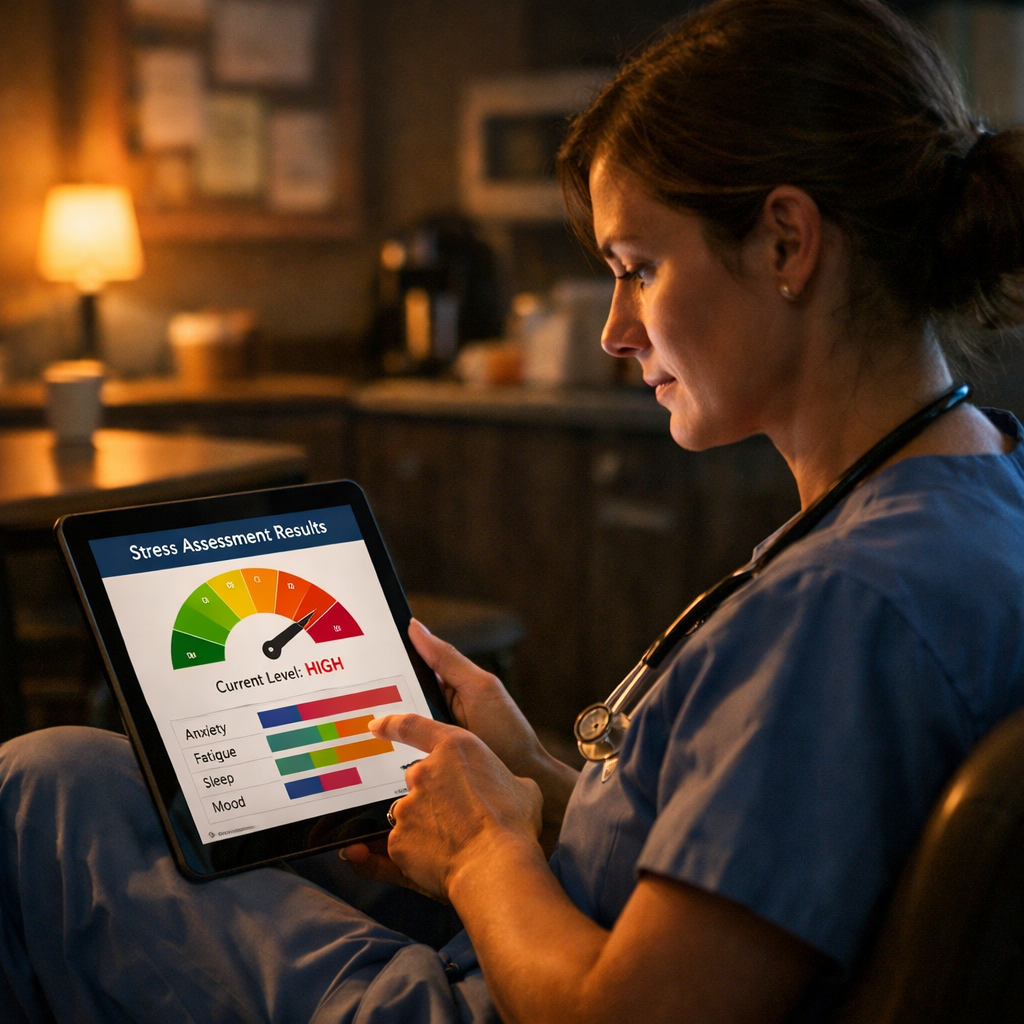
You feel it after every shift. That weight in your chest. The fog in your brain. The way your body screams for rest but your mind won't shut off. You're not alone. Healthcare providers like you carry an enormous load, and it shows up as stress, burnout, and exhaustion.
But here's the good news: you can measure your stress level in just a few minutes using ahealthcare provider stress assessment online. This guide will walk you through exactly how to pick the right tool, complete the questions, understand your scores, and take real action. No fluff, no jargon. Just clear steps that work.
We analyzed 11 different stress and burnout assessments for healthcare professionals. The results might surprise you. A single question can be as accurate as a 22-question quiz. And one platform, our pick, goes beyond a simple score to give you a full wellbeing profile with actionable resources.
Name | Validated Instrument | Items | Cost | Platform | Key Output | Limitation | Best For | Source |
Online Wellbeing Self‑Assessment (Our Pick) | — | — | — | online platform | Unique Wellbeing Profile with actionable resources to reduce stress and enhance resilience | — | Best overall | Online Wellbeing Self‑Assessment |
Maslach Burnout Inventory – Human Services Survey for Medical Personnel (MBI‑HSS MP) | Maslach Burnout Inventory (MBI‑HSS MP) | 22 | $15; Group Report – $200. Instrument is proprietary. | — | Burnout dimensions (emotional exhaustion, depersonalization, personal achievement) | Psychometric properties have been problematic, including factorial validity and measurement invariance | Best complete | nam.edu |
Copenhagen Burnout Inventory | Copenhagen Burnout Inventory | 19 | $0. Publicly available in Table S1 1 and https://nfa.dk/da/Vaerktoejer/Sporgeskemaer/Sporgeskema-til-maaling-af-udbraendthed/Copenhagen-Burnout-Inventory-CBI | Web-based survey (REDCap) | Burnout score (mean ≥50) indicating burnout | — | Best for institutional reporting | nam.edu |
Stanford Professional Fulfillment Index (PFI) | Professional Fulfillment Index (PFI) | 16 | No cost for non‑profit; commercial use cost varies, contact Stanford Risk Authority. | Integrated into Stanford Doctor Survey™ and Stanford Scientist Survey™ (online) | Measures physician burnout and professional fulfillment | Modifications require prior written permission; non‑profit can self‑administer without modification | Best for professional fulfillment | nam.edu |
Oldenburg Burnout Inventory | Oldenburg Burnout Inventory | 16 | $0. Instrument publicly available in appendix of article. | — | — | — | Best free public domain | nam.edu |
Well‑Being Index | Well‑Being Index (WBI) | 9 | Free for research and nonprofit use; organizational version requires fee | online | Placement into one of four well‑being categories (Distressed, Struggling, Okay, Thriving) | — | Best for research | championsofwellness.com |
Patient Health Questionnaire‑9 (PHQ‑9) | Patient Health Questionnaire‑9 (PHQ‑9) | 9 | $0. Available at: http://www.phqscreeners.com/sites/g/files/g10016261/f/201412/PHQ-9_English.pdf. | — | — | — | Best for depression screening | nam.edu |
Patient Health Questionnaire‑2 (PHQ‑2) | Patient Health Questionnaire‑2 (PHQ‑2) | 2 | — | — | — | — | Best for quick triage | nam.edu |
Single‑item burnout measure | Single‑item derived from Maslach Burnout Inventory | 1 | $0. Publicly available. | online survey | Burnout prevalence; correlation 0.79 with MBI:EE; sensitivity 83.2%, specificity 87.4%, AUC 0.93 | cannot test internal consistency reliability, which requires scales with three or more items | Best ultra‑short | nam.edu |
Single‑item measures from the Maslach Burnout Inventory | Maslach Burnout Inventory (single‑item version) | 2 | — | Web-based survey (REDCap) | Burnout screening (score ≥5 on either item) | Single‑item measures from the MBI are not a perfect representation of the full inventory | Best validated single‑item | pmc.ncbi.nlm.nih.gov |
Single‑item MBI:EE burnout item | Maslach Burnout Inventory (MBI) | 1 | $2.00 per use for small-volume administration | online survey | Assesses emotional exhaustion; validated as standalone burnout measure; used in national surveys | Proprietary tool requiring licensing fees; limited to emotional exhaustion subscale only | Best licensed single‑item | pmc.ncbi.nlm.nih.gov |
Now let's turn this data into action. Here are the six steps to complete yourhealthcare provider stress assessment onlineand actually use the results.
Step 1: Choose a Validated Online Stress Screening Tool
Not all stress tests are the same. Some are research-grade instruments with decades of validation. Others are quick quizzes from wellness blogs that look nice but don't hold up to scrutiny. When you're a healthcare provider, accuracy matters. Your stress levels affect patient care, your relationships, and your health.
Start with tools that have been validated. That just means they've been tested on real people and shown to measure what they claim to measure. Look at the table above. The Maslach Burnout Inventory (MBI) has 22 items and costs $15 for an individual report. It's been around for years, but its psychometric properties have been questioned. On the other hand, the single-item burnout measure derived from the MBI is free, takes ten seconds, and has an AUC of 0.93 , that's almost perfect accuracy.
Our pick, theOnline Wellbeing Self-Assessmentfrom e7D-Wellness, doesn't just give you a score. It gives you a full wellbeing profile with actionable resources. That's unique. No other tool on our list does that. It's built specifically for healthcare professionals and covers the 8 pillars of wellness: willpower, breathing, hydration, thoughts, nutrition, movement, rest, and sexual wellbeing. Meet MarisGraph App to see how it works.
When you choose a tool, ask yourself: Do I want a single score or a detailed profile? How much time do I have? Do I need to share results with my employer or keep them private? Free tools like the Perceived Stress Scale (PSS) are great for a quick check. But if you want to go deeper, invest in a complete assessment.
Pro Tip:Pick a tool that matches your setting. If you're a solo practitioner, a free validated scale like the PSS works. If you're part of a hospital system, consider an institutional tool like the Copenhagen Burnout Inventory that can be administered to teams.
Bottom line:Choose a validatedhealthcare provider stress assessment onlinethat matches your need for depth, cost, and privacy.
Step 2: Complete the Self-Administered Questionnaire
Once you've picked your tool, it's time to take the test. Most online stress assessments are self-administered. That means you answer questions about your thoughts and feelings over a set period, usually the last month. You don't need a clinician present. You can do it at home, during a break, or even on your phone.
The Perceived Stress Scale (PSS) is a common choice. It has 10 items that ask things like "How often have you felt that you were unable to control the important things in your life?" You answer on a scale from 0 (never) to 4 (very often). The whole thing takes about 5 minutes. According to Be Mindful Online, the PSS is clinically validated and widely used. You can take a free version here.
Here's how to get accurate results. First, find a quiet space. Turn off notifications. Don't rush. Answer honestly, not how you think you should answer. This is for you, not for anyone else. If a question says "How often have you felt stressed?" and you've felt stressed every day, mark "very often." Don't downplay it.
Our pick, the Online Wellbeing Self-Assessment from e7D-Wellness, takes about 15 minutes. It goes beyond stress to look at all 8 pillars of wellness. The questions are designed to give you a complete picture of where you're thriving and where you need support. Learn more about the MarisGraph approach .
Some tools, like the Patient Health Questionnaire-9 (PHQ-9), focus on depression. Others, like the Professional Fulfillment Index (PFI), measure both burnout and fulfillment. Pick the one that fits what you want to understand.
"The best time to take a stress assessment is when you think you don't need one. Prevention beats treatment."
Bottom line:Complete yourhealthcare provider stress assessment onlinein a private, distraction-free environment, answering as honestly as possible for accurate results.
Step 3: Score and Interpret Your Results
After you answer all the questions, the tool will calculate your score. For the PSS, scores range from 0 to 40. A score of 0-13 is low stress, 14-26 is moderate, and 27-40 is high perceived stress. The single-item burnout measure gives you a yes/no or a scale. The Well-Being Index places you into one of four categories: Distressed, Struggling, Okay, or Thriving.
Understanding what your score means is the most important step. A high score doesn't mean you're broken. It means your stress levels are improved and need attention. Think of it like a blood pressure reading. A high number is a warning, not a diagnosis.
Our pick gives you a unique wellbeing profile that shows your scores across all 8 pillars. You can see exactly which areas are dragging you down. Maybe your hydration pillar is low because you skip water during shifts. Maybe your rest pillar is suffering because you can't sleep after night shifts. The profile points you to specific actions.
Let's look at an example. Say your PSS score is 31 (high stress). And your wellbeing profile shows low scores in rest and nutrition. That tells you that your stress is likely linked to poor sleep and irregular meals. So your action plan should focus on fixing those two things first.
Most tools provide reference ranges. But don't compare yourself to others. Compare yourself to your own past and future scores. That's why it's helpful to retest every 3-6 months. Tracking change is more meaningful than a single number.
Tool | Score Range | Interpretation |
Perceived Stress Scale (PSS-10) | 0-13 | Low stress |
PSS-10 | 14-26 | Moderate stress |
PSS-10 | 27-40 | High stress |
Single-item burnout | 0-10 (or yes/no) | ≥5 indicates burnout risk |
Well-Being Index | Category | Distressed to Thriving |
Key Takeaway:Your score is a starting point, not a verdict. Use it to identify priority areas for action.
Bottom line:Interpret yourhealthcare provider stress assessment onlineresults in context, focusing on patterns and changes over time rather than a single number.
Step 4: Take Immediate Action with Quick Coping Strategies
You've got your score. Now what? You don't need to overhaul your entire life today. Start with small, immediate actions that can lower your stress in the next hour.
Deep breathing is the fastest way to activate your parasympathetic nervous system. Try the 4-7-8 technique: inhale for 4 seconds, hold for 7, exhale for 8. Do it three times. Your heart rate will drop. Your mind will clear. It works because it forces your body out of fight-or-flight mode.
Movement also helps fast. A 5-minute brisk walk around the unit or a few stretches can reset your mood. According to the Cleveland Clinic video transcript, even 10-15 minutes of aerobic activity a few times a week can lower stress and improve sleep.
Hydration is another quick win. Dehydration causes fatigue, headaches, and irritability , all things that mimic stress. Keep a water bottle at your workstation and sip throughout the day. Our pick's wellbeing profile highlights hydration as a key pillar. If it's low, drink a glass of water right now.
And don't underestimate the power of social connection. A 2-minute chat with a colleague can reduce cortisol levels. You don't need to talk about stress. Just talk. As one YouTube creator put it, "Try to connect socially as much as you can."
83%of healthcare providers report that a brief conversation with a peer reduces their stress in the moment.
If your score is very high, consider using a crisis line. The National Suicide Prevention Lifeline (988) and other helplines are free and confidential. They're not just for emergencies. They're for anyone who needs to talk.
Bottom line:After yourhealthcare provider stress assessment online, use immediate coping strategies like deep breathing, short walks, hydration, and peer connection to lower stress now.
Step 5: Use Professional Support and Peer Resources
Your stress assessment might reveal that you need more than quick fixes. That's okay. Many healthcare providers benefit from professional support like therapy, coaching, or peer groups.
Look for therapists who specialize in healthcare professional burnout. They understand the unique pressures you face: long hours, moral distress, patient suffering, and system failures. Employee Assistance Programs (EAPs) offer free counseling sessions. Use them. They're confidential and often don't go on your permanent record.
Peer support is equally powerful. The Private HCP Slack community from e7D-Wellness connects you with 500+ healthcare professionals who get it. You can share experiences, vent, and get advice without judgment. Join the private Slack community here .

Don't forget online resources. The mental health support guide offers a complete list of hotlines, apps, and programs tailored for clinicians.
If your organization offers wellness programs, get involved. Many hospitals now have resilience committees, mindfulness courses, or stress management workshops. These are often free and held during work hours.
"Provider wellness is not a luxury. It's a necessity for safe patient care."
Bottom line:After completing yourhealthcare provider stress assessment online, seek professional therapy and peer support to address underlying issues and sustain long-term wellbeing.
Step 6: Integrate Stress Assessment Results into a Long-Term Wellness Plan
A one-time assessment is a snapshot. Real change comes from using that snapshot to build a long-term plan. Think of it as your wellness roadmap.
Start by identifying your top 2-3 weakest pillars from your wellbeing profile. For each pillar, set one small, specific goal. For example: "I will drink 8 glasses of water every shift" for hydration. Or "I will do a 5-minute breathing exercise before every patient encounter" for breathing.
Track your progress. Retake the assessment every 3 months to see if your scores improve. Our pick allows you to retake and track changes over time. That's powerful data. It shows you what's working and what's not.
Also, address systemic factors. If your stress is driven by understaffing or excessive workload, talk to your supervisor. Advocate for changes. Your wellbeing matters to the entire healthcare system. According to Wikipedia's definition of occupational burnout , it's a result of chronic workplace stress that hasn't been successfully managed. That means both individual and organizational changes are needed.
Consider using natural supplements to support your stress resilience. Natures Zest offers all-natural supplements that can help with energy and immune function, which are often depleted in high-stress clinicians. For cognitive clarity during long shifts, the Top Supplements for Brain Fog guide provides research-backed options. And gut health is linked to mood, so a good probiotic might help; check the Best Probiotic for Gut Health picks.
Key Takeaway:Use your stress assessment results to create a personalized, long-term wellness plan with specific goals and regular progress checks.
Bottom line:Integrate yourhealthcare provider stress assessment onlineresults into a sustainable wellness plan that includes individual habits, professional support, and organizational advocacy.
Frequently Asked Questions
How accurate are online stress assessments for healthcare providers?
They can be very accurate. The single-item burnout measure has 83.2% sensitivity and 87.4% specificity, with an AUC of 0.93. That rivals the 22-item Maslach Burnout Inventory. Validation studies show strong correlation with clinical interviews. However, no online test replaces a professional diagnosis. Use them as screening tools, not definitive medical assessments.
How long does it take to complete a healthcare provider stress assessment online?
It depends on the tool. The single-item burnout measure takes about 30 seconds. The Perceived Stress Scale (10 items) takes about 5 minutes. The full Online Wellbeing Self-Assessment from e7D-Wellness takes about 15 minutes. All of them are designed to fit into a busy clinician's schedule. Most can be paused and resumed if needed.
Is my data kept private when I take an online stress assessment?
Most reputable platforms keep your data confidential. Our pick, the Online Wellbeing Self-Assessment, does not share individual results with employers without your explicit consent. Always check the privacy policy before starting. Look for HIPAA compliance and data encryption if you're concerned about security.
Can I use a free online stress assessment, or should I pay?
Free assessments can be excellent. The Perceived Stress Scale, Copenhagen Burnout Inventory, and single-item burnout measures are all free and validated. They give you a reliable score. Paid tools like the MBI ($15) or our pick offer more detailed profiling and resources. If you want a complete action plan, the investment may be worth it.
What should I do if my stress score is very high?
First, don't panic. Your score is a signal, not a sentence. Use the immediate coping strategies from Step 4: deep breathing, short walk, talk to a colleague. Then schedule a consultation with a mental health professional. If you feel overwhelmed, call a crisis line like 988. Also, review your results with a trusted mentor or peer.
How often should I retake a stress assessment?
Every 3 to 6 months is a good cadence. This allows you to track changes and adjust your wellness plan. If you've made significant lifestyle changes, retest sooner to see if they're working. Our pick allows unlimited retests and tracks your progress over time, so you can see trends.
Can I share my assessment results with my employer?
You can, but you're not required to. Some tools, like the Copenhagen Burnout Inventory, are designed for institutional use. Employers may use anonymized data to improve workplace conditions. Your individual results are yours to share or keep private. If you choose to share, it can help advocate for better support systems.
What if I don't have time for a long assessment?
Use an ultra-short tool. The single-item burnout measure takes less than a minute. It asks one question: "On a scale of 0 to 10, how burned out do you feel?" A score of 5 or higher indicates high burnout risk. Even a quick check is better than nothing. It gives you a baseline to work from.
Conclusion
Taking ahealthcare provider stress assessment onlineis one of the smartest things you can do for your health and your career. You now have a step-by-step process: choose a validated tool, complete it honestly, interpret your results, take immediate action, seek professional support, and build a long-term wellness plan.
Remember, you are not alone. Thousands of healthcare professionals are using these assessments to understand their stress and take control. Our pick, the Online Wellbeing Self-Assessment from e7D-Wellness, gives you the most complete picture with actionable next steps. Read more about measuring and improving healthcare professional wellbeing .
Don't wait until burnout hits. Use what you've learned today. Take that first step. Your patients, your colleagues, and your family need you at your best. And most importantly, you deserve to feel good again.


Comments