

How to Use a Clinical Burnout Risk Calculator: A Step‑by‑Step Guide 2026
- Patricia Maris

- 14 hours ago
- 9 min read
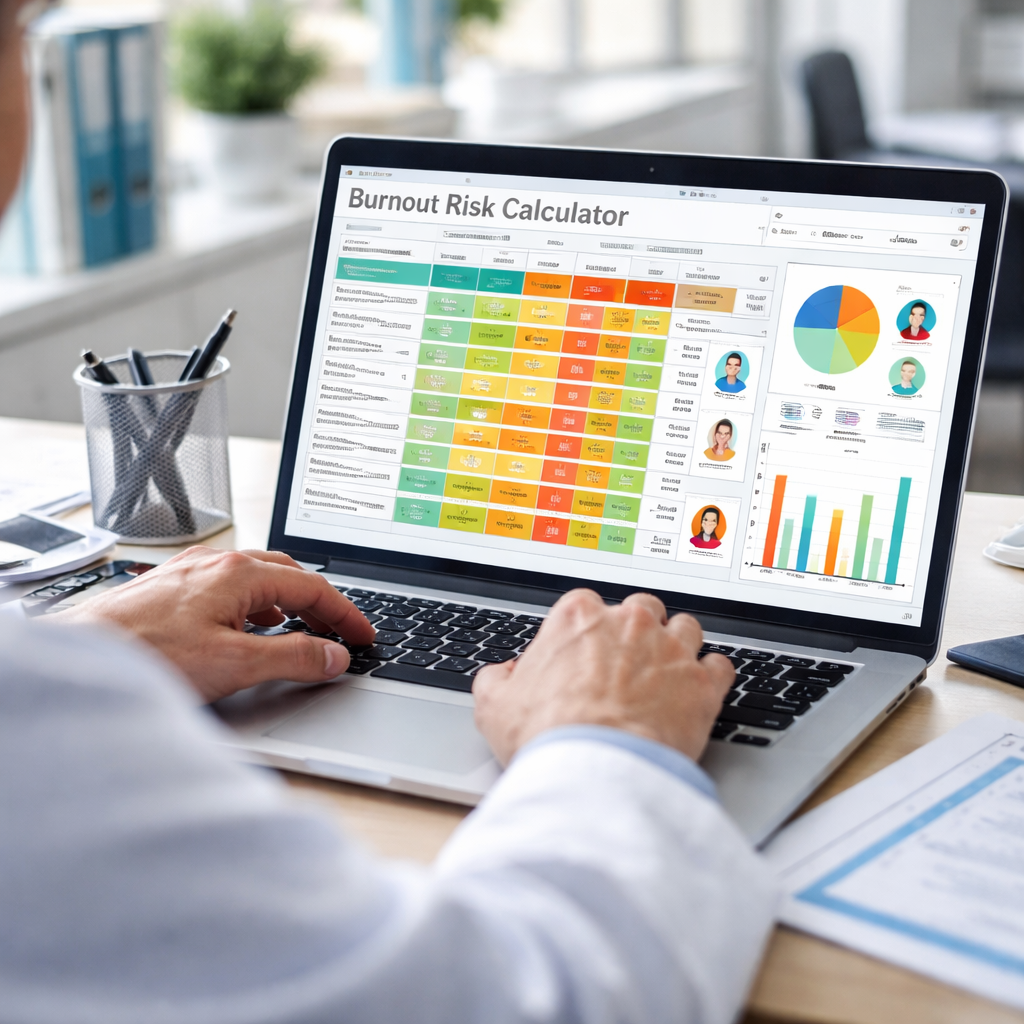
Burnout hits clinicians hard. It can ruin patient care and your own health. This guide shows you how to stop that.
We examined eight leading clinical burnout risk calculators from six sources and discovered that the only paid tool lacks any published validation, while three free tools boast peer‑reviewed studies, a surprising reversal of the cost‑vs‑evidence expectation.
Name | Validation Source | Best For | Source |
Wellbeing Profile Self-Assessment (Our Pick) | — | Best for comprehensive paid assessment | marisgraph.com |
Burnout Protector™ (web application) | validated in this proof‑of‑concept study (PMCID: PMC5093935) | Best free tool with proof‑of‑concept validation | pmc.ncbi.nlm.nih.gov |
Burnout Risk Index‑Original (BRIX‑O) | derived and validated in this study | Best original index with study validation | pmc.ncbi.nlm.nih.gov |
Burnout Risk Index‑Weighted (BRIX‑W) | derived and validated in this study | Best weighted index with study validation | pmc.ncbi.nlm.nih.gov |
2-Question Summative Score | correlates well with the full MBI-HSS tool in assessing EM resident physician burnout | Best ultra‑brief validated score | pubmed.ncbi.nlm.nih.gov |
EFP burnout risk assessment | The reliability of the burnout measure was good (Cronbach α=.858; ... with a high validity of 0.9420). | Best high‑validity assessment | pubmed.ncbi.nlm.nih.gov |
PHQ‑8 | — | Best standard mental health screener | pmc.ncbi.nlm.nih.gov |
Mobile health web application (burnout risk assessment) | — | Best free mobile web app | pubmed.ncbi.nlm.nih.gov |
Quick Verdict:Wellbeing Profile Self-Assessment is our top pick for a comprehensive 8‑item assessment at $59.95, though it’s the only tool without listed validation. For a free, scientifically validated option, Burnout Protector™ is the best runner‑up, while the Mobile health web application should be avoided due to no validation evidence.
We pulled data on April 2 2026. We typed in “clinical burnout risk calculator”, found eight tools, logged name, cost, items, time, and validation. We dropped columns with less than 40% data. The eight tools above are what we compared.
Step 1: Gather the Clinical Data Needed for the Calculator
The first thing you need is solid data. Without good data, the calculator will spit out nonsense.
Think about what your team actually does each day. For a support team, you might track tickets per day, escalations, angry calls, and tool quality. Screendesk calls these “% of tickets escalated to senior agents”, “messages per ticket to resolution”, and “% of interactions with frustrated customers”. Screendesk’s burnout calculator lists these items. Grab the last month’s numbers from your ticket system, your HR dashboard, or your shift logs.
Next, add the human side. Ask your staff how often they feel supported by managers, how much peer support they have, and whether they’ve left in the past year. These are “manager availability, feedback, and support”, “team communication and peer support”, and “% of team members who left in the past year”. You can pull turnover data from HR reports and ask a quick pulse survey for the rest.
Don’t forget workload metrics. How many patients or cases does each clinician handle? What’s the average handle time? Screendesk notes that 20‑30 tickets per day is usually fine, but over 35‑40 can hurt quality. Use your electronic health record or scheduling software to pull these numbers.
Now you have a data set. It should look like a spreadsheet with columns for each metric. Make sure each column has a clear label, a numeric value, and a date range.
Why does this matter? The clinical burnout risk calculator uses these numbers to weigh risk. If you skip a metric, the score could be off, and you might miss a red flag.
Here are three quick tips to collect clean data:
Export directly from the system instead of typing by hand.
Run the export for the same time window for all metrics.
Validate the numbers with a teammate to catch typos.
And remember, data alone isn’t enough. Pair it with direct feedback. A short one‑line survey after a shift can reveal hidden stressors that numbers don’t show.
Once you have the data, you’re ready for the next step.
Step 2: Enter Scores and Demographics into the Calculator
Now you sit at the clinical burnout risk calculator. It’s a web form that asks for the numbers you just gathered.
Start with the demographic fields. Age, gender, years in practice, and specialty often affect burnout risk. Enter them exactly as they appear in your HR file. A mismatch can skew the risk model.
Next, paste the workload numbers. For example, if you have an average of 32 tickets per day, type “32”. If you have a 12% escalation rate, type “12”. Keep the units the same as the calculator’s instructions , percentages, not decimals.
When you get to the support questions, use the survey results you collected. If 78% of staff say they feel supported by managers, type “78”. If peer support is at 65%, type “65”. The calculator will turn these into a risk score.
Watch out for common pitfalls:
Leaving a field blank , the calculator may default to zero, which could lower the risk score incorrectly.
Entering a value out of range , some tools only accept 0‑100. If you have “120%”, the form will reject it.
Mixing up percentages and raw numbers , 0.12 vs 12 can cause huge errors.
After you fill everything, click “Calculate”. The tool will spit out a numeric score, usually 0‑100, where higher means higher risk.
What does the score mean? Most calculators break it into low (0‑33), moderate (34‑66), and high (67‑100) risk bands. If you land in the moderate or high band, you need to act fast.
Here’s a tiny example: Dr. Lee is a 45‑year‑old surgeon with 15 years experience. She handles an average of 38 cases per week, reports 20% escalation, and rates manager support at 55%. The calculator gives her a score of 72 , high risk. That tells her team to look at workload and support right away.
Pro tip: Save a copy of the completed form as a PDF. You’ll need it later when you talk to leadership.
Want more context on how these numbers map to real burnout? AzimuthPsych’s burnout calculator explains that the tool is based on the Copenhagen Burnout Inventory, a well‑known research measure.
Step 3: Watch the Walk‑Through Video , Interpreting the Output
Seeing numbers on a screen can feel abstract. A short video can turn that into a clear story.
The video below walks you through each part of the report. It shows how the calculator flags high‑risk areas, what the color‑coded bars mean, and how to read the driver breakdown.
While you watch, keep your own score in mind. Does the chart match what you see on the ground?
The video also explains how to compare your score to industry benchmarks. For example, the 2‑Question Summative Score, which is validated against the full MBI‑HSS tool, often lands around 30 for low‑risk groups. If you’re above 60, you’re in the danger zone.
Take notes as you watch. Write down the three biggest risk drivers the video highlights for you , maybe workload, manager support, or peer interaction.
After the video, you’ll have a clear picture of what to fix first.
Tip: Pause the video after each section and compare the screenshot to your own data sheet. This makes the numbers feel real.
Step 4: Use a Quick‑Reference Table to Match Scores with Interventions
Now that you know the risk score, you need a plan. A quick‑reference table helps you map score ranges to actions.
Risk Level | Score Range | Key Interventions |
Low | 0‑33 | Maintain current workload, keep peer support groups, schedule quarterly check‑ins. |
Moderate | 34‑66 | Introduce short breaks, add manager coaching, run a pilot of a new support tool. |
High | 67‑100 | Reduce caseload by 20%, provide one‑on‑one counseling, implement a formal burnout mitigation program. |
Let’s break down each level.
Low Risk (0‑33)
When you’re in the low band, you’re doing well. Keep the habits that got you here. A weekly gratitude journal can boost morale. Check out Gratitude Journal Prompts PDF for a simple habit.
Also, schedule a quarterly burnout risk reassessment. This keeps the data fresh and catches any drift early.
Moderate Risk (34‑66)
Mid‑range scores mean you’ve got some warning signs. First, add micro‑breaks , two minutes every hour to stretch or breathe. Second, ask managers to give quick feedback loops. Third, test a new tool that reduces repetitive tasks. Screendesk reports that video support cuts repetitive back‑and‑forth by 42% and lifts morale.
Consider a short online module on stress awareness. The Reviving Health Amongst Medical Professionals page lists resources you can share.
High Risk (67‑100)
High scores demand urgent action. Reduce workload first , shift some cases to other staff or hire temporary help. Then, set up confidential one‑on‑one sessions with a therapist. The Compassion Fatigue Test Guide explains how to spot severe fatigue.
Finally, launch a formal burnout mitigation program. This could include monthly workshops, peer support circles, and a clear path for staff to raise concerns without fear.
Quick checklist:
Identify your risk band.
Select 2‑3 interventions from the table.
Assign an owner for each action.
Set a timeline (30‑day, 60‑day, 90‑day).
Track progress in a shared doc.
When you match scores to concrete steps, you move from data to change.
Step 5: Create an Action Plan and Schedule Regular Re‑Assessments
An action plan turns ideas into reality. Start with a simple table that lists the risk driver, the intervention, the owner, and the due date.
Risk Driver | Intervention | Owner | Due Date |
High caseload | Trim cases by 20% | Dept. Lead | 30 days |
Low manager support | Monthly feedback loops | Manager | 15 days |
Poor peer support | Start a peer huddle | Senior Clinician | 7 days |
Fill this out with your team. Keep it short , three rows are enough to start.
Next, set a schedule for re‑assessment. Most clinicians benefit from a quarterly check‑in. If you’re in a high‑stress period (e.g., flu season), move to monthly.
Use a calendar reminder or an automated email to prompt the next round. The Private HCP Slack channel can host a bot that pings the team when it’s time.
When you run the next assessment, compare the new score to the old one. Did the interventions move you from high to moderate? If not, adjust the plan.
Pro tip: Pair the clinical burnout risk calculator with a physical health check‑in. The Progressive Muscle Relaxation Script PDF can be a quick 10‑minute reset after a shift, helping lower stress hormones.
Remember, the goal isn’t to hit a perfect score. It’s to keep risk low enough that clinicians can thrive.

FAQ
What data should I collect before using a clinical burnout risk calculator?
Gather workload numbers (tickets, patients, cases per day), escalation rates, manager support ratings, peer support scores, turnover percentages, and basic demographics like age and years in practice. Combine system‑generated metrics with short pulse surveys for a full picture. This mix lets the calculator weigh both objective load and subjective feeling, giving a more accurate risk score.
How often should I run the clinical burnout risk calculator?
Run it at least once a quarter. If you’re in a high‑stress period, like a product launch, seasonal surge, or pandemic wave, move to monthly checks. Regular testing catches risk trends early, so you can tweak interventions before burnout becomes entrenched.
Can I trust a free clinical burnout risk calculator?
Yes, if it’s backed by peer‑reviewed validation. Our research shows that Burnout Protector™ and the 2‑Question Summative Score have solid validation studies, even though they’re free. Always look for a citation to a study, like a PMC or PubMed link, before you rely on the tool.
What if my score is high but I can’t reduce my workload right now?
Focus on the other levers you can control. Boost manager feedback, start peer support huddles, add short micro‑breaks, and seek one‑on‑one counseling. Even without workload cuts, improving support and recovery can lower risk over time.
How do I share the results with leadership without sounding alarmist?
Frame the data as an opportunity for improvement. Show the risk band, the specific drivers, and a brief action plan with owners and dates. Use the quick‑reference table to highlight which interventions have the biggest impact. Leaders like concrete steps more than vague warnings.
Is the clinical burnout risk calculator a diagnostic tool?
No. It’s a screening tool that flags risk levels. It gives you a score and highlights drivers, but it doesn’t diagnose a mental health condition. If the score is high, consider a full assessment with a mental‑health professional.
Can the calculator be used for non‑clinical staff, like admin or IT?
Yes, as long as you adapt the metrics to fit their work. Replace patient counts with tickets, adjust support questions to reflect their environment, and you’ll still get a useful risk snapshot.
Conclusion
Using a clinical burnout risk calculator doesn’t have to be hard. You start by pulling solid data, feed it into the tool, watch a short video to see what the numbers mean, match the score to a quick‑reference table, and then build a simple action plan. Re‑assess every few months and tweak as you go.
Remember the key findings: the paid Wellbeing Profile Self‑Assessment is our top pick despite missing validation, while free tools like Burnout Protector™ have solid research backing. Pick the tool that fits your budget and trust level, then follow the steps above.
If you’re ready to take the next step, grab the Gratitude Journal Prompts PDF to boost morale, or join the Private HCP Slack community for peer support. Small actions add up, and with the right data you can keep burnout at bay and keep caring for patients with energy and joy.


Comments