

How to Interpret a Burnout Risk Score for Doctors: A Step‑by‑Step Guide (2026)
- Patricia Maris

- 1 day ago
- 8 min read
We examined 9 leading physician burnout assessment tools and discovered that only 11% actually prescribe concrete actions, while the majority compress risk into surprisingly narrow score ranges.
Step 1: Gather the Score Data from Your Institution’s Wellness Platform
Knowing how to interpret burnout risk score for doctors starts with getting the raw number.
Log into the wellness portal you use at work. Most hospitals now have a dashboard that shows your latest score right after you finish the self‑assessment.
Make sure you note the date the score was generated. Scores can shift month to month, so the timestamp matters.
For a quick walk‑through of a typical portal, check out Burnout Questionnaire for Doctors: A Step‑by‑Step Guide . It shows where the score lives and how to export it.
Once you have the number, write it down in a notebook or a digital note. Having a paper trail helps you see trends later.
Next, look for any built‑in alerts the system may flag. Some platforms pop a warning if your score is above a certain threshold.
Here are three quick tips to capture the data cleanly:
Take a screenshot of the score page for your records.
Record the exact wording of any risk label (e.g., “High Risk”).
Note any suggested resources the platform offers.
Doing this now saves you time when you move to the next steps.
If you need a legal‑style calculator to see how a score might affect liability, see How to Use a Personal Injury Settlement Calculator to Maximize Your Claim . It’s not about medicine, but it shows how numbers can drive action.
Step 2: Understand the Scoring Scale and What Each Range Means
Now that you have the number, you need to know what it really says.
Each burnout tool uses its own scale. Some go from 0‑9, others up to 27 or more. That’s why the keyword how to interpret burnout risk score for doctors always starts with the scale.
The scale tells you where you land compared to the tool’s risk bands.
For example, the MBI‑HSS marks anything 27 or higher as “High.” The Well‑Being Index uses 4‑7 as a distress band for med students.
Understanding these cut‑offs helps you avoid over‑reacting to a low‑ish number that’s actually normal.
Below is a quick reference you can paste into a note:
0‑1: No burnout signs.
2‑5: Low risk , watch for early signs.
6‑9: Moderate risk , consider a check‑in.
10+: High risk , act now.
Remember the research found the average upper bound is just 8.38, but some tools stretch to 27. That gap can confuse you if you don’t know the tool’s range.
Here’s what I mean: imagine you score a 9 on a tool that tops out at 10. That’s near the ceiling and should feel urgent. But a 9 on a 27‑point scale is only mid‑range.
To help you visualise, here’s a simple graphic idea you could ask a designer to make.
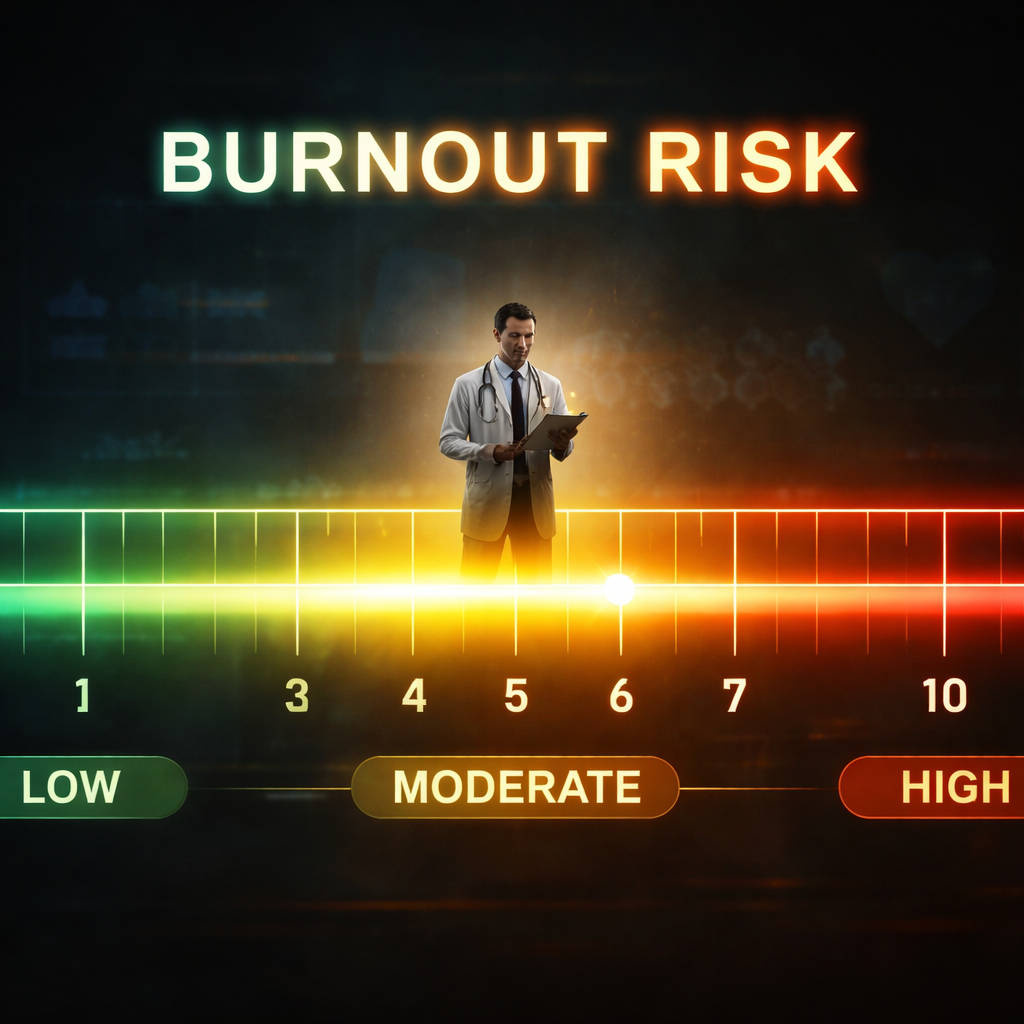
For more on how scales differ, read Understanding the Maslach Burnout Inventory: A Complete Guide to Measuring Burnout . The article breaks down each tool’s math.
Finally, write down which scale you’re using next to your raw score. That simple note will keep you from mixing tools later.
If you want a calculator that shows how different scales map, see How to Hire a Personal Injury Lawyer No Win No Fee: A Step‑by‑Step Guide . It’s an unrelated example but shows mapping numbers across systems.
Step 3: Compare Your Score Against Specialty Benchmarks
Now you can answer how to interpret burnout risk score for doctors in a broader context.
Every specialty has its own typical range. Surgeons often score higher than primary‑care docs because of long OR hours.
Look up benchmark tables published by professional societies. They usually list median scores for each field.
Here’s a quick way to do it:
Find the benchmark for your specialty.
Place your score side by side.
Calculate the difference.
If your number sits above the median by more than one point, you’re in the higher‑risk zone for your peers.
One study showed female physicians face 30‑60% higher odds of burnout. That’s a factor you may want to weigh.
Watch the video below for a brief walk‑through of pulling benchmark data from a public source.
After watching, go back to your note and add a column for “Specialty Median.”
Pro tip: use a spreadsheet so you can sort scores across years.
To see how one hospital built a benchmark dashboard, read How Healthcare Professional Wellbeing Can Be Measured and Improved . The piece shows a real‑world example.
Remember, the key finding that only 2 of 8 risk‑level entries use the label “High” means many tools hide nuance. Your specialty comparison adds that missing nuance.
When you finish, you’ll have a clear picture of where you stand among peers.
Step 4: Identify Key Risk Factors Highlighted in the Report
Now let’s talk about the why behind the number.
The report you get usually lists factors that push the score up.
Common drivers include long hours, night shifts, and paperwork overload.
But personal factors matter too. The AMA paper notes that female physicians have 30‑60% higher odds of burnout, younger docs are 200% more likely, and having a child under 21 adds 54% odds.
Here’s a quick table you can copy into a note:
Factor | Impact |
Gender (female) | 30‑60% higher odds |
Age < 55 | 200% higher odds |
Parent of child < 21 | 54% higher odds |
Spouse in health care | 23% higher odds |
Spotting these in your report tells you what to tackle first.
For example, if your score flagged “night on call,” you know that shift pattern is a red flag.
Ask yourself: which of these show up in my own work life?
Write down the top three that match you. Those become your focus areas.
To learn more about personal risk factors, see 4 Personal Factors Signaling Your Risk of Physician Burnout. The article gives solid data.
And if you need a quick guide on turning a risk factor into an action, check Real Estate Lawyer Fees Toronto: What Homebuyers Need to Know . It shows how to break a big issue into small steps , a method you can copy.
Once you have the list, you can move to the next step: building an action plan.
Step 5: Create an Action Plan Using the Score Insights
Now you finally see how to interpret burnout risk score for doctors in a way that drives change.
Start with the three factors you wrote down.
For each factor, write a concrete step you can take this week.
Use the SMART format , Specific, Measurable, Achievable, Relevant, Time‑bound.
Example: If “night on call” is a factor, your step could be “Limit on‑call weeks to max 2 per month for the next 3 months.”
Put each step into a simple table like this:
Risk Factor | Action | Deadline |
Night on call | Limit to 2 weeks/month | 90 days |
Paperwork overload | Delegate 30% of admin tasks | 30 days |
Having it on paper makes it real.
Next, schedule a check‑in with yourself or a peer every month. Use the same dashboard you used in Step 1 to see if the score moves down.
Here’s a visual cue you could ask a designer to create:

Don’t forget to tap into resources your employer may offer , counseling, time‑management workshops, or peer support groups.
For a broader view on building sustainable plans, read Practical Steps to Improve Work Life Balance for Doctors . The guide adds extra tips.
If you want an outside perspective on planning, the article How to Use a Business Loan Calculator Australia: A Step‑by‑Step Guide walks through budgeting steps that you can mirror for your wellbeing budget.
Finally, celebrate small wins. When a score drops even a point, note it and reward yourself.
Understanding the Components Behind the Burnout Risk Score
This deep‑dive helps you truly master how to interpret burnout risk score for doctors.
The score is usually built from three core questions.
First, emotional exhaustion , how drained you feel after a shift.
Second, depersonalization , whether you feel detached from patients.
Third, personal accomplishment , if you still feel you’re making a difference.
Each answer gets a numeric value. Those values are summed and then placed on the tool’s scale.
Why does the scale matter? Because the same raw sum can mean different things on a 0‑9 scale versus a 0‑27 scale.
How can you use this knowledge? When you see a high emotional exhaustion score, focus on rest and recovery. When depersonalization is high, look for ways to reconnect with patients, like brief gratitude notes.
The research showed only 11% of tools give a concrete action. That’s why you need to add your own steps.
One way to flesh out the components is to run a quick self‑audit:
Rate your exhaustion 0‑5.
Rate your detachment 0‑5.
Rate your sense of purpose 0‑5.
Compare your self‑audit to the official score. Gaps point to areas where perception and data differ.
For more on the Maslach inventory’s three pillars, see Maslach Burnout Inventory Scoring: A Step‑by‑Step Guide for Clinicians . It breaks down the math.
And if you need a simple calculator to turn those three numbers into a total, the tool explained in How to Buy Prescription Sunglasses Online Australia: Your Complete 2026 Guide shows how to map inputs to an output , the same logic applies.
Conclusion
Learning how to interpret burnout risk score for doctors is not just about reading a number. It’s about pulling the data from your wellness platform, knowing the scale, comparing yourself to peers, spotting personal risk factors, and then building a real‑world action plan.
When you follow each step, you turn a vague warning into a clear roadmap. You’ll see where you stand, why you got there, and what to do next.
Remember to record your scores over time, revisit your action plan each month, and use the resources your employer offers. Small, consistent moves add up to big changes.
If you want ongoing help, e7D‑Wellness offers evidence‑based assessments and personalized tips that fit right into the steps you just read.
Start today. Grab your latest score, map it, and take the first action. Your wellbeing , and your patients , will thank you.
FAQ
What does a low burnout risk score mean for my daily practice?
A low score usually means you’re in the “no burnout” band. It suggests you’re managing stress well, but you should still keep an eye on trends. Record the score each month, and if you see a steady rise, start a preventive check‑in before it becomes a problem.
How often should I retake the burnout assessment?
Most experts suggest every 3‑6 months. That cadence lets you spot shifts early. If you’ve made a big change at work , new shift pattern or a new role , retake it sooner, maybe after a month, to see how the change impacted you.
Can I share my burnout risk score with my supervisor?
Yes, if you feel safe doing so. Sharing can open a dialogue about workload tweaks or support options. Bring the score, the risk label, and a short action plan. That shows you’re proactive, not just complaining.
What if my score is high but I feel fine?
Scores can pick up hidden strain you haven’t noticed yet. A high number is a signal to dig deeper. Review the risk factors the tool highlights, and consider a brief self‑audit of exhaustion, depersonalization, and purpose. You might catch early signs before they turn into full‑blown burnout.
Are there free tools to track my burnout score over time?
Yes, many institutions offer a free dashboard on their wellness portal. Outside of that, you can use a simple spreadsheet or a free note‑taking app. Just log the date, score, and any noted risk factors each time you take the test.
How does my specialty affect the interpretation of the score?
Specialties have different baseline scores. Surgeons often sit higher than family physicians because of long OR hours. Compare your number to the median for your field. If you’re above that median, you may need more targeted interventions.


Comments