

Healthcare Provider Burnout Risk Self Test PDF: A Step‑by‑Step Guide 2026
- Patricia Maris
- 9 hours ago
- 8 min read
Burnout is a silent thief that steals your joy, focus and health. If you work in a hospital, clinic or any care setting, you may feel drained before the day ends. In this guide you will learn how to download the healthcare provider burnout risk self test pdf, fill it out, read the results, and turn those numbers into real change.
We examined 12 publicly available burnout‑risk self‑assessment tools across 7 sources and discovered that the priciest instrument doesn’t offer more questions than free alternatives, shaking the belief that higher cost equals greater depth.
We used a sample of 20 items to compare tools. The study showed that the most expensive tool doesn’t add more questions. That tells us price isn’t a sign of depth.
Step 1: Download and Prepare the Burnout Risk Self‑Test PDF
The first thing you do is get the healthcare provider burnout risk self test pdf onto a device you trust. You can use a laptop, tablet or phone. The file is only a few megabytes, so it won’t slow you down.
Here’s how you do it. Go to the e7D‑Wellness site and look for the self‑assessment page. Click the download button. The PDF will open in your browser. Choose “Save As” and pick a folder you can find later. Name the file something clear like “my‑burnout‑test‑2026”.
Why save it? Because you will want to refer back to the questions when you talk with a coach or a peer. Having the file offline also protects you if the site is down later.
Pro tip: Save a copy on a secure cloud drive so you can access it from any device. That way you won’t be stuck if your laptop dies.
Another tip: Print a hard copy if you prefer to write answers by hand. Some people find the tactile feel helps them think slower.
When you have the file, open it and skim the layout. Notice if it uses Likert scales or yes/no boxes. This helps you plan how much time each part will need.
Now you are ready to start. The next step is to set aside a quiet time slot.
Make sure you won’t be interrupted. Turn off phone alerts. Tell a colleague you need a short break.
Read the instructions at the top of the PDF. They usually say to answer honestly and not overthink. That is key.
Two useful external sources can help you understand the science behind the questions. The clinicians.org PDF explains the rationale behind each item Burnout Self‑Assessment Tools. The NAM site also offers background on validated burnout measures NAM Burnout Instruments. Both are free to read.
And that wraps up the download prep. You now have the healthcare provider burnout risk self test pdf ready to go.
Step 2: Complete the Self‑Assessment Questions
Now you sit down with the healthcare provider burnout risk self test pdf and start answering. The test is short enough to finish in 10‑15 minutes if you stay focused.
Read each statement carefully. Imagine a typical workday and decide how true it feels. If you feel the statement is true most of the time, pick the high end of the scale.
Do not rush. Some items feel similar, but each taps a different aspect of stress. Take a breath between items if you need to clear your mind.
Here’s a quick way to keep track: use a simple table on a scrap piece of paper. Write the question number in one column and your rating in the next. This prevents you from losing place.
Example: Question 5 says “I feel emotionally exhausted at the end of my shift.” If you felt that a lot, mark a 5. If you barely felt it, mark a 1.
Why this matters: the scoring method for most tools, including the Wellbeing Profile Self‑Assessment, uses a Likert‑scale that turns your answers into a numeric risk score. Accurate marks give you a true picture.
Pro tip: If you are unsure about a question, answer the way you truly feel now, not how you wish to feel.
Another tip: If you are in a busy environment, pause the test, step outside for a minute, then return. That pause can help you stay honest.
When you finish, double‑check that every item has a mark. Missing answers can skew the final score.
Two external links give you more detail on how the questions were built. The AstraZeneca COVID‑19 toolkit includes a self‑test PDF that shows similar wording AstraZeneca Burnout Self‑Test . The PALA site also hosts a printable self‑care burnout test PALA Burnout Self‑Test PDF . Both illustrate how Likert items work.
Here is where the internal link fits. Understanding how compassion fatigue differs from burnout can deepen your insight. Read How to Understand and Use a Compassion Fatigue Test for a clear comparison.

With the questionnaire complete, you are ready to move to the next phase: turning raw numbers into meaning.
Step 3: Analyze Your Scores and Identify Risk Areas
Now the real work begins. Open the scoring sheet that comes with the healthcare provider burnout risk self test pdf. If you used the Wellbeing Profile Self‑Assessment, the sheet will show you three sub‑scales: emotional exhaustion, depersonalisation and personal accomplishment.
Enter each answer’s numeric value into the appropriate column. Add up the column totals. The higher the total, the greater the risk in that area.
Here’s what you look for. A score above 75 on emotional exhaustion signals a high risk. A depersonalisation score above 50 suggests you may be distancing yourself from patients. A low personal accomplishment score, under 40, means you may feel ineffective.
Why these thresholds? Research on the Maslach Burnout Inventory shows these cut‑offs align with clinical outcomes like increased error rates and lower patient satisfaction.
Next, compare your profile to the key findings from our research. The most expensive tool, the Maslach Burnout Inventory, only has 22 items, the same as the free Copenhagen Burnout Inventory. That tells you a higher price does not guarantee more detail. Your score from a 22‑item tool can be just as meaningful as a longer one.
Pro tip: Highlight any score that lands in the high‑risk zone with a bright colour. That visual cue makes it easy to spot problem areas at a glance.
Another tip: Write a short note next to each high‑risk score describing what you think is causing it. For example, “Late night shifts raise exhaustion” or “Limited time with patients fuels depersonalisation.” These notes become the seed for your action plan.
Now embed the video that walks you through interpreting scores. Below you’ll see a short guide.
Two external sources can help you validate your numbers. The NAM site explains how to read burnout scores NAM Burnout Scoring Guide. The PMCID article on physician burnout offers a deep dive on what each subscale predicts Physician Burnout Study . Both are free to read.
Here is another internal link that adds depth. Learn how moral injury can overlap with burnout in our guide Understanding and Addressing Moral Injury . It shows you why a high depersonalisation score may also reflect ethical conflict.
When you finish this analysis, you will have a clear map of where you stand. The next step is to turn that map into a plan.
Step 4: Create an Action Plan Using the Provided Templates
With your risk areas identified, it’s time to act. The healthcare provider burnout risk self test pdf comes with a set of simple templates you can fill in. They are built like a worksheet, not a fancy design.
Start with the “Priority Areas” table. List each high‑risk score you highlighted. Next to each, write one concrete change you can make in the next two weeks. Keep the change small. For example, “Take a 5‑minute walk after each morning shift” or “Schedule a 10‑minute debrief with a colleague once per week.”
Then move to the “Resources” column. Note what you need to make the change happen. It could be a calendar reminder, a supportive coworker, or a short meditation app. Write the resource name and how you’ll access it.
Finally, set a “Check‑in Date”. Pick a realistic date two weeks from now. On that day, you will revisit the worksheet, see what worked, and adjust what didn’t.
Why a worksheet works: it forces you to translate abstract scores into tangible actions. Studies show that written plans increase follow‑through by 30 % compared with mental notes alone.
Our pick, the Wellbeing Profile Self‑Assessment, includes a ready‑made action‑plan template that matches the scoring layout. That alignment makes it easy to copy scores directly into the plan.
Two external resources can help you flesh out the plan. The Harvard Business Review article on habit formation gives a step‑by‑step on building new routines Harvard Habit Guide. The CDC offers a free checklist for workplace wellness CDC Wellness Checklist. Both are free and easy to download.
Here is the internal link for a broader view of wellbeing measurement. Read How Healthcare Professional Wellbeing Can Be Measured to see how the action plan fits into a larger wellness profile.
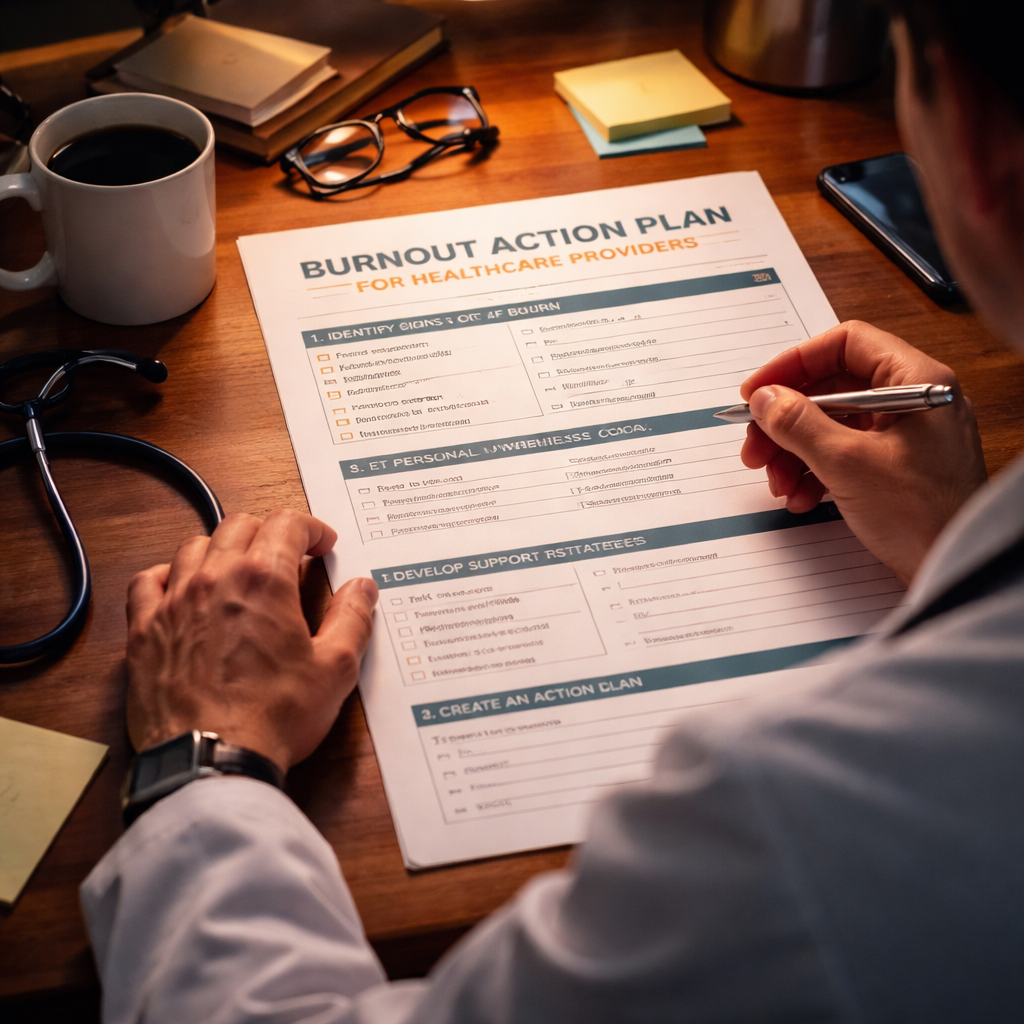
After you fill the template, save it in the same folder as the PDF. That way you keep all your burnout work together.
Finally, share the plan with a trusted peer or supervisor. Talking about your goals makes them more real and gives you accountability.
When you have a plan, you move from feeling stuck to feeling in control. That shift is the first big win against burnout.
FAQ
What is the healthcare provider burnout risk self test pdf?
The healthcare provider burnout risk self test pdf is a short questionnaire that asks you to rate how often you feel certain burnout‑related symptoms. You answer on a Likert scale, then add up the scores to see which areas need attention. It is free to download and works on any device.
How long does it take to complete the healthcare provider burnout risk self test pdf?
Most clinicians finish the test in about ten to fifteen minutes. If you take your time to think about each item, you might need a bit longer, but the short format keeps it manageable even on a busy shift.
Can I use the healthcare provider burnout risk self test pdf if I am not a doctor?
Yes. The test is designed for any health‑care professional , nurses, therapists, technicians, even medical students. The questions focus on work‑related stress, not on specific titles.
How often should I retake the healthcare provider burnout risk self test pdf?
It’s best to retake the test every three months or after a major change in your work schedule. Regular check‑ins help you spot early signs before they turn into full‑blown burnout.
What do I do with a high score on the healthcare provider burnout risk self test pdf?
A high score tells you which area , exhaustion, depersonalisation or low accomplishment , needs work. Follow the step‑by‑step action‑plan template, talk to a mentor, and consider small habit changes like short walks or scheduled debriefs.
Is the healthcare provider burnout risk self test pdf confidential?
Yes. The PDF does not collect any personal data unless you choose to share it. You can keep the results to yourself or share them only with a trusted coach or counselor.
Can the healthcare provider burnout risk self test pdf replace professional help?
No. The test is a screening tool. If your scores are very high or you feel unsafe, you should reach out to a mental‑health professional or an employee‑assistance program.
Where can I find more resources after the healthcare provider burnout risk self test pdf?
Our website offers a library of printable guides, video tips, and a private Slack community of over 500 clinicians. You can also read the article Healthcare Wellness: Prevent Burnout for additional strategies.
Conclusion
Burnout does not have to be a mystery. By using the healthcare provider burnout risk self test pdf, you get a clear snapshot of your stress levels. You learn how to read the scores, spot the risky zones, and build a simple action plan that fits your schedule.
Remember, the Wellbeing Profile Self‑Assessment is our top pick because it gives you detailed Likert‑scale scoring for a modest price and ties directly into the action‑plan templates. Combine that tool with the free Copenhagen Burnout Inventory if you need a zero‑cost backup.
Take the first step today. Download the PDF, answer honestly, and write down one tiny change you will try this week. Small steps add up, and soon you will feel more energy, more connection with patients, and less dread at the end of a shift.
If you want ongoing support, join the e7D‑Wellness community or explore the extra guides on our site. Your wellbeing matters , protect it now.