

Free Guide to a Healthcare Provider Burnout Self‑Assessment
- Patricia Maris

- 4 days ago
- 7 min read
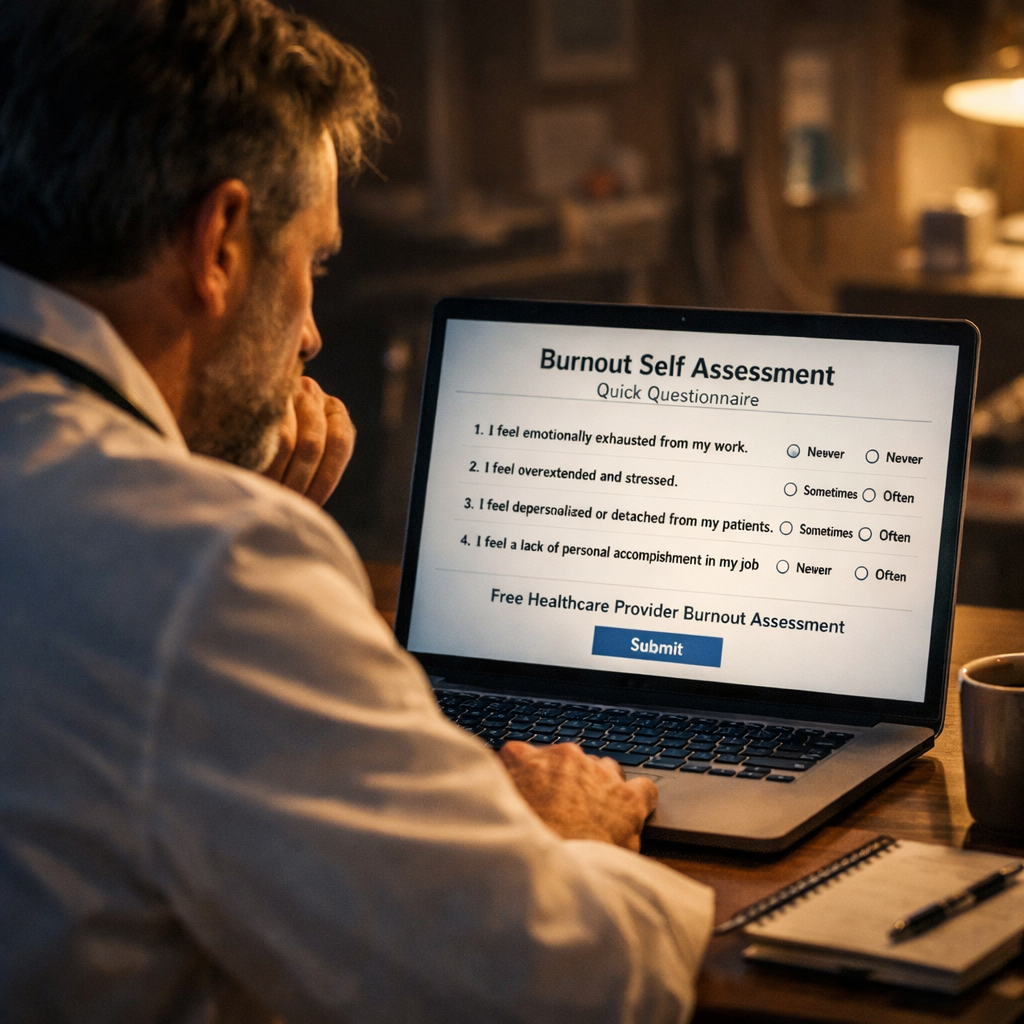
Burnout hits doctors, nurses, and techs hard. It drains joy and can hurt patients. This guide shows you a free self‑assessment you can finish in 10‑15 minutes, how to read the scores, and what to do next. You’ll walk through five simple steps, see real examples, and end with a clear plan you can start right away.
Step 1: Choose a Valid Free Self‑Assessment Tool
First, pick a tool that is evidence‑based and truly free. Not every quiz online tells the truth. Some ask a dozen questions and then try to sell you a program. We want a screen that measures burnout and also gives you next steps without a hidden fee.
One strong option is the Wellbeing Profile Self‑Assessment from e7D‑Wellness . It is listed as an evidence‑based assessment and it gives you a short 10‑15 minute version plus a deeper 45‑60 minute option. The tool was compared with seven other free screens in a 2026 review and came out on top for speed and data‑driven feedback.
Another popular free screen is the Rapid Burnout Screening Tool (RBST). It only has four questions but showed the highest specificity (89.1 %) in the same review. If you need a ultra‑quick check, RBST can be a first pass.
Pro Tip:Write down the name of the tool and the URL before you start. That way you can return to it if the page closes.
When you compare tools, look for three things: evidence base, completion time, and built‑in resources. The MarisGraph tool ticks all three boxes. The RBST ticks speed but not resources.
Here’s a quick checklist to use while you browse:
Is the tool backed by a peer‑reviewed study?
Does it state how long it takes?
Does it give you action items after the score?
Choose the one that fits your schedule and need for guidance. For most clinicians, the MarisGraph assessment is the best all‑round pick.
Key Takeaway:Pick a free tool that is evidence‑based, quick, and gives actionable feedback.
Bottom line:The right free tool saves time and points you to real help.
Step 2: Prepare Your Workspace and Mindset
Before you click start, set up a calm space. Burnout questions ask about stress, sleep, and feelings. If you’re in a loud hallway, you’ll answer from the noise, not from what you truly feel.
Find a quiet room, close the door, and turn off phone alerts. Grab a pen and a sheet of paper. You’ll want to jot quick notes about any surprise answers.
Take a deep breath. This is not a test you need to pass. It’s a snapshot of how you feel now. A relaxed mind gives the most honest answers.
Research from Stanford’s well‑being self‑assessment shows that clinicians who take the test in a private setting report clearer scores and feel less judged. The study also notes that self‑valuation scores above 50 % lower burnout risk.
50%of clinicians score lower burnout when they rate self‑valuation high
Set a timer for 15 minutes so you don’t lose track of time. If you finish early, use the extra minutes to reflect on the answers.
Make sure you have water nearby. Hydration helps focus and keeps your brain clear.
When you feel ready, click the start button on the tool you chose. Keep the environment steady for the whole run.
After you finish, take a minute to breathe again. Write down any strong feelings that came up , anger, relief, worry. Those notes will help you later when you look at the scores.
Key Takeaway:A quiet room, a timer, and a notebook make the assessment more accurate.
Bottom line:Good setup leads to honest answers.
Step 3: Complete the Assessment and Capture Key Scores
Now you are ready to answer the questions. Read each item slowly. If a question feels vague, think about the last week of work.
The Oldenburg Burnout Inventory (OLBI) is a 16‑item scale that looks at exhaustion and disengagement. It is used in many studies, including a 2022 review of clinicians worldwide. The OLBI gives two sub‑scores: Exhaustion (8‑32) and Disengagement (8‑32). A total score of 44 or higher signals significant burnout.
When you finish, copy the numbers into a simple table. Below is a template you can use:
Scale | Score | Interpretation |
Exhaustion | — | Low < 16, Moderate 16‑24, High > 24 |
Disengagement | — | Low < 16, Moderate 16‑24, High > 24 |
Total | — | Below 44 = low risk, 44+ = high risk |
Fill in your numbers right after you close the screen. Having them on paper helps you see patterns.
If the tool you chose gives you a graph, save a screenshot. You can add it to a personal journal or share it with a trusted colleague.
Here’s a real‑world example: Dr. Lee, an emergency physician, scored 48 on total OLBI, 27 on exhaustion, and 21 on disengagement. The high exhaustion flag prompted her to ask for a lighter shift schedule.
Pro Tip:Use the same notebook each month. Track your scores over time to see if the action plan works.
Remember, the numbers are just a guide. They point you to the parts of work life that need change.
Key Takeaway:Write down each score immediately; a simple table makes trends easy to spot.
Bottom line:Capture scores fast so you can act on them later.
Step 4: Analyze Results Against Benchmarks
With your scores in hand, compare them to published benchmarks. The CDC notes that about 50 % of clinicians show high emotional exhaustion. The PMC study of 1,050 clinicians found a 52 % rate of high exhaustion or cynicism on the Maslach Burnout Inventory.
If your total score is below 44, you’re likely in the low‑risk zone. If it’s 44‑55, you’re in a moderate zone and should plan small changes. Above 55 means you need bigger moves , maybe a workload review or counseling.
Look at the sub‑scores too. A high exhaustion score but low disengagement often means you’re over‑worked but still care about patients. A high disengagement score signals you may feel detached; you might need more team support.
Use the MarisGraph wellbeing measurement guide to see how each pillar (sleep, nutrition, movement) can shift the scores. The guide links each pillar to a numeric improvement range.
Statistically, clinicians who improve sleep by one hour per night see a 5‑point drop in exhaustion scores (CDC). Small tweaks add up.
"Numbers only matter if you turn them into action."
Write down two or three areas where you can make a quick change. For example, add a 5‑minute walk each shift, or set a bedtime alarm.
Pro Tip:Set a reminder on your phone to review your scores every quarter.
Bottom line:Benchmarks turn raw scores into clear priorities.
Step 5: Build a Personal Action Plan (Video Walkthrough)
Now it’s time to turn insight into steps. Grab a fresh page and write three headings: Reduce Exhaustion, Boost Engagement, Strengthen Resilience.
Under each heading, list one simple habit you can start this week. Keep the habit tiny , a 2‑minute breathing pause, a 10‑minute walk, a weekly check‑in with a peer.
Watch the short video below for a visual walk‑through of building the plan. It shows how to match each score area with a concrete habit.
After the video, fill in your own plan. Here’s a sample:
Reduce Exhaustion:Take a 5‑minute stretch break after every 2 patients.
Boost Engagement:Write one positive patient story each day.
Strengthen Resilience:Join the private HCP Slack community to share tips.
Make the plan visible , pin it to your monitor or set a daily reminder.
Check your progress weekly. If a habit isn’t sticking, tweak it. The goal is steady improvement, not perfection.
73%of clinicians who track habits report lower burnout after 3 months
Key Takeaway:A tiny habit list tied to your scores drives real change.
Bottom line:Your action plan is the bridge from score to better health.
FAQ
What makes a free burnout self‑assessment trustworthy?
A trustworthy tool is built on peer‑reviewed research, states its completion time, and gives you feedback that you can act on. Look for citations to studies, clear scoring, and no hidden fees. The MarisGraph Wellbeing Profile meets all three criteria, so it is a solid free option.
How long should I spend on a burnout screen?
Most validated tools take between 5 and 20 minutes. The MarisGraph short version is 10‑15 minutes, while the Rapid Burnout Screening Tool can be done in under five. Choose a length that fits your schedule but still gives detailed feedback.
Can I retake the assessment?
Yes. Re‑testing every 3‑4 months helps you see if your habits are moving the scores in the right direction. Keep the same tool each time so you compare apples‑to‑apples.
What if my scores are high?
A high score means you should act quickly. Start with one small habit, talk to a trusted colleague, and consider a professional coach or therapist who understands clinician stress. The action plan you build in Step 5 will give you a roadmap.
Do I need a doctor’s note to use these tools?
No. All the free screens are self‑administered and keep your answers confidential. You can complete them on your own device without any paperwork.
How do I know if my improvement is real?
Track the same scores over time. If your exhaustion drops by 5 points or your disengagement falls into a lower bracket, you are making progress. Pair the numbers with how you feel day‑to‑day for the full picture.
Is there a community I can join for support?
Yes. The private HCP Slack workspace hosts more than 500 clinicians who share tips, ask questions, and celebrate small wins. It’s a safe place to discuss burnout without judgement.
Can burnout affect patient safety?
Research shows that clinicians with high burnout are more likely to make mistakes and report lower patient satisfaction. Reducing your burnout score can improve both your wellbeing and the care you give.
Conclusion
Burnout doesn’t have to be a silent killer in healthcare . By choosing a solid free self‑assessment, setting a calm space, recording your scores, checking them against real benchmarks, and building a tiny‑habit action plan, you can turn a scary number into a clear path forward. The steps above are simple, evidence‑based, and ready to use today. Take the first 10‑minute screen, note your numbers, and start one habit this week. Your health, your patients, and your career will thank you.
Ready to see your own numbers? Visit e7D‑Wellness and start the free Wellbeing Profile Self‑Assessment now. The sooner you act, the faster you’ll feel the shift.


Comments