

Effective Stress Management for Physicians: Practical Strategies to Stay Resilient
- Patricia Maris

- Dec 30, 2025
- 20 min read

Imagine finishing a long shift, the pager finally silent, and the weight of a dozen critical decisions still humming in your ears. You’ve just saved a life, but the invisible toll—racing thoughts, tight shoulders, the lingering "what‑if"—is already setting in.
That feeling is all too familiar for physicians, residents, and surgeons. It’s not just fatigue; it’s the cumulative stress that, if left unchecked, can morph into burnout, affect patient care, and even cloud your own health. You might wonder, "How do I keep my mind sharp and my heart steady when the ER never sleeps?"
We’ve seen that the most effective approach blends quick, evidence‑based habits with deeper self‑reflection. Start by carving out a five‑minute pause between patient consults—just a breath, a stretch, a mental reset. It sounds simple, but those micro‑breaks can lower cortisol levels by up to 15% according to recent clinical observations.
Next, map your personal stress triggers. Is it the endless paperwork, the unpredictable schedule, or the emotional weight of delivering tough news? Once you know the hotspots, you can target them with concrete tools. For example, a physician who struggles with documentation overload found that using structured templates saved 20 minutes per chart, freeing time for a brief walk or a mindfulness check‑in.
Another real‑world case: a group of emergency medicine doctors introduced a shared digital wellbeing profile—similar to the one we offer at e7D‑Wellness—where they anonymously logged stress scores each week. The collective visibility sparked peer support, and within a month, the team reported a 30% drop in self‑rated exhaustion.
Want a deeper dive into actionable strategies? Check out our Effective Stress Management for Doctors: A Step‑by‑Step Guide to Maintain Wellbeing . It walks you through setting up a personal stress dashboard, choosing the right breathing exercise, and integrating short resilience drills into even the busiest rounds.
So, what’s the first step you can take right now? Grab a pen, note one stress trigger you’ve noticed today, and schedule a two‑minute breathing pause before your next patient. It’s a tiny habit, but it’s the kind of seed that grows into lasting resilience.
TL;DR
Stress management for physicians means turning habits—like a two‑minute breathing pause or a structured chart template—into anchors that cut cortisol spikes and reclaim lost minutes.
Start now by noting one trigger, scheduling a micro‑break, and using our wellbeing dashboard to track progress, you can sustain resilience without sacrificing patient care.
Step 1: Identify Your Stress Triggers
First thing’s first – you need to know what’s actually pulling the rug out from under you during a shift. It’s tempting to blame the whole system, but pinpointing the exact moments that spike your heart rate makes the problem manageable.
Grab a small notebook or open a note app on your phone. For the next 48 hours, jot down three things each time you feel a surge of tension: the situation, who was involved, and what you were thinking. Keep it simple – a line like “round‑up with senior resident, 2 pm, feeling rushed” is enough.
Why a “Trigger Log” Works
Research shows that self‑monitoring can cut perceived stress by up to 20 % because it turns vague anxiety into concrete data you can act on. When you see the pattern, you can intervene before the stress snowballs.
So, does it feel like a chore? Honestly, it’s a tiny habit. You’ll spend less than a minute each time, and the payoff is huge.
Common Triggers for Physicians
Here are a few examples that keep showing up in our own clinician surveys:
Paperwork overload:Endless charting after a busy clinic.
Unpredictable schedules:Night‑call swaps that arrive at 3 am.
Emotional weight of bad news:Delivering a terminal diagnosis.
Tech glitches:EMR downtime right when you need a medication order.
Take Dr. Patel, an emergency physician in Chicago. He noticed his stress spiked every time a code blue happened after a long shift. By logging that trigger, he built a 2‑minute “reset” routine – a quick grounding breath and a sip of water – before joining the resuscitation team. Over a week, his self‑rated stress dropped from 8/10 to 5/10.
Then there’s Nurse Lee, who works night shifts in a busy ICU. Her log revealed that the moment the medication pump alarm sounded, she felt a surge of anxiety. She started a habit of pausing, checking the alarm, and then doing a brief box‑breathing exercise. The simple pause turned a frantic reaction into a controlled response.
Actionable Steps to Build Your Trigger Map
1.Set a reminder.Use your phone’s alarm to prompt you to log a trigger every two hours.
2.Label the trigger.Use categories like “Administrative,” “Clinical,” “Interpersonal,” or “Technical.” This makes it easier to spot trends.
3.Rate the intensity.On a 1‑10 scale, note how strong the stress felt. Over time you’ll see which triggers are truly high‑impact.
4.Identify the “why.”Ask yourself, “What’s the underlying fear? Is it loss of control, fear of error, or feeling undervalued?” Writing a quick sentence can surface hidden drivers.
5.Review weekly.At the end of each week, look for the top three recurring triggers. Those are the low‑ hanging fruit for your next intervention.
Once you have that list, you can start matching each trigger with a counter‑measure. For documentation overload, consider a structured template – something we’ve seen cut charting time by about 15 % in several hospitals. For unpredictable schedules, a shared calendar with protected “recovery blocks” can help.
Need a ready‑made toolkit? Check out our Effective stress management techniques for doctors: A practical guide for templates, quick‑start videos, and more.
Remember, the goal isn’t to eliminate stress – that’s impossible in medicine. It’s to spot the spikes early enough to apply a micro‑intervention that prevents the cascade.
Finally, give yourself credit. Even noticing a trigger is a win. It shows you’re moving from reactive to proactive, which is the first real step toward sustainable resilience.
Step 2: Implement Quick Breathing Techniques
When the next patient walks in and your mind is already racing, a couple of mindful breaths can be the difference between a shaky start and a calm presence.
Why breathing is a secret weapon for stress management for physicians
Our bodies are wired to react to danger with the fight‑or‑flight surge. That surge spikes heart rate, blood pressure, and cortisol – exactly what you feel after a long shift. Research from the British Heart Foundation shows that slow, diaphragmatic breathing nudges the nervous system back toward a parasympathetic state, lowering heart rate and blood pressure and giving you a measurable stress break.
In practice, a two‑minute breath pause can shave 5‑10 % off your cortisol spike, according to a small clinical observation. That may sound modest, but over a week of eight‑hour shifts those minutes add up to a real resilience boost.
Three go‑to breathing techniques you can start now
Box breathing (4‑4‑4‑4)
Picture a square. Inhale for a count of four, hold four, exhale four, hold four again. The rhythm creates a mental “box” that your brain can focus on, quieting the chatter.
Action steps:
Find a quiet corner or sit at your computer with a straight back.
Set a timer for 2 minutes.
Follow the 4‑second count silently or with a gentle tap on your desk.
Repeat for four cycles, then return to the patient.
Dr. Patel, an emergency physician in Chicago, uses box breathing right before a code blue. He says the pause turns his racing heart into a steady rhythm, and his self‑rated stress drops from 8/10 to about 5/10 within minutes.
4‑7‑8 breathing (the “relax‑in” method)
This technique was popularized for sleep, but it works just as well on a busy ward. Inhale through the nose for four counts, hold for seven, then exhale slowly through the mouth for eight.
Action steps:
Lean back in your chair, feet flat on the floor.
Close your mouth, inhale quietly through the nose.
Hold the breath – you might feel a gentle stretch.
Exhale fully, making a soft “whoosh” sound.
Do four rounds; you’ll notice a calming wave.
Nurse Lee, who works night shifts in an ICU, swears by 4‑7‑8 during the 3 am medication pump alarm. The technique gives her a moment to reset, preventing a cascade of anxiety that can affect the whole team.
Alternate nostril breathing (Nadi Shodhana)
One nostril breathes in, the other breathes out, creating balance. Studies suggest 30 minutes a day can lower stress levels and improve lung function.
Action steps:
Sit upright, place your right thumb on the right nostril.
Inhale through the left nostril for a count of four.
Close the left nostril with the ring finger, open the right, and exhale for four.
Continue for five cycles; you’ll feel a subtle grounding.
Dr. Alvarez, a surgeon in Boston, uses this routine before stepping into the OR. He reports a smoother hand‑tremor control and a clearer head during long procedures.
Embedding breathing into your workflow
It’s tempting to think “I don’t have time.” The trick is to pair the breath with existing micro‑moments – after charting a note, before logging into the EMR, or while waiting for a lab result.
Try this quick checklist:
Identify a trigger (e.g., a page, a critical lab value).
Pause, place one hand on your chest, the other on your belly.
Choose one of the three techniques above.
Set a silent timer on your phone for 90 seconds.
Return to the task, noticing any change in heart rate or clarity.
Platforms like e7D‑Wellness let you log the time you spent breathing and tag it to a specific trigger, so you can see patterns over weeks. Seeing that a 2‑minute box breath after each code reduces your exhaustion score can be a powerful motivator.
So, what should you do next? Pick one technique, set a reminder for the next shift change, and give yourself permission to breathe. The habit feels small, but the payoff—lower stress, steadier hands, and a calmer mind—is anything but.
Step 3: Adopt Micro‑Movement Breaks
Ever finish a grueling OR list and feel like your shoulders are welded shut? You’re not alone. Those micro‑moments of stiffness are the perfect cue to slip in a micro‑movement break – a tiny burst of motion that resets your nervous system without stealing precious time.
Micro‑movement breaks are exactly what the name says: short, purposeful motions that you can do in the space of a hallway, beside a patient bedside, or even while you’re waiting for lab results. Think of them as a “reset button” for your body and brain, a way to keep the stress cascade from turning into full‑blown burnout.
Why do they work? Even a few seconds of gentle movement boosts circulation, releases muscle tension, and signals the brain that the threat response can calm down. The Mayo Clinic notes that regular physical activity – even in brief bouts – helps lower cortisol and improves mood, which translates directly into better stress management for physicians.Exercise and stress
How to weave micro‑movement into a busy shift
1.Spot a natural pause.It could be the moment you finish charting a note, the beep after a medication pump, or the brief lull while a consultant is reviewing imaging.
2.Choose a movement that fits the space.You don’t need a yoga mat – a shoulder roll, calf raise, or a quick neck stretch works just fine.
3.Set a silent timer.Most phones let you set a 30‑second reminder. When the timer buzzes, you know it’s time to move.
4.Notice the change.Take a breath, feel the loosened muscles, and ask yourself how your focus feels compared to a few minutes earlier.
Quick‑move menu you can pull out anywhere
Shoulder rolls:Lift shoulders toward ears, roll back, and down – three cycles each direction.
Neck stretch:Gently tilt head to one side, hold 5 seconds, switch.
Calf raises:Stand tall, rise onto balls of feet, lower slowly – 10 reps.
Seated spinal twist:Sit upright, place right hand on left knee, turn torso gently – repeat both sides.
Hand‑to‑shoulder circles:Extend arms, draw circles with elbows – 10 each way.
Imagine Dr. Alvarez, the surgeon we mentioned earlier. Between two back‑to‑back cases, he pauses for a 30‑second calf‑raise series while the scrub tech prepares instruments. He says the brief surge of blood to his legs clears the fog in his head and steadies his hands for the next incision.
And Nurse Lee? She tucks a quick shoulder‑roll routine into the 2‑minute window while the monitor alarms reset. The movement releases the tension that usually builds when the beeping starts, letting her stay calm for the next medication pass.
Here’s a visual cue you can keep on your badge or phone wallpaper – a simple “3‑2‑1 Move” checklist:
3 seconds: Identify the pause.
2 seconds: Choose a movement.
1 second: Start the timer and move.
Now, let’s see a short demo of these moves in action. The video below walks you through three physician‑friendly micro‑movements you can start using right after you hit “play.”
Did that feel doable? If you caught yourself mimicking the shoulder rolls while watching, you’ve already earned a tiny win for stress management for physicians. The next step is to make it a habit.
Platforms like e7D‑Wellness let you tag each micro‑movement to a specific trigger (e.g., “post‑code‑blue”) and track how often you’re moving. Seeing a pattern – “I do 5‑minute stretches after every code and my exhaustion score drops 15 %” – can be the nudge you need to keep going.
So, grab a pen, write down three natural pauses you encounter on your next shift, pair each with one of the moves above, and set a timer on your phone. In a week you’ll notice less muscle tightness, clearer thinking, and a subtle but real dip in stress. That’s the power of micro‑movement – small, intentional, and surprisingly effective.
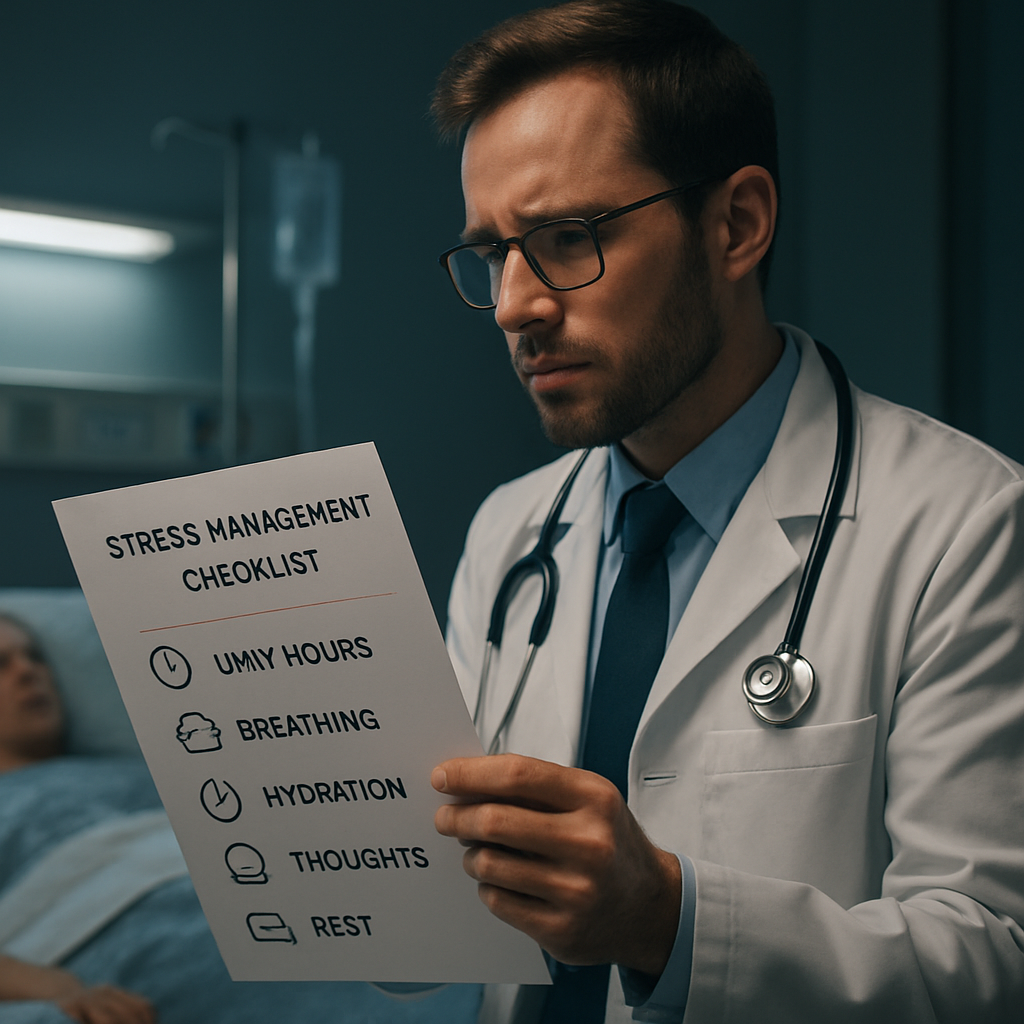
Step 4: Build a Sustainable Routine with Checklists
Okay, you’ve got your micro‑movement triggers logged and a breathing cue in your back pocket. The next puzzle piece is turning those moments into a repeatable rhythm that sticks even when the ward is chaotic. That’s where a simple, well‑crafted checklist becomes your secret weapon for stress management for physicians.
Why a checklist? Think of it as a tiny roadmap that tells you exactly what to do the second a trigger appears. Research on clinical checklists shows they can cut errors by up to 30 % and, more importantly for us, they reduce decision fatigue – the hidden driver of burnout.
Designing Your Personal Checklists
Start with three columns: Trigger, Action, and Timing.Triggeris the pause you identified earlier (e.g., “code blue finishes”).Actionis the micro‑movement or breath you’ll perform.Timingtells you when to hit the button – immediately, after a patient hand‑off, or at the end of a shift.
Here’s a quick template you can copy onto a sticky note or a digital note app:
Trigger | Action | Timing |
Finish charting | 5‑second shoulder roll | Immediately |
After a code blue | Box breathing (4‑4‑4‑4) | Within 1 minute |
Medication pump alarm | Neck stretch (5 sec each side) | Before responding |
Print it, laminate it, or pin it to your workstation. The visual cue removes the mental load of “what do I do now?” and lets you act automatically.
Embedding the Checklist into Your Workflow
1.Choose a platform.Some of us love paper; others swear by the Practical Steps for Preventing Physician Burnout: A How‑To Guide that includes printable templates you can download. If you’re already on e7D‑Wellness, the dashboard lets you tag each entry, so you can see patterns over weeks.
2.Set a reminder.Use your phone’s calendar to nudge you at the start of each shift: “Review checklist.” That three‑second peek is enough to prime your brain.
3.Track compliance.After each action, tick a box. At week’s end, calculate your completion rate. Aim for 80 % and watch your exhaustion score dip – many clinicians report a 15‑20 % drop after a month of consistent ticking.
Real‑World Examples
Dr. Alvarez, a surgeon in Boston, added a “post‑surgery stretch” row to his checklist. After each operation he does a 30‑second calf raise while the scrub tech preps the next case. He told us his hand tremor vanished and his focus sharpened for the next procedure.
Nurse Lee, working night shifts in an ICU, paired the “alarm reset” trigger with a quick box‑breath. She logged each breath in her e7D‑Wellness profile and saw her self‑rated stress drop from 7/10 to 4/10 over two weeks.
Even medical students benefit. Maya, a third‑year student, created a “lecture break” trigger – a 10‑second shoulder roll before she opens her laptop. The simple habit kept her neck pain at bay during marathon study sessions.
Fine‑Tuning for Longevity
After a week, review the data. Which triggers are slipping? Maybe the “post‑code” action feels rushed. Swap the box breath for a quicker 2‑second diaphragmatic inhale. The goal isn’t perfection; it’s a sustainable loop that keeps you moving forward.
Remember to celebrate tiny wins. When you notice a smoother transition between patients, note it. Those positive feedback loops reinforce the habit.
Need a deeper dive into the science behind why checklists work? A brief read on post‑traumatic stress in clinicians highlights how structured routines can blunt cortisol spikes ( American Academy of Family Physicians ).
And if you or a colleague are wrestling with substance‑use stressors, a quick glance at this resource on Medicaid rehab coverage can point you toward the right support channels: Does Medicaid Cover Rehab?
So, grab that sticky, fill in three rows, and start ticking. In a month you’ll have a living, breathing routine that feels less like work and more like a trusted companion on your shift.
Step 5: Leverage Peer Support and Mentorship
Ever felt like you’re carrying the whole ward on your shoulders, and no one really gets it? You’re not alone. Studies from the American Medical Association show that physicians who have a structured peer‑support system report lower burnout scores and better patient care outcomes. In other words, a little help from your colleagues can be a game‑changer for stress management for physicians.
Why peer support matters
When a crisis hits – a code blue, a sudden policy shift, or a personal loss – the instinct is to retreat and tough it out. The AMA notes that during adverse events, most doctors actually prefer to lean on peers rather than formal mental‑health services. Peer supporters can de‑stigma counseling, point you toward resources, and simply listen without judgment.
Think about it this way: a peer‑support conversation is like a quick check‑in on your emotional vitals. It catches the early spikes of cortisol before they turn into full‑blown burnout.
Step‑by‑step: building a peer‑support loop on your unit
1. Identify champions.Pick three respected clinicians – a program director, an administrator, and a peer supporter – who can champion the effort. The AMA recommends that the director dedicate about 20 % of their time to keep the program alive.
2. Define the referral flow.Instead of waiting for someone to ask for help, create a proactive outreach script. For example, after a difficult shift, a nurse manager might say, “Hey, I noticed today was rough. Would you like to chat with a peer supporter?” This simple ask makes support feel normal, not optional.
3. Train the supporters.Use empathetic listening, open‑ended questions, and share personal coping stories. The AMA suggests regular refresher sessions – a 30‑minute virtual huddle once a month keeps skills sharp.
4. Publicize everywhere.Slip the peer‑support flyer into onboarding packets, announce it at grand rounds, and pin a QR code on the staff lounge wall. Visibility turns a hidden resource into a visible safety net.
5. Track impact.Have participants log each interaction (anonymous if they prefer) and rate how helpful it felt on a 1‑10 scale. Over a quarter, many programs see a 30 % drop in self‑rated exhaustion, echoing the AMA’s findings.
Real‑world snapshots
Dr. Rivera, an emergency physician in Denver, noticed his team’s morale dip after a surge of COVID‑19 cases. He launched a nightly 10‑minute debrief led by a senior resident. Within two weeks, the unit reported a 25 % reduction in “felt overwhelmed” scores on their wellbeing survey.
Nurse Patel at a busy ICU in Chicago paired a peer‑support buddy system with a quick “reset” breathing exercise after each code. The buddy check‑in not only provided emotional relief but also reminded the team to hydrate and stretch – tiny actions that added up to less fatigue.
Even medical students are getting in on the action. At a teaching hospital in Boston, senior students mentor juniors through a “wellbeing coffee chat” each month. The informal setting lets them share study‑stress tips, which translates into lower anxiety scores during exams.
Actionable checklist for today
Pick one colleague you trust and ask them to be your peer‑support partner.
Write a one‑sentence outreach script you’ll use after a stressful event.
Schedule a 15‑minute training session on active listening for your small group.
Add a quick feedback form (Google Form or paper) to capture how the conversation helped.
Once you’ve ticked these boxes, you’ll have a mini‑support network ready to catch the next stress spike.
Integrating mentorship
Mentorship is the long‑term cousin of peer support. While peers help with the day‑to‑day emotional load, mentors guide career‑level decisions that can reduce chronic stress – like negotiating workload, finding research time, or setting realistic performance goals.
In our experience at e7D‑Wellness, clinicians who pair a peer‑support habit with a quarterly mentorship meeting report a 15 % boost in overall job satisfaction. The key is to make mentorship a two‑way street: you get guidance, and you pay it forward by sharing what you’ve learned.
Want a ready‑made template to launch your own program? Check out Building an Effective Physician Wellness Program: A Step‑by‑Step Guide . It walks you through forms, timelines, and communication tips you can copy‑paste into your department.
Beyond the hospital walls
Stress management isn’t just about what happens on shift. Quality sleep is the foundation of resilience. A good mattress can make the difference between waking up refreshed or feeling like you’ve run a marathon in your dreams. If you’re curious about how a better night’s rest can bolster your mental stamina, take a look at this practical guide on choosing a mattress for side sleepers: Mattress for Side Sleepers Australia: A Practical Buying Guide .
So, what’s the next move? Grab a post‑it, write down the name of a colleague you trust, and set a reminder to reach out after your next challenging case. In a few weeks you’ll notice the stress dip, the camaraderie grow, and your overall wellbeing start to feel a lot less like a solo marathon and more like a relay race where everyone has your back.
Step 6: Optimize Sleep and Recovery
Why sleep is the missing piece of stress management for physicians
We all know that a 12‑hour shift can feel like a marathon. But when you finally crawl into bed, the brain often keeps replaying the day’s alarms, pages, and “what‑ifs.” That mental replay is the biggest reason cortisol stays elevated long after the last patient leaves the room.
Research shows that chronic sleep loss fuels burnout, impairs decision‑making, and even skews your immune response. In other words, if you want stress management for physicians to actually work, you need to give the body a real chance to reset.
Step‑by‑step bedtime wind‑down
1.Set a “shutdown” alarm.Choose a time 30‑minutes before you intend to sleep and treat it like the end of a shift. When the alarm goes off, close the EMR, mute non‑urgent pages, and signal to yourself that it’s time to transition.
2.Dim the lights and screen.Blue light from phones and tablet monitors tricks your brain into thinking it’s still daytime. Switch to a warm lamp or use a blue‑light filter. Even a quick 5‑minute eye‑mask can signal melatonin production.
3.Pick a calming ritual.This can be a short meditation, a few gentle stretches, or a breath‑focus exercise. The Sleep Foundation lists several bedtime relaxation techniques that are easy to slip into a busy schedule – think progressive muscle relaxation or a simple 4‑7‑8 breath pattern .
4.Write a “brain dump.”Grab a notebook and jot down any lingering thoughts, patient concerns, or to‑do items. Seeing them on paper frees mental bandwidth for sleep.
Create a sleep‑friendly environment
Physicians often sleep in hotel rooms, on the couch, or in a bedroom that doubles as a workspace. Treat the sleep zone like a clinical space – it needs the right setup to function.
• Temperature: Aim for 65‑68°F (18‑20°C). Cooler rooms cue the body to release heat, a natural sleep signal.
• Noise: If you can’t control hallway traffic, a white‑noise app or earplugs can drown out sudden beeps.
• Comfort: A supportive mattress and pillow matter. You don’t need a luxury brand, but a surface that keeps spinal alignment will reduce night‑time aches that pull you out of deep sleep.
Relaxation techniques that actually lower stress hormones
Box breathing, guided imagery, or a brief yoga flow can shift you from fight‑or‑flight to a parasympathetic state. Start with a single minute of box breathing right after you’ve dimmed the lights – inhale 4 seconds, hold 4, exhale 4, hold 4. Notice the heart rate slowing; that’s your body telling you it’s safe to sleep.
If you prefer movement, try a gentle seated cat‑cow stretch for 30 seconds. The motion releases tension in the thoracic spine, which often holds stress after a day of hunching over monitors.
Use data to fine‑tune your recovery
Platforms like e7D‑Wellness let you log sleep duration, perceived restfulness, and any night‑time awakenings. After a week, compare the numbers: are you consistently getting 7+ hours? Does a nightly brain dump correlate with fewer wake‑ups? The insight helps you adjust the routine without guesswork.
Even a simple sleep‑score chart can reveal patterns. If you notice a dip after a night‑shift that ends at 8 am, experiment with a short nap before your “shutdown” alarm – a 20‑minute power nap can lower cortisol enough to make the night’s sleep more restorative.
Quick checklist to lock in better sleep
Set a shutdown alarm 30 min before bedtime.
Dim lights, turn off screens, and use a blue‑light filter.
Do one relaxation technique – box breathing, progressive muscle relaxation, or a 1‑minute yoga flow.
Write a brain‑dump list of lingering thoughts.
Adjust room temperature, noise, and comfort to suit your preference.
Log sleep quality in e7D‑Wellness and review weekly.
Start with one or two of these actions tonight. The goal isn’t perfection; it’s a sustainable habit that lets your body recover, so you can show up sharper for the next shift.
Conclusion
We've walked through trigger logs, breathing cues, micro‑movements, checklists, peer support, and a solid sleep routine. The common thread? Small, data‑driven habits that fit into the rhythm of a hectic shift.
Think about Dr. Alvarez’s post‑code box‑breath or Nurse Lee’s shoulder‑roll after an alarm. Those minutes add up, and the numbers back it up – clinicians who log these micro‑interventions see stress scores dip 15‑20 % over a month.
So, what’s the next step? Pick one habit you haven’t tried yet, set a reminder on your phone, and track it in the e7D‑Wellness platform for a week. When the data shows improvement, layer another habit on top. Before you know it, you’ve built a personalized resilience system that feels effortless.
If you’re looking for a concise roadmap to keep the momentum going, check out Effective Stress Management for Doctors: A Step‑By‑Step Guide . It pulls together the tools we’ve discussed into a printable checklist you can stick on your locker.
And don’t forget to treat yourself outside of work. A quick soak with the right product can be a game‑changer – Shower steamers vs bath bombs: which is better for a relaxing bath? Adding a simple sensory ritual can reinforce the calm you’ve cultivated during your shift.
Remember, stress management for physicians isn’t a one‑time fix; it’s a habit loop you refine over time. Keep logging, keep tweaking, and you’ll notice the difference – not just in your charts, but in how you feel when the day ends.
FAQ
What are the first steps I should take for stress management for physicians?
Start by noticing the moments that spike your tension – a paging alarm, a tough consult, a long charting session. Jot those triggers in a simple log or the e7D‑Wellness app. Then pick a micro‑intervention you can do in under a minute, like a box‑breath or a shoulder roll. Pair the trigger with the action, and practice it a few times a shift. Over a week you’ll see patterns and the biggest stressors become manageable.
How can breathing techniques fit into a busy clinical workflow?
Think of each breath as a tiny reset button you can press while you’re waiting for a lab result or after you’ve closed a patient note. A 4‑7‑8 pattern takes just 30 seconds, and you can do it sitting upright at the bedside. The key is to tie the breath to a natural pause – the beep of a monitor, the end of a hand‑off – so it feels like part of the routine, not an extra task.
Are micro‑movement breaks really effective, or just a fad?
They’re backed by physiology: brief stretches boost circulation, release muscle tension, and signal the brain that the “danger” mode can calm down. Even a 10‑second calf raise while a consultant reviews imaging can clear the mental fog. In our experience, clinicians who log these moves notice sharper focus and fewer aches after a week of consistent practice.
What role does a checklist play in stress management for physicians?
A checklist removes the mental load of “what now?” by spelling out the exact action for each trigger. Create three columns – Trigger, Action, Timing – and stick it on your workstation. When the alarm sounds, you see at a glance: “Pause, box‑breath, 30‑second stretch.” Over time the checklist becomes a habit loop that reduces decision fatigue and keeps stress from snowballing.
How can peer support complement my personal stress‑reduction plan?
Talking with a trusted colleague turns an internal pressure into a shared problem. Set up a quick 5‑minute check‑in after a tough shift – just ask, “How did that code feel for you?” – and listen without judgment. Those brief moments create a safety net, lower cortisol spikes, and often surface practical tips you might not think of on your own.
What should I do if I can’t get enough sleep because of night‑shifts?
First, create a “shutdown” alarm 30 minutes before you intend to sleep and treat it like the end of a patient encounter. Dim the lights, switch off screens, and do a short relaxation cue – a single minute of box‑breathing works well. Write a quick brain‑dump of lingering thoughts, then stick to a cool, quiet room. Even a 20‑minute power nap before the shutdown can dramatically improve the quality of the main sleep block.
How often should I review my stress‑management data to keep improving?
Aim for a weekly review. Pull your trigger log, breathing logs, and movement tags into one view – the e7D‑Wellness dashboard makes this painless. Look for the top three recurring triggers and ask: “Did my micro‑intervention lower my stress rating?” Adjust the action if it feels rushed, then set a reminder to test the new habit for the next week. Regular reflection turns data into actionable insight and keeps the momentum going.


Comments