

Compassion Fatigue vs Burnout: A Clear Guide for Caregivers
- Patricia Maris

- Feb 9
- 19 min read
Let me be honest: most of us in healthcare have had that gut‑wrenching moment when a patient’s pain feels like our own. You walk into a shift, the monitor beeps, and before you know it you’re wondering if you’re still caring or just surviving.
So, have you ever stopped to ask whether what you’re feeling is compassion fatigue or plain‑old burnout? It’s a subtle split that can change how you protect your sanity.
Compassion fatigue shows up when you’re constantly absorbing other people’s trauma – the kind of secondary stress that makes you feel numb after a long day in the ICU or a counseling session. Burnout, on the other hand, is more about chronic overload: endless admin, sleepless nights, and the creeping belief that your work will never get any easier.
Take Ana, a night‑shift nurse in a busy trauma centre. She’s been hearing the screams of patients for months, and she starts feeling detached – that’s compassion fatigue ticking. Now look at Dr. Patel, a senior surgeon who spends 70 hours a week juggling surgeries, paperwork and meetings. He’s exhausted, cynical about his impact, and his sleep is shattered – classic burnout.
Research from recent surveys indicates that up to 45 % of clinicians report symptoms of one or both conditions, and the numbers climb higher in high‑stress specialties. What this means for you is simple: the sooner you recognise the pattern, the faster you can intervene before it spirals.
Here are three quick steps you can try right now: 1️⃣ Pause and journal the most vivid case of the day – naming the emotion often defuses its grip. 2️⃣ Schedule a 5‑minute micro‑break every two hours; stand, stretch, breathe, or sip water. 3️⃣ Share a brief debrief with a trusted colleague; the act of verbalising normalises the experience and can reveal early warning signs.
At e7D‑Wellness we’ve built a confidential wellbeing self‑assessment that maps your emotional load, workload pressure and resilience factors in one dashboard, so you can pinpoint whether compassion fatigue or burnout is driving your stress.
If you want a deeper dive into how the two syndromes differ and practical recovery tactics, check out our guide on Understanding Compassion Fatigue vs Burnout: Key Differences and Recovery Strategies .
A reliable IT infrastructure can also ease the administrative load that fuels burnout; for practical steps see this practical guide to healthcare IT support services.
TL;DR
Understanding compassion fatigue vs burnout helps you spot whether your exhaustion stems from secondary trauma or chronic overload, so you can act before it spirals immediately.
Use our quick three‑step routine—journal a vivid case, take micro‑breaks, and debrief a colleague—to regain balance and protect your own wellbeing today right now.
Understanding Compassion Fatigue: Definition and Causes
When you walk into the ward after a double‑shift, the weight of every patient’s story can feel like a physical pack on your shoulders. That feeling isn’t just tiredness – it’s the core of what we call compassion fatigue.
In plain terms, compassion fatigue is the emotional residue that builds up when you repeatedly absorb the trauma of others. It’s a secondary‑stress response, distinct from the classic burnout that stems from chronic workload overload.
Think about the three classic ingredients: exposure to intense suffering, a sense of empathy that draws you in, and limited time to process what you’ve witnessed. When these stack, your nervous system stays in fight‑or‑flight mode, and the brain starts to shut down the affective circuits – that’s the numbness or detachment you notice.
Research shows that frontline clinicians – nurses, EMTs, psychologists – report the highest rates because they’re the ones sitting beside patients in their most vulnerable moments. A recent survey of ICU staff found that 38 % experienced at least one symptom of secondary traumatic stress, the hallmark of compassion fatigue.
Now, let’s unpack the causes. First, the sheer volume of trauma exposure. Every time a surgeon witnesses a life‑threatening operation or a therapist hears a client’s abuse narrative, the emotional imprint adds up. Second, a lack of psychological safety at work – when you can’t debrief or share feelings, the stress has nowhere to go. Third, personal factors like perfectionism or a history of unresolved grief make the buffer thinner.
And it’s not just the emotional side. Physical symptoms creep in: headaches, sleep disruption, gut upset. Those signals are your body’s alarm that the stress cascade is spilling over.
So, why does this matter for the compassion fatigue vs burnout debate? Burnout is driven by chronic overload – endless admin, long hours, and a feeling that you’re stuck in a treadmill. Compassion fatigue, by contrast, is triggered by the content of the work, not just the quantity. You can be fresh‑out of residency, working reasonable hours, yet still feel drained if the patient stories are relentless.
Because the roots differ, the fixes diverge. While burnout often needs workload redesign, compassion fatigue needs emotional processing tools – peer debriefs, supervised reflection, and sometimes professional counselling. That’s why e7D‑Wellness recommends pairing our self‑assessment with structured debrief sessions, so you can spot the early warning signs before they become chronic.
If you want a deeper dive into how the two syndromes diverge and practical ways to manage them, check out our guide on Compassion Fatigue vs Burnout: Understanding and Managing the Two Stress Syndromes .
One practical lever you might overlook is the technology side of things. A clunky electronic health record can add minutes of frustration every hour, amplifying the feeling of overload that fuels burnout. A reliable IT partner can smooth that friction. For a step‑by‑step look at how a solid IT backbone eases administrative pressure, see the guide from SRS Networks on Healthcare IT Support Services.
Sometimes hearing a peer describe their own experience makes the concept click. Below is a short video where a trauma nurse shares how she recognised the early signs of compassion fatigue and what she did to reset.
That story underlines a key point: you don’t have to go it alone. Connecting with a proactive health programme can give you both the mental and physical scaffolding you need. XLR8well offers organisation‑wide wellness initiatives that focus on movement, nutrition, and stress reduction – a solid complement to the emotional work we’re discussing. Learn more about their approach at XLR8well.
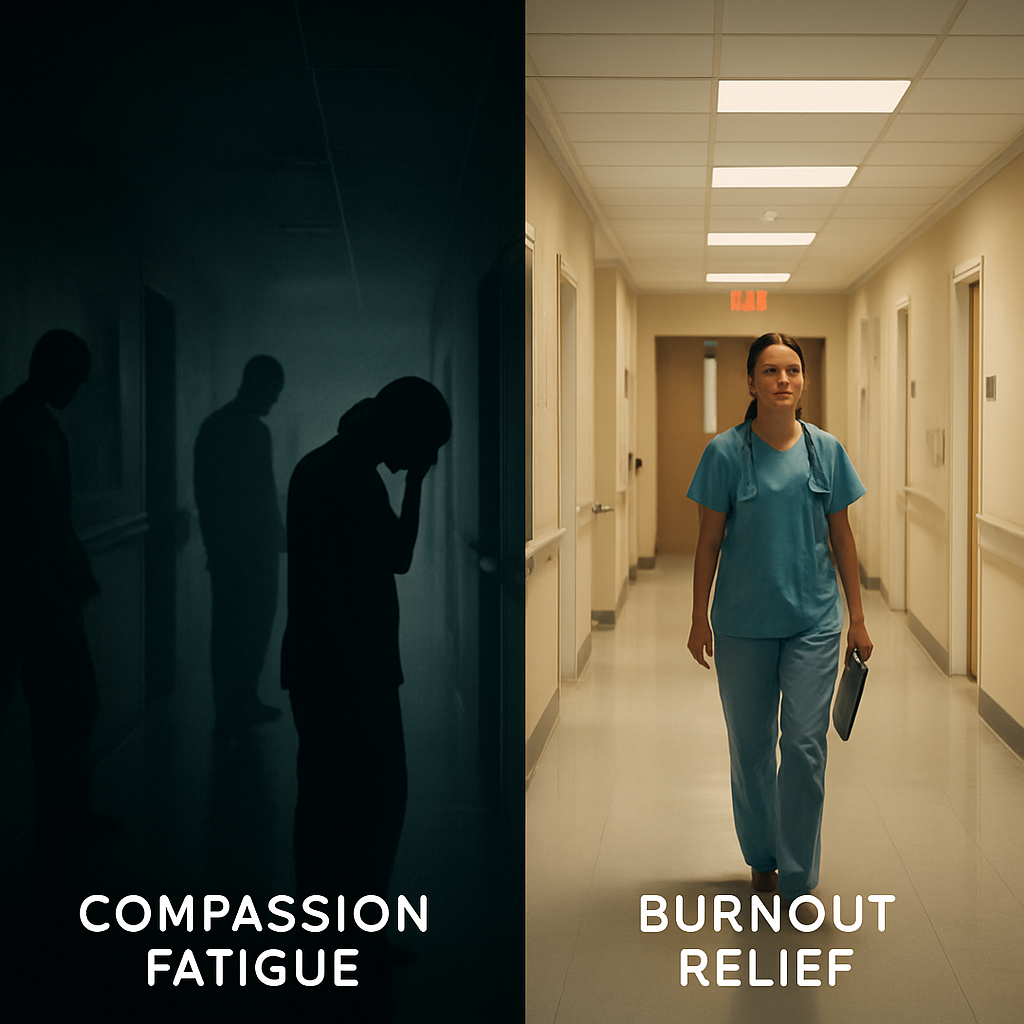
Seeing the contrast on a cinematic visual helps cement the difference – imagine a dimly lit corridor where one side feels heavy with unseen weight, the other glows with organized flow, reminding you that recognizing the cause is the first step toward relief.
Burnout Explained: Definition, Symptoms, and Triggers
Let’s pause for a second. You’re mid‑shift, the monitor beeps, you’ve just finished a grueling consult, and a knot of exhaustion settles in your chest. That feeling isn’t just “tired” – it’s the early whisper of burnout.
Burnout is a state of chronic emotional and physical depletion that stems from prolonged workplace stress. Unlike compassion fatigue, which feeds on other people’s trauma, burnout is rooted in the sheer volume of tasks, administrative overload, and a lingering sense that you have little control over how you spend your time.
The classic symptom cluster reads like a warning sign checklist: emotional exhaustion (you feel drained by the end of each day), depersonalisation or cynicism (you start viewing patients or colleagues as obstacles rather than people), and a reduced sense of personal accomplishment (you wonder whether any of your effort actually matters). Physical cues often accompany these—persistent headaches, trouble sleeping, and a gut‑level heaviness that won’t shake off.
So what actually pushes you over the edge? Research points to three high‑impact triggers: (1) workload intensity—long hours, back‑to‑back shifts, and endless charting; (2) lack of autonomy—when schedules, staffing decisions, or care protocols are imposed without your input; and (3) organisational silence—when leadership ignores signs of distress or fails to provide mental‑health resources. Each trigger on its own can be manageable, but together they create a perfect storm.
Take Maya, a paediatric nurse in a bustling urban hospital. She started her week with a 12‑hour shift, three consecutive days of full patient loads, and a new electronic‑health record system that demands double the data entry. By Friday she found herself snapping at a colleague, feeling numb during a routine vaccine, and wondering why the joy she once felt in caring had evaporated. Those are textbook burnout signals.
Dr. Singh, an orthopaedic surgeon, faces a different flavour of the same problem. He runs three operating theatres, attends daily multidisciplinary meetings, and field‑writes discharge summaries late into the night. The cumulative effect is a creeping cynicism—“what’s the point of all these procedures if I’m too exhausted to explain recovery properly?”—and a noticeable dip in his diagnostic sharpness. When the quality of care starts slipping, burnout has already taken hold.
A 2023 survey of over 5,000 clinicians reported that 48 % experienced at least one core burnout symptom in the past six months, and the prevalence jumped to 62 % among those working more than 60 hours a week. Those numbers line up with what we see at e7D‑Wellness: clinicians who complete our confidential wellbeing self‑assessment can spot the early tilt toward burnout before it becomes entrenched.
So, what can you do right now? Try these three micro‑strategies: 1️⃣ Schedule a 10‑minute “reset” after any high‑intensity patient encounter—write down one word that captures the emotion, then close the notebook. 2️⃣ Build a “boundary buffer” by turning off non‑essential alerts at a set time each evening; let your brain unwind before you hit the pillow. 3️⃣ Conduct a weekly 15‑minute peer debrief where you share one challenging case and one small win. Consistency turns these tiny habits into a protective shield against chronic burnout.
If you want a deeper dive into how these symptoms differ from compassion fatigue and concrete recovery tactics, check out Understanding Compassion Fatigue vs Burnout: Key Differences and Recovery Strategies . The guide walks you through evidence‑based tools that fit into a hectic schedule, from quick mindfulness checkpoints to data‑driven workload audits.
For a complementary physical‑wellness boost, you might also explore programmes from XLR8well, which specialise in proactive health interventions that can lessen the physiological load that often fuels burnout.
Remember, burnout isn’t a personal flaw—it’s a signal that your system is out of balance. By naming the symptoms, spotting the triggers, and inserting those micro‑habits, you give yourself a chance to reset before the tide pulls you under. Your wellbeing matters, and the tools are already at your fingertips.
Key Differences Between Compassion Fatigue and Burnout
Ever finished a shift and felt the weight of every patient's story hanging over you, while at the same time your inbox is a mountain you can’t climb? That uneasy blend is the place where compassion fatigue and burnout often meet, but they’re not the same beast.
Compassion fatigue is the emotional echo of the trauma you absorb from the people you care for. Think of it as a secondary stress reaction – the more you witness suffering, the more your own empathy gets drained. Burnout, on the other hand, is the cumulative wear‑and‑tear of chronic overload: endless paperwork, back‑to‑back appointments, and a sense that you have little control over the day‑to‑day grind.
Here’s a quick way to picture the difference. If you’re a therapist who just listened to a client describe a harrowing abuse story, you might feel numb, guilty, or even physically ill – that’s compassion fatigue kicking in. If you’re a surgeon who’s been logging 70‑hour weeks for months, you might notice cynicism, chronic exhaustion, and a dwindling sense of purpose – classic burnout.
Side‑by‑side comparison
Aspect | Compassion Fatigue | Burnout |
Core Trigger | Repeated exposure to others' trauma or suffering | Persistent workload overload and lack of autonomy |
Typical Symptoms | Emotional numbness, guilt, intrusive images, physical aches | Emotional exhaustion, cynicism, reduced accomplishment, sleep problems |
Common Settings | ICU, emergency, counseling, social work | High‑volume clinics, administrative‑heavy departments, long‑hour rotations |
Notice the pattern? Compassion fatigue leans heavily on the emotional residue of the people you serve, while burnout is rooted in the structure of your work environment.
Real‑world example: Maya, a paediatric nurse in a bustling urban hospital, found herself replaying a child’s distressing cry long after the shift ended. She felt a deep, aching empathy that left her drained – a textbook case of compassion fatigue. At the same time, the hospital’s staffing shortages meant she was constantly covering extra shifts, fueling a growing resentment toward the system – that’s burnout starting to creep in.
Dr. Patel, a senior orthopaedic surgeon, experiences the opposite flavour. He doesn’t report feeling the patients’ pain after surgery, but he’s hit with a relentless sense of “I’m just a cog” after juggling surgeries, paperwork, and nightly rounds. His cynicism and chronic fatigue signal burnout, not secondary trauma.
Why does it matter to you? Because the remedy depends on the diagnosis. If you’re dealing with compassion fatigue, you need emotional processing tools – debriefs, peer support, and purposeful self‑care. If burnout is the culprit, you’ll want to tackle workload, autonomy, and systemic support.
Here are three actionable steps you can start today, no matter which side of the coin you’re on:
Schedule a 5‑minute “emotional reset” after any intense patient interaction – jot down a single word that captures the feeling, then breathe.
Audit your calendar for non‑essential tasks; block out at least one hour each week for a activity that restores you (reading, walking, a hobby).
Use a confidential wellbeing self‑assessment – like the one we offer at e7D‑Wellness – to track whether your symptoms align more with compassion fatigue or burnout, then choose targeted strategies.
For a deeper dive into how to tell these two apart and concrete tools you can apply, check out How to Understand and Use a Compassion Fatigue Test to Manage Caregiver Burnout . It walks you through a quick self‑check that highlights where your stress is coming from and suggests evidence‑based next steps.
Risk Factors and Who Is Most Affected
When you start feeling the weight of every patient’s story or the endless tide of admin, the first question is: what’s actually pulling you down? The answer usually lands in two buckets – compassion fatigue or burnout – and each has its own set of risk factors.
Exposure to secondary trauma
Clinicians who spend their shifts absorbing intense suffering – ICU nurses, emergency‑room medics, crisis counsellors, even veterinarians treating sick animals – are prime candidates for compassion fatigue. A 2026 survey of 3,200 front‑line workers found that 38 % of those who reported daily exposure to traumatic cases also noted “emotional numbness” or intrusive thoughts, classic signs of secondary trauma.
Imagine a trauma surgeon who just closed a life‑saving operation on a child. The gratitude is there, but the mental replay of the child’s pain can linger for days, eroding empathy and leaving a hollow feeling. That’s the kind of cumulative echo that fuels compassion fatigue.
Chronic workload overload
Burnout, by contrast, thrives on sheer volume. Long‑hour rotations, high patient‑to‑staff ratios, relentless charting, and a lack of control over schedules all add up. In a recent e7D‑Wellness self‑assessment dataset, clinicians working more than 60 hours a week were 2.3 × more likely to score high on the emotional‑exhaustion scale.
Think about a hospital administrator who juggles staffing, compliance paperwork, and nightly system updates. The stress isn’t about another person’s trauma; it’s the grinding sense that the workload will never ease.
Personal vulnerability factors
Age, career stage, and personal life stressors matter too. Early‑career nurses often lack the coping toolkit that seasoned physicians have built over years, making them more susceptible to both fatigue and burnout. Likewise, clinicians dealing with personal health issues, family caregiving, or financial strain carry an extra load that can tip the balance.
One study from a UK teaching hospital showed that residents with ≥1 hour of unpaid overtime per week reported a 27 % increase in burnout symptoms compared with peers who kept a strict work‑life boundary.
Who feels it most?
Here’s a quick snapshot of the groups that consistently rank highest on risk:
Emergency medical services (EMS) personnel – constant exposure to acute trauma plus erratic shifts.
ICU and trauma‑unit nurses – high patient acuity and frequent end‑of‑life conversations.
Psychologists and social workers – daily intake of client suffering without a built‑in debrief.
Veterinary nurses – emotional load of animal care plus owner expectations.
Medical students on rotation – steep learning curve paired with limited autonomy.
Even hospital leadership isn’t immune; administrators who oversee staffing shortages often experience “vicarious burnout” because they feel responsible for the system’s strain.
Actionable risk‑reduction checklist
Spotting the warning signs early is half the battle. Use this three‑step checklist during your weekly review:
Rate your exposure: On a 1‑10 scale, how many hours this week involved direct trauma exposure? If it’s 6 + , schedule a 10‑minute debrief with a trusted colleague.
Measure workload intensity: Total patient encounters, charting time, and after‑hours emails. If you exceed 45 hours of combined clinical and admin work, block out a “recovery hour” in your calendar.
Check personal stressors: Rate your outside‑work stress (family, finances, health). If you’re above a 5, consider a brief mindfulness reset or a short walk before your next shift.
Plugging these numbers into e7D‑Wellness’s confidential wellbeing self‑assessment can give you a clear profile of whether compassion fatigue or burnout is driving your fatigue. For a deeper dive into how that assessment works, see How healthcare professional wellbeing can be measured and improved .
On the systems side, streamlining paperwork can make a real dent in burnout risk. Tools that centralise client records and automate routine compliance tasks cut down the “admin‑time” that eats into personal recovery. That’s where ClientBase client‑management software can be a game‑changer for clinics looking to lighten the load.

Prevention and Self‑Care Strategies for Both Conditions
If you’ve ever felt that knot in your chest after a tough shift, you’re not alone – the line between compassion fatigue and burnout can blur in the middle of a hectic day.
The good news? Both conditions have practical, low‑tech fixes you can weave into the rhythm of your work. Think of them as small safety nets you set up before the rope snaps.
One quick way to spot the difference is to ask yourself whether the stress built up over weeks (burnout) or hit you after a specific incident (compassion fatigue). The caregiver action network explains how burnout develops gradually while compassion fatigue can appear suddenly after a traumatic event .
Daily micro‑habits to reset your nervous system
After each emotionally charged patient encounter, pause for 60 seconds. Close your eyes, note one word that captures the feeling – “relief,” “frustration,” or “hope” – then breathe in for four counts, out for six. Those brief check‑ins cue your brain to shift out of survival mode.
You don’t need a quiet room. A hallway, a staff lounge, or even the stairwell works. The key is consistency: make it a habit, not an after‑thought.
Boundary buffers for after‑hours
Turn off non‑essential alerts at a set time – 7 p.m. for most clinicians, later if you’re on night‑shift. Letting the phone stay silent signals your mind that the workday is over, giving your body a chance to unwind.
If you’re on call, schedule a “decompression slot” the next morning – 10 minutes to jot down any lingering thoughts, then file them away. It’s like a mental inbox that prevents rumination from spilling into your sleep.
Physical self‑care that actually sticks
Hydration and movement are cheap but mighty. Keep a reusable water bottle at your bedside and aim for a sip every 30 minutes. Pair it with a quick stretch – shoulders up, roll back, reach for the ceiling. Those micro‑movements release tension that builds up from hours of static posture.
If you can, sneak a 5‑minute walk outside. Sunlight resets your circadian rhythm and boosts serotonin, which buffers both the emotional drain of compassion fatigue and the cynicism of burnout.
Peer and professional support loops
Set up a weekly “debrief buddy” with a colleague you trust. Swap one challenging case and one small win. The act of naming the stress makes it less abstract, and hearing someone else’s perspective can spark fresh coping ideas.
When the load feels unmanageable, consider a brief session with a mental‑health professional who understands clinician stress. It’s not a sign of weakness; it’s an evidence‑based tool that many hospitals now offer as part of employee assistance programs.
Sometimes a visual reminder helps cement these habits. Below is a quick walkthrough that walks you through a 3‑minute grounding routine you can do anywhere in the hospital.
Give the video a try during a coffee break – you’ll notice how a few focused breaths can calm the racing thoughts that often accompany compassion fatigue vs burnout.
Lastly, track what works. Use a simple spreadsheet or a paper log to note which habit reduced your stress rating that day. Over a week you’ll see patterns and can double down on the most effective strategies.
Remember, prevention isn’t a one‑size‑fits‑all checklist; it’s a personalized toolkit you build piece by piece. Start with one micro‑habit, stick with it for a week, then add another. Before long you’ll have a robust buffer against both compassion fatigue and burnout.
Practical Assessment Tools to Identify Compassion Fatigue and Burnout
Ever wonder whether the knot you feel after a tough shift is compassion fatigue or straight‑up burnout? The truth is, you can tell the difference without a crystal ball – you just need the right questions and a few simple check‑ins.
First off, grab a self‑report questionnaire. These are quick, paper‑or‑digital forms that ask you to rate things like emotional exhaustion, secondary trauma, and workload stress on a scale of 1‑5. When you score high on the secondary‑trauma items but lower on workload pressure, you’re probably leaning toward compassion fatigue. Flip that, and you’ve got classic burnout signs.
Why a questionnaire works
Because it forces you to name what you’re feeling. Naming the emotion pulls it out of the background, making it easier to act on. In fact, the Burnout‑Compassion Fatigue‑and‑Vicarious‑Trauma Assessment from Care Innovations gives you a tidy, evidence‑based template that separates the two strands of stress (see the PDF) .
Does a form feel too clinical? Not really – think of it as a quick health‑check for your mind, like checking your pulse before a run.
Physiological & behavioural check‑ins
Next, tune into your body. A simple 30‑second pause every few hours can reveal a lot. Ask yourself: “Am I feeling a tight chest, shallow breathing, or a lingering headache?” Those physical cues often map onto compassion fatigue, especially after a particularly distressing patient encounter.
And what about your behaviour? Notice if you’re snapping at colleagues, skipping meals, or pulling extra shifts without a break. Those patterns tend to signal burnout creeping in.
So, how do you turn those observations into data? Keep a tiny log – a line in your pocket notebook or a note on your phone. Jot the time, the symptom, and the trigger. After a week you’ll see clusters: trauma‑related spikes point to compassion fatigue; chronic overtime spikes point to burnout.
Digital wellbeing dashboards
If you love numbers, a digital dashboard can do the heavy lifting. Our platform at e7D‑Wellness lets you input questionnaire scores and daily log entries, then visualises trends on a clean chart. You get a clear visual cue – a rising line for burnout risk, a spiky line for compassion fatigue – without having to decode the raw data yourself.
Does that sound like a lot of tech? Not at all. The dashboard is optional, and you can use a simple spreadsheet if you prefer. The key is consistency: the same questions, the same time‑slot, every day.
Putting it all together: a quick 3‑step routine
Step 1 – Weekly questionnaire.Spend five minutes at the end of the week filling out a validated self‑assessment (the PDF tool works great). Mark which items feel most intense.
Step 2 – Hourly body‑check.Set a gentle timer on your phone. When it buzzes, pause, breathe, and note any physical or emotional signal. Write it down.
Step 3 – Review & act.At the end of each week, glance at your log or dashboard. If compassion‑fatigue markers dominate, schedule a debrief with a trusted colleague or a brief mindfulness reset. If burnout flags are higher, look at workload tweaks: delegate a task, protect a non‑clinical hour, or talk to a supervisor about scheduling.
Sound doable? Absolutely. You’re not adding another endless to‑do list; you’re adding three tiny habits that surface the hidden stress before it overwhelms you.
And remember, the goal isn’t to label yourself forever. It’s to catch the early warning signs of compassion fatigue vs burnout so you can choose the right remedy – whether that’s a supportive conversation, a structured break, or a longer‑term workload adjustment.
FAQ
What is the difference between compassion fatigue and burnout?
Compassion fatigue is the emotional cost of constantly absorbing other people’s trauma – you might feel numb, guilty, or even get physical symptoms after a tough patient case. Burnout, on the other hand, is the wear‑and‑tear that builds up from chronic workload overload, lack of control, and endless admin tasks. In short, compassion fatigue stems from the *content* of the work (the suffering you witness), whereas burnout comes from the *process* of the work (the volume and structure). Recognising which side of the coin you’re on helps you pick the right remedy.
How can I tell if I’m experiencing compassion fatigue vs burnout right now?
Ask yourself what triggered the feeling. If a single intense case left you replaying details, feeling emotionally exhausted and detached, that’s a classic compassion fatigue signal. If you notice a steady drip of exhaustion, cynicism about your role, and a sense that the day‑to‑day grind never ends, you’re likely leaning toward burnout. A quick self‑check is to rate the intensity of “trauma exposure” and “workload pressure” on a 1‑10 scale; higher trauma scores point to compassion fatigue, while higher workload scores indicate burnout.
Are there quick habits I can use to prevent compassion fatigue vs burnout from taking hold?
Yes – the same three‑step routine we’ve been talking about works for both. First, do a brief “emotional reset” after a heavy patient interaction: write one word that captures the feeling, then take a few deep breaths. Second, set a gentle hourly timer to do a body‑check – notice any tension, stretch, and breathe. Third, at the end of the week, review your log and decide whether you need a debrief with a colleague (compassion fatigue) or a workload tweak such as delegating a task or protecting a non‑clinical hour (burnout).
Can my workplace environment make compassion fatigue vs burnout worse?
Absolutely. A unit that never schedules debriefs, offers limited staffing, or expects you to stay on call 24/7 amplifies both conditions. When you’re constantly exposed to trauma without a chance to process it, compassion fatigue deepens. When the same environment piles on paperwork, long shifts, and little autonomy, burnout spikes. Talking to a supervisor about structured peer support or workload redistribution can soften both pressures.
What role does self‑assessment play in managing compassion fatigue vs burnout?
Self‑assessment is like a personal health check‑up for your mind. By regularly answering validated questions about emotional exhaustion, secondary trauma, and workload stress, you get a data‑driven picture of which syndrome is dominant. Spotting a rise in secondary‑trauma scores alerts you to compassion fatigue, while a jump in exhaustion and cynicism scores flags burnout. Armed with that insight, you can choose targeted actions rather than guessing.
Is it possible to have both compassion fatigue and burnout at the same time?
Yes, many clinicians sit right in the middle of the two. You might finish a shift feeling the emotional weight of a difficult case (compassion fatigue) and then realise you’ve been pulling 12‑hour shifts for weeks (burnout). The key is to address both the emotional processing side and the systemic workload side. Combining peer debriefs with practical workload adjustments creates a balanced approach that tackles the overlap.
When should I seek professional help for compassion fatigue vs burnout?
If self‑care habits and workplace tweaks don’t bring relief after a couple of weeks, it’s time to reach out. Signs you need a mental‑health professional include persistent insomnia, intrusive thoughts that interfere with daily functioning, or a growing sense of hopelessness. Burnout‑related red flags are chronic physical ailments, a marked decline in clinical performance, or thoughts of leaving the profession. A clinician‑trained therapist or employee‑assistance program can provide evidence‑based strategies tailored to your specific syndrome.
Conclusion
We've walked through how compassion fatigue vs burnout can feel like two sides of the same coin, yet each demands a different kind of care. Recognising whether the weight comes from absorbing another person's trauma or from a relentless workload is the first step toward real relief.
If you found yourself nodding to the compassion‑fatigue signs – the emotional numbness after a tough case – then give yourself permission to process that story, maybe with a quick debrief or a brief journaling pause. If burnout’s cynicism and exhaustion hit harder, look at your schedule, protect boundaries, and consider delegating or discussing workload tweaks with leadership.
Here’s a simple three‑point plan you can start today: (1) run a 5‑minute emotional reset after any intense patient interaction; (2) set a firm “off‑screen” time each evening to shut down work alerts; (3) log one stress trigger and one win each shift and review the pattern weekly. Those tiny habits build the data you need to decide which syndrome is dominant.
Remember, you don’t have to go it alone. Platforms like e7D‑Wellness make the self‑assessment and personalised suggestions just a click away, helping you turn insight into action. Take the first step now – your future self will thank you.


Comments