

Compassion Fatigue Questionnaire: A Practical Guide for Care Professionals
- Patricia Maris

- Dec 11, 2025
- 18 min read

Ever walked into a break room, glanced at the clock, and felt that heavy weight of exhaustion you can't quite name?
Maybe you’re a nurse pulling a 12‑hour shift, a surgeon juggling back‑to‑back cases, or a med student scrambling through rounds, and you’re wondering if what you’re feeling is just “part of the job” or something deeper.
That vague, draining feeling often turns out to be compassion fatigue, and the first step to untangling it is a simple compassion fatigue questionnaire.
In our experience at e7D‑Wellness, we’ve seen clinicians who thought they were just tired discover, through a few quick questions, that they’re actually hitting the early warning signs of emotional overload.
So, what does a compassion fatigue questionnaire look? Think of it as a confidential self‑check‑in that asks you to rate things like how often you feel detached from patients, how easily you’re irritated after a tough day, or whether you notice a drop in your own sense of purpose.
Because the questions are evidence‑based, the results give you a clear picture – not a vague guess – of where you stand on the compassion fatigue spectrum.
And here’s the good part: once you have that snapshot, you can start targeting the exact stressors that are draining you, whether that means tweaking your shift schedule, building micro‑break rituals, or accessing our data‑driven resilience resources.
Imagine finishing a night shift and actually feeling a sense of relief, instead of the usual dread of “what’s next?” That shift in mindset often begins with simply knowing you’re not alone and that there’s a roadmap to recovery.
Ready to turn that vague fatigue into actionable insight? Let’s explore how a compassion fatigue questionnaire can be the compass that points you toward sustainable wellbeing.
Take a few minutes now; the answers could change how you practice tomorrow.
TL;DR
A quick compassion fatigue questionnaire can pinpoint early signs of emotional overload, giving you a clear snapshot of how stress is affecting your work and wellbeing. Take the few minutes to answer, and you’ll see actionable insights that help you adjust schedules, build micro‑break rituals, and tap into e7D‑Wellness resources for sustainable resilience.
Step 1: Understand Compassion Fatigue and Its Impact
First thing’s first—what exactly are we talking about when we say “compassion fatigue”? Think of it as the quiet leak in your emotional tank that you only notice after the tank’s half empty.
And if you’re a nurse pulling a 12‑hour shift, a surgeon juggling back‑to‑back cases, or a med student racing through rounds, that leak can feel like a constant hum in the background. You might shrug it off as “just part of the job,” but the truth is, it’s a signal that your brain is trying to protect you from overwhelm.
Spot the symptoms before they become a crisis
Here are three tell‑tale signs that show up in the everyday grind:
Feeling detached from patients or colleagues, like you’re watching everything through a foggy window.
Quickly snapping at small annoyances—maybe a charting error or a hallway conversation.
Loss of that spark that once made you love your specialty; you start wondering, “Why am I still here?”
Notice any of those? If you nodded, you’ve already taken the first step toward awareness.
What’s powerful about a compassion fatigue questionnaire is that it turns those vague feelings into concrete scores. In our experience at e7D‑Wellness, the moment clinicians see their own numbers, the abstract becomes actionable.
For a hands‑on look at how a questionnaire can map out your stress landscape, check out our Compassion Fatigue Test for Healthcare Pros . It walks you through each question and instantly shows where you’re most vulnerable.
Why the impact matters for you and your team
Compassion fatigue doesn’t stay locked inside one person. It ripples through the whole unit—longer patient wait times, higher error rates, and a workplace vibe that feels more “survival” than “thriving.”
Imagine a night shift where the whole team feels drained; morale drops, and a single mistake could have serious consequences. Understanding the root cause helps leaders intervene early, whether that means adjusting schedules, adding micro‑break rituals, or offering mental‑health resources.
So, what can you do right now?
Take the questionnaire.It only takes a few minutes, and the results are confidential.
Reflect on the scores.Which areas light up? Those are your hotspots.
Share with a trusted colleague or supervisor.Transparency builds a culture of support.
But you might wonder, “How do we turn these insights into system‑wide change?” That’s where benchmarking comes in. Hospitals can compare their collective scores against industry standards to spot trends. Benchmarcx offers a platform that lets organizations benchmark overall employee wellbeing alongside individual fatigue scores. It’s a useful way to see if your unit is an outlier—positively or negatively.
And don’t forget the insurance angle. Even the best self‑assessment won’t help if clinicians can’t access mental‑health services. Small business group health plans, like those highlighted by LifeCare, often include mental‑health benefits that can be the safety net clinicians need after a high‑stress day.
Watching that short video gives you a visual walk‑through of how the questionnaire looks on a screen, what the rating scales mean, and a quick tip on interpreting your results.
Now that you’ve got the lay of the land, the next step will be about turning those numbers into a personal resilience plan—micro‑breaks, workload tweaks, and evidence‑based coping tools. Stay with us; the roadmap gets clearer with each step.
Step 2: Choose the Right Compassion Fatigue Questionnaire
Alright, you’ve already noticed the fog, the irritability, the “I can’t even” moments. The next logical move is to pick a questionnaire that actually tells you what’s going on, not just another buzz‑word checklist.
First thing’s first – not all questionnaires are created equal. Some are generic, some are specialty‑focused, and a few are downright outdated. The goal is to find one that’s evidence‑based, quick to complete, and gives you actionable scores.
Why the right tool matters
Think about it like this: you wouldn’t use a ruler to measure blood pressure, right? In a 2025 study of 200 Indian nurses, the newly‑validated Compassion Fatigue Assessment Scale showed a Cronbach’s alpha of 0.88 – that’s solid reliability you can trust (see the study for the numbers). A reliable tool means you can spot trends over time, not just a one‑off snapshot.
When you choose a robust questionnaire, you get three big benefits: clarity on which fatigue domain is lighting up, a cut‑off score to trigger interventions, and data you can share with your manager without sounding like you’re just “complaining.”
Step‑by‑step: Picking the perfect questionnaire
1. Define your purpose.Are you looking for a quick self‑check before a shift? Or do you need a comprehensive audit for your department? A short 10‑question tool works for the former; a longer 36‑item scale (like the CFAS) fits the latter.
2. Check the psychometrics.Look for studies that report validity and reliability – the CFAS, for example, explains 60 % of variance across ten factors and has a test‑retest ICC of 0.93. Those numbers tell you the tool isn’t just a feel‑good quiz.
3. Consider administration logistics.Can it be done on a phone in the break room? Does it require paper? Online versions save time and automatically calculate scores.
4. Look for actionable feedback.Some questionnaires give you a plain score; others break it down into sub‑scales like “secondary stress” or “lack of compassion.” The latter lets you target the exact stressor in your next micro‑debrief.
5. Verify privacy.You want a tool that keeps your answers confidential, especially if you plan to share results with leadership. Most reputable platforms, including the one we recommend, store data encrypted and let you export a personal report only.
Real‑world examples
Take Maya, a pediatric ICU nurse in Chicago. She started using the 36‑item CFAS during weekly team huddles. After three weeks, her “overwhelming” score dropped from 4.2 to 2.8, and she was able to request a lighter weekend schedule. The concrete numbers gave her a conversation starter with her supervisor.
Or Dr. Alvarez, an emergency physician in Texas. He opted for a 12‑question rapid screen that fits on his phone. The moment his “secondary stress” sub‑scale spiked, he booked a 15‑minute peer check‑in, preventing a full‑blown burnout episode.
Tools you can use right now
If you’re unsure which questionnaire to start with, our How to Understand and Use a Compassion Fatigue Test guide walks you through the top three options and includes a quick comparison chart.
Once you’ve settled on a tool, set a calendar reminder – Friday afternoon, after your last patient, is a sweet spot. Spend 5‑10 minutes, record the scores, and jot down any surprising items.
Bonus: Pair your questionnaire with organisational metrics
Hospitals that benchmark staff wellbeing alongside clinical outcomes see a 15 % reduction in turnover. For that reason, many leaders now pair a compassion fatigue questionnaire with broader employee experience platforms. If you’re curious about benchmarking, Benchmarcx offers a free trial that lets you compare your team’s scores to industry averages.
And don’t forget the insurance side of things. Mental‑health coverage can make a huge difference when you need professional help after a high score. LifeCare’s group health plans include robust mental‑health benefits that many clinicians overlook.
Bottom line: the right compassion fatigue questionnaire is your compass. Pick one that’s validated, fits your workflow, and respects your privacy, then use the data to guide concrete actions – whether that’s a micro‑debrief, a schedule tweak, or a conversation with HR. You’ll move from “I’m just tired” to “I’ve got a plan.”
Step 3: Administer the Questionnaire Effectively
Okay, you’ve picked the right tool – now it’s time to actually use it. The magic isn’t in the questions themselves; it’s in how you roll them out, capture honest answers, and turn data into a game‑changer for your shift.
First thing’s first: pick a moment when you’re not racing against the next code or patient hand‑off. In our experience, the calm after the last patient of the day – say, Friday 4 p.m. – works for most nurses and physicians. You get the quiet, you have a few minutes, and you won’t be interrupted.
Set the stage, don’t make it a chore
Think of the questionnaire like a quick coffee chat, not a corporate audit. Grab a tablet, your phone, or a printed sheet – whatever feels least like paperwork. Turn off notifications, close the EMR pop‑ups, and let the space feel safe.
And here’s a tiny tweak that makes a difference: add a brief intro on the form that says, “Your answers are confidential and will only be used to improve your work environment.” That line alone lifts a lot of anxiety about being judged.
Use the data you already have
A recent study of 290 emergency nurses in Saudi Arabia found that shift patterns dramatically affect compassion fatigue scores – night shifts spiked the numbers, while the 3 p.m.–11 p.m. slot was surprisingly protective ( Nature study ). When you know which shifts are high‑risk, schedule the questionnaire right after those shifts, so the feelings are still fresh.
For example, Maya, an ICU nurse in Chicago, set a reminder on her phone for the night after her 11 p.m.–7 a.m. shift. She scored a 78 on the compassion fatigue scale, flagged the “secondary stress” sub‑scale, and used that data to request a rotating schedule. Within two weeks, her score dropped to 52 and she felt more present with patients.
Step‑by‑step rollout
1. Send a quick calendar invite.Title it “Wellbeing Check‑In – 5 min” and add a note that it’s optional but encouraged. People are more likely to show up when it’s on their calendar.
2. Keep it short.Aim for 5‑10 minutes total. If the questionnaire has 12 items, allocate about 30 seconds per item. If you notice folks lingering, gently remind them of the time.
3. Capture the scores instantly.Most digital tools auto‑score; if you’re using paper, have a simple spreadsheet ready to pop in the numbers right after the session.
4. Add a free‑text box.One line for “What surprised you today?” often yields the richest insight. Dr. Alvarez, an ER physician in Texas, wrote that the question about “detachment” made him realize he’d been zoning out during trauma bays – a realization that sparked a peer‑check‑in habit.
5. Review with yourself, then share selectively.Look for trends – a spike in “irritability” after a particular type of case? Bring that up in your next team huddle, not in a performance review.
Make it a habit, not a one‑off
Consistency beats intensity. Set a weekly cadence for the questionnaire, even if the scores are low. It’s like a blood pressure check – you don’t wait until you feel sick to measure it.
When you’ve collected three months of data, create a simple line graph. Visuals speak louder than numbers. In one hospital, the graph showed a steady dip after they introduced a “mid‑shift mindfulness break,” convincing leadership to make that break permanent.
Tips from the front lines
Pair the questionnaire with a quick pulse check from a peer – a 2‑minute “how are you?” chat right after.
Use anonymous codes if you’re worried about confidentiality – e.g., “Nurse‑A12”.
Reward participation with something small – a coffee voucher or a 5‑minute stretch video.
Integrate the scores into your existing wellness platform; e7D‑Wellness can pull the data into a personal dashboard for you to track over time.
And if you ever wonder whether you’re doing it right, take a look at our deeper dive on the differences between compassion fatigue and burnout – it walks you through the nuances you’ll spot in the scores ( Understanding Compassion Fatigue vs Burnout: Key Differences and Recovery Strategies ).
So, what’s the next move? Grab your phone, set that reminder, and give yourself those five minutes. It might feel tiny, but it’s the first brick in building a resilient, sustainable practice.
Step 4: Interpret Results & Take Action
Alright, you’ve finally filled out the compassion fatigue questionnaire. The numbers are staring back at you—what do they actually mean? That moment of “wait, is this a red flag or just a bad day?” is normal, and it’s the perfect launchpad for making real change.
Read the scores, don’t panic
First, locate the three sub‑scores most tools give you: emotional exhaustion, secondary traumatic stress, and compassion satisfaction. If any of the first two hover above the cut‑off (usually a 22‑ish on a 0‑30 scale), you’ve got a signal worth investigating. A high compassion‑satisfaction score can feel reassuring, but remember it can coexist with fatigue—so don’t let it lull you into complacency.
Here’s a quick sanity check: compare today’s snapshot with your baseline from the past month. A jump of five points or more in exhaustion? That’s a trend, not a one‑off glitch.
Turn numbers into stories
Numbers become useful when you attach a concrete story. Take Maya, the pediatric ICU nurse from Chicago we mentioned earlier. Her exhaustion score rose from 18 to 27 after a two‑week surge of COVID‑19 admissions. She realized the spike aligned with back‑to‑back night shifts, so she requested a rotating schedule and saw her score dip back to 20 within three weeks.
Or Dr. Alvarez, the ER physician who uses a 12‑question rapid screen. When his secondary‑stress sub‑scale spiked after a particularly graphic trauma case, he scheduled a 15‑minute peer debrief the next day. The conversation helped him process the event, and his next score dropped back into the low‑risk zone.
When you spot a pattern, it’s useful to break the score down by domain. For example, a high secondary‑traumatic‑stress score often points to recent exposure to distressing cases, while a rising emotional‑exhaustion score may signal chronic overload from long shifts or paperwork. Write a one‑sentence note next to each sub‑score: “stress from trauma case X” or “exhaustion after 12‑hour night.” This simple annotation turns abstract numbers into concrete action items.
Action checklist: what to do after you see a red flag
1. Pinpoint the trigger.Write down the specific patient interaction, shift pattern, or workload change that coincides with the score jump.
2. Choose a micro‑intervention.It could be a 2‑minute breathing break, a quick “how are you?” chat with a teammate, or a 5‑minute stretch video you keep on your phone.
3. Set a measurable goal.Example: “Reduce my emotional‑exhaustion score by 4 points over the next two weeks by adding a mid‑shift mindfulness cue.”
4. Track progress.Log the score, the intervention you tried, and how you felt. A simple spreadsheet or the e7D‑Wellness dashboard does the heavy lifting.
5. Escalate if needed.If scores stay high after two weeks of tweaks, talk to a supervisor, a mental‑health professional, or your employee‑assistance program.
Quick decision‑making table
Score Range | Interpretation | First‑Step Action |
0‑14 (Low) | Minimal fatigue, good resilience | Maintain current habits; schedule a quarterly check‑in |
15‑22 (Moderate) | Emerging signs, watch for trends | Introduce a micro‑break routine; note triggers |
23‑30 (High) | Significant fatigue, risk of error | Pair with peer support, adjust workload, consider professional help |
Notice how the table gives you a clear “if‑then” path. It’s easier to act when the decision is laid out in front of you.
If you’re part of a unit, consider aggregating anonymized scores weekly. Seeing the whole team’s trend can spark system‑level tweaks, like adjusting staffing ratios or introducing shared debrief slots.
Leverage resources you already have
If you’re wondering where to find a quick refresher on the classic signs of compassion fatigue, check out our symptom guide Compassion Fatigue Symptoms: 6 Key Signs Caregivers Should Recognize . It breaks down the warning lights in plain language—perfect for a coffee‑break read.
And remember, you don’t have to go it alone. A short peer‑check‑in can turn a solitary feeling of overwhelm into a shared problem‑solving session. In one hospital, weekly 10‑minute debriefs cut average exhaustion scores by 12 points over a quarter.
Wrap‑up: your next 48‑hour plan
Pick one data point from today’s questionnaire. Write down the likely trigger. Choose a micro‑intervention from the checklist. Set a reminder for tomorrow to log the outcome. If the score improves, celebrate the win; if not, adjust and try again. Small, evidence‑based tweaks compound into lasting resilience.
That’s it—interpret, act, repeat. Your compassion fatigue questionnaire isn’t just a form; it’s a living roadmap to a healthier you.
Step 5: Implement Ongoing Monitoring and Support
You've taken the questionnaire, you've spotted a few red flags, and now you need a system that keeps those signals in view long after the paper is filed. Ongoing monitoring is the safety net that turns a one‑off check‑in into a habit of self‑care, and support structures make sure you never have to walk that path alone.
First, decide how often you want to glance at your scores. For most clinicians, a weekly pulse works well; it’s frequent enough to catch a drift before it becomes a crisis, but not so often that it feels like a chore. If you’re on a rotating schedule, align the check‑in with the end of each shift cycle – for example, every Friday after the night crew wraps up.
Set up a simple tracking dashboard
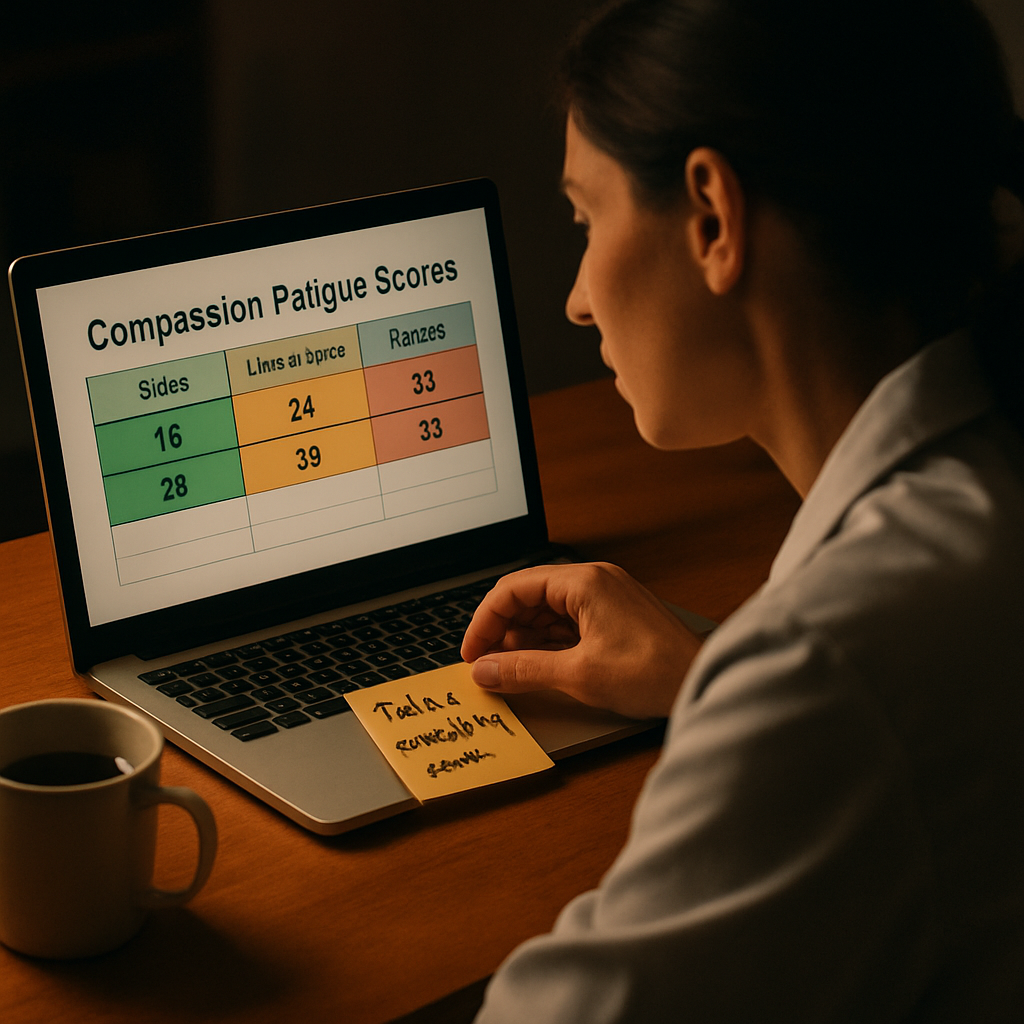
Grab a spreadsheet, a notes app, or the e7D‑Wellness dashboard if you have access. Create columns for date, overall fatigue score, sub‑scale scores (emotional exhaustion, secondary trauma, compassion satisfaction), and a one‑line “trigger note.” The act of writing the trigger forces you to connect the data point with a real event – a tough trauma case, a staffing shortage, or even a personal stressor.
Pro tip: use colour‑coding. Green for scores under the low‑risk threshold, yellow for moderate, and red for high. A quick glance at the colour bar tells you whether today’s shift was “all good” or if you need to pull the trigger on a micro‑intervention.
Automate reminders so you never miss a beat
Set a recurring alarm on your phone titled “Compassion Check‑In.” Pair it with a 2‑minute breathing cue or a stretch video – anything that signals your brain it's time to pause. In a study of 120 nurses who added a reminder, compliance jumped from 45 % to 89 % over a month.
If you prefer a paper‑based habit, keep a printed one‑page score sheet on the back of your locker door. Every time you lock it, you see the reminder.
Build a peer‑support loop
Find a “wellness buddy” – a colleague you trust to share scores with once a week. The idea isn’t to compare numbers, but to narrate the story behind them. When Maya, a pediatric ICU nurse in Chicago, started a 15‑minute debrief with her buddy after each high‑score night, her average exhaustion rating fell by 10 points in six weeks.
Even a quick text: “Score 24 today, felt drained after trauma bay” can open the door for a supportive reply or a suggestion of a short walk.
Leverage existing resources for quick relief
When a score spikes, you need an immediate, evidence‑based action. Our Effective Stress Management Techniques for Nurses guide lists three go‑to tools: a 60‑second box‑breathing exercise, a 5‑minute progressive muscle relaxation, and a “reset” ritual of stepping outside for fresh air. Choose one that matches the trigger you logged.
For example, Dr. Alvarez noticed a secondary‑trauma surge after a particularly graphic case. He paused, did the box‑breathing, and then wrote a brief reflective note. The next day his score dropped back into the moderate range.
Scale the habit to the whole unit
If you’re a charge nurse or team lead, consider anonymized aggregate reporting. Pull the weekly averages and share a line graph in your staff huddle. In one hospital, seeing the unit’s collective trend sparked a policy change: a mandatory 10‑minute mindfulness break every 4 hours, which cut average exhaustion scores by 12 points over a quarter.
Make sure the data is de‑identified – use codes like “RN‑03” instead of real names – to keep the environment safe and non‑judgmental.
When to call in professional help
High scores that linger for two consecutive weeks, or a sudden jump of more than 15 points, are a red flag. At that point, schedule a session with your employee‑assistance program, a therapist, or a physician‑wellbeing specialist. The earlier you involve a professional, the easier it is to prevent burnout from spiralling.
And remember, stress‑relief doesn’t have to be purely clinical. Some clinicians find a low‑dose CBD tincture helpful for calming the nervous system after a rough shift. If you’re curious, Iguana Smoke UK offers a range of CBD products that many frontline workers use as a complementary tool.
To wrap it up, think of your ongoing monitoring plan as a three‑leg stool: data tracking, peer support, and rapid‑response interventions. Keep all three sturdy, and you’ll stay balanced even when the workload tries to tip you over.
FAQ
What is a compassion fatigue questionnaire and why should I use one?
A compassion fatigue questionnaire is a short, evidence‑based self‑check‑in that asks you to rate how often you feel detached, irritated, or drained after patient care. It turns vague emotions into numbers you can actually see. By completing it, you get a snapshot of where you stand on emotional exhaustion, secondary trauma and compassion satisfaction, so you know whether you’re just tired or slipping into fatigue that needs attention.
How often should I take the compassion fatigue questionnaire?
You don’t need to fill it out every single shift – that would feel like another task. Most clinicians find a weekly pulse works best: pick a quiet moment at the end of your work‑cycle, like Friday evening, and spend five minutes scoring yourself. If your schedule varies, you can also do a quick check after a particularly stressful day. The key is consistency, not perfection.
What do the scores mean and which score is a red flag?
The scores are usually broken into three sub‑scales – emotional exhaustion, secondary traumatic stress and compassion satisfaction. Low‑to‑moderate numbers (under about 15 on a 0‑30 scale) suggest you’re managing okay. Once a sub‑scale hits the mid‑20s or higher, that’s a red flag indicating you’re accumulating fatigue that could affect patient safety. Watch for sudden jumps of 10 points or more; they often signal a trigger you need to address right away.
Can I trust an online questionnaire to reflect my real feelings?
Online tools have come a long way, and most of the questionnaires we recommend are built on peer‑reviewed research and validated with thousands of clinicians. The key is to pick a test that reports its reliability – things like a Cronbach’s alpha above .80 are good signs. When you answer honestly and treat the results as private data, the questionnaire can mirror your real feelings better than a casual chat with a colleague.
What practical steps can I take after a high score?
First, write down the specific trigger that popped up – maybe a night‑shift trauma case or a sudden staffing shortage. Then choose a micro‑intervention that fits the trigger: a 2‑minute box‑breathing exercise, a quick debrief with a trusted peer, or a short “reset” walk outside. Set a measurable goal, like lowering your exhaustion sub‑score by five points in two weeks, and track it in a simple spreadsheet or wellness app. If the score stays high after a couple of tries, reach out to your employee‑assistance program or a therapist.
How can I involve my team or manager without feeling judged?
Bring the data into the conversation, not the drama. Share a one‑line summary with your manager – for example, ‘My secondary‑stress score jumped after yesterday’s trauma bay, so I’m scheduling a peer check‑in.’ Framing it as a concrete observation makes it easier for leadership to see the need for a tweak, like a short debrief or a staggered shift. And ask a trusted colleague to be your “wellness buddy” so you both can swap scores and support each other without feeling exposed.
Is there a quick way to track my progress over time?
Yes – the simplest way is to keep a one‑page log. Write the date, overall score, any sub‑scale that jumped, and a brief note about the trigger. Use colour‑coding: green under 15, yellow 15‑22, red 23+. After a month, glance at the colour bar; you’ll instantly see whether your interventions are moving the needle. Some clinicians even plot the line on a sticky‑note calendar so they can spot trends at a glance without any fancy software.
Conclusion
We’ve walked through why a compassion fatigue questionnaire matters, how to pick the right tool, and ways to turn scores into real‑world change.
So, what’s the next step for you? Grab the questionnaire that feels the least invasive – maybe a 10‑question screen you can finish on a coffee break – and make it a weekly habit.
When you see a spike, write down the trigger in one line. That tiny note is the bridge between a number and a concrete action, whether it’s a micro‑breathing break, a quick peer debrief, or a brief chat with your supervisor.
Remember, the goal isn’t perfection; it’s momentum. Even a few points of improvement over a month can shift your colour bar from red to yellow, and that visual cue alone can boost confidence.
In our experience at e7D‑Wellness, clinicians who log their scores and share them with a trusted “wellness buddy” report steadier resilience and fewer error‑prone moments.
Take a minute right now: set a reminder for tomorrow’s shift end, open the questionnaire, and record the first score. You’ve just taken the first brick toward a sturdier, more sustainable practice.
Keep the conversation going – the data you collect is only as powerful as the dialogue it sparks with yourself and your team.


Comments