

Clinician Wellbeing Self-Assessment Tool Free: How to Use It
- Patricia Maris

- 8 hours ago
- 9 min read
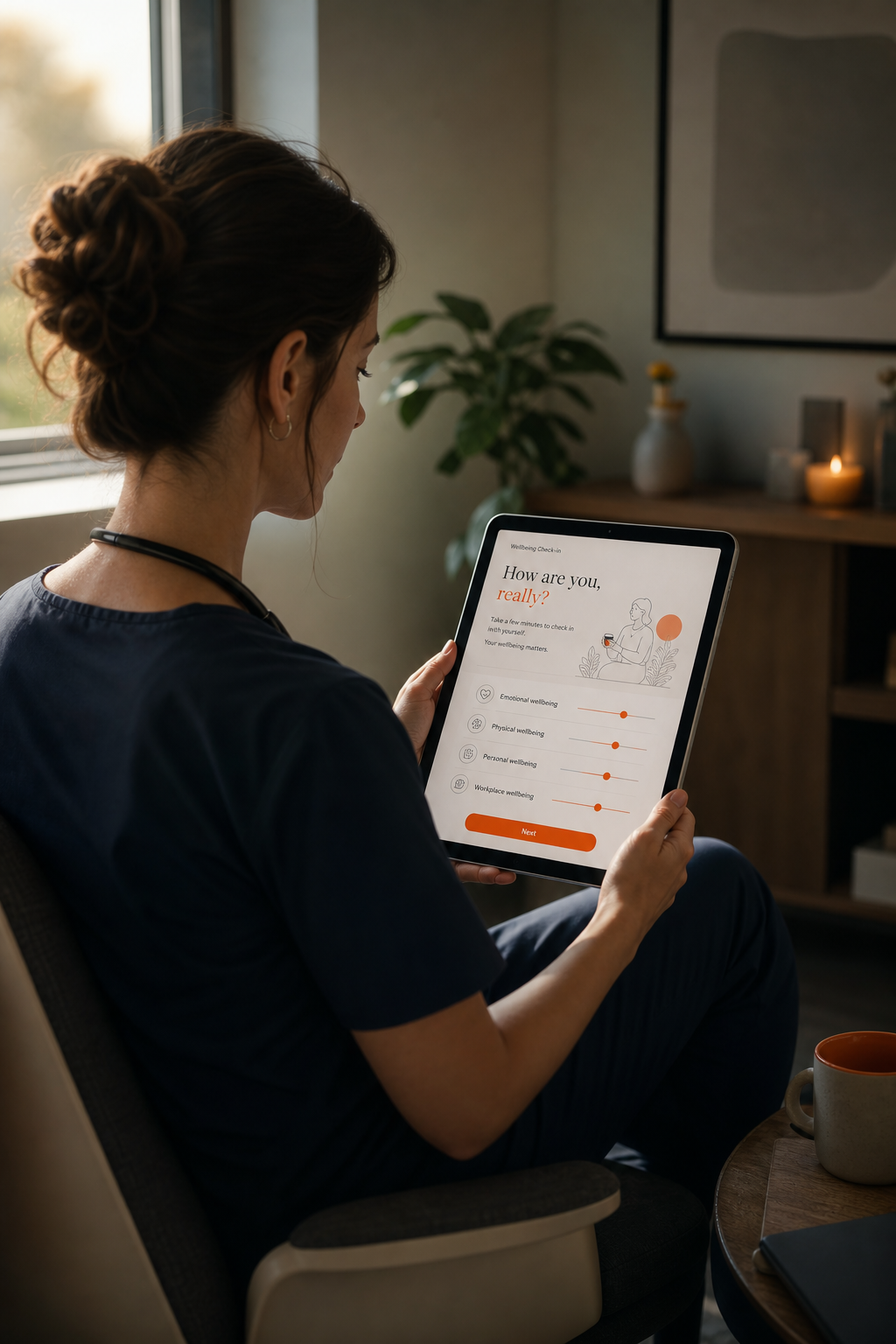
Hey there. If you're a clinician feeling the weight of endless charts, sleepless nights, or that nagging sense that something's off, you're not alone. Burnout among healthcare professionals has reached crisis levels, with nearly half reporting symptoms. But you don't have to guess where you stand. A free, confidential self-assessment can give you clear answers. In this guide, you'll learn how to use the Clinician Wellbeing Self-Assessment Tool, a free, evidence-based tool designed specifically for healthcare workers. We'll walk through five simple steps: recognizing distress signals, choosing the right tool, taking the assessment honestly, interpreting your scores, and building a personalized action plan using the eight pillars of wellbeing. Let's get started.
Step 1: Recognize the Signs of Clinician Distress
Before you pick any assessment, you need to know what you're looking for. Burnout isn't just feeling tired. Global health authorities define it as a syndrome from chronic workplace stress that hasn't been managed well. The three key signs are exhaustion, cynicism or mental distance from your job, and reduced professional effectiveness. According to authoritative medical sources, it's recognized as an occupational phenomenon.
But burnout shows up differently for everyone. Some clinicians feel drained despite getting enough sleep. Others become detached from patients or cynical about their work. You might notice increased anxiety, trouble concentrating, or physical symptoms like headaches and stomach issues. The earlier you catch these signs, the easier they are to reverse.
One of the most telling red flags is work-life imbalance. If your job constantly spills into your personal time, or you can't switch off after a shift, that's a clear signal. Another is losing enjoyment in what used to bring you satisfaction. Pay attention to how you feel before and after work. Are you dreading your shift? Do you feel numb or irritable around colleagues? These are clues.
Organizational biopsy data from large-scale clinician surveys (over 30,000 respondents) shows that work exhaustion and interpersonal disengagement are the core components of burnout. That's why a good self-assessment measures both. The free Clinician Wellbeing Self-Assessment Tool does exactly that. It's part of a comprehensive system for measuring healthcare professional wellbeing . It breaks down your experience into measurable domains like professional fulfillment, burnout, self-valuation (self-compassion), sleep-related impairment, and work-life integration.
Think of this first step as building awareness. Without recognizing that something's off, you won't take the next step. So take a honest moment. Ask yourself: Am I feeling exhausted more often than not? Have I become more cynical about my work? Do I feel less effective than I used to? If you answer yes to any, it's time to assess.
Watching that clip gives you a real sense of how organizational factors contribute to burnout. Now let's move to the actual tool.
Step 2: Choose a Free Self-Assessment Tool for Clinicians
Not all free tools are created equal. You need one that's confidential, evidence-based, and covers the right domains. The Clinician Wellbeing Self-Assessment Tool from e7D-Wellness stands out because it's the only free tool that explicitly guarantees your responses are confidential. In a world where 89% of similar tools provide no privacy statement, that matters. Your data stays yours.
This tool uses validated questions from the Stanford WellMD framework. It measures professional fulfillment, burnout, self-valuation, sleep impairment, and work-life integration. Each domain is scored, and you get a clear picture of where you're thriving versus struggling. The single-item burnout measure alone was validated on over 5,400 VA employees , one of the largest validation samples out there. So even though it's a short question, it's reliable.
Other longer burnout inventories exist, but they are often more time-consuming and lack the same privacy guarantee. The Clinician Wellbeing Self-Assessment is designed to be quick , you can finish it in under 10 minutes. That's important for busy clinicians who don't have time for an extended survey.
When choosing a tool, look for three things: evidence base, confidentiality, and actionable results. The e7D-Wellness tool checks all boxes. It's built on peer-reviewed research and directly links to resources for each domain. For example, if your sleep score is low, you'll get recommendations for improving sleep hygiene. That's the kind of usable help that makes assessment worthwhile.
To see how this tool compares to other assessments, you can explore additional resources on wellbeing. But for a quick, free start, use the Clinician Wellbeing Self-Assessment. No sign-up required, no data stored. Just you and your answers.
Step 3: Take the Assessment Accurately
Your self-assessment is only as good as your honesty. Sounds simple, but it's hard. We tend to downplay our struggles, especially as clinicians. You might think, "Others have it worse" or "I should be able to handle this." That's the self-valuation trap. To get accurate results, you need to answer from your real experience, not your ideal version.
Find a quiet moment when you won't be interrupted. Maybe after rounds or when the kids are asleep. Turn off notifications. Take a few deep breaths. Then read each question and pause. Don't rush. If a question makes you uncomfortable, that's a sign it's touching something real. Sit with it. Answer what's true, not what you wish were true.
One common mistake is answering based on your best day instead of your typical week. The assessment asks about the past month. So think about that time frame. If you had one good day but most days were draining, answer for the majority. Also, watch out for the "fine" trap. Many clinicians default to "I'm fine" because they've learned to suppress distress. But the tool is private , no one sees your answers. So let your guard down.
If you're not sure how to rate something, use your gut. The first instinct is usually closest to the truth. Overthinking leads to editing. Remember, this is for you, not for anyone else. The purpose is to identify areas where you need support. Being brutally honest is the kindest thing you can do for yourself.
After you finish, review your answers once more to make sure nothing was skipped. Then submit. The tool will generate your scores instantly. You'll see a bar chart or numerical range for each domain. That's where the real work begins.
Step 4: Interpret Your Wellbeing Scores
Your scores come in ranges. Each domain has a low, moderate, or high zone. For example, a burnout score above 50% suggests significant distress. A professional fulfillment score below 30% means you're not getting the positive rewards from work. Self-valuation scores under 50% indicate a higher risk of burnout. These thresholds come from the validation studies behind the tool.
But numbers only tell part of the story. Look for patterns. If your sleep impairment is high and your self-valuation is low, that combo often leads to burnout. If your work-life integration is poor and your professional fulfillment is low, your environment might be the root cause. The tool's strength is showing you where to focus first.
Let's break it down. The burnout scale has two parts: work exhaustion and interpersonal disengagement. A high score on exhaustion but low on disengagement might mean you're tired but still connected to your work. That's a different intervention than if both are high. Similarly, sleep impairment is a separate domain because it's not always tied to burnout. You could be fulfilled but still have poor sleep due to shift work.
To help you visualize, here's a quick reference table:
Domain | Low Score (0-30) | Moderate Score (31-50) | High Score (51-100) |
Burnout | Low risk | Borderline | Significant distress |
Professional Fulfillment | Low fulfillment | Moderate | High fulfillment |
Self-Valuation | Low self-care | Medium | Good self-care |
Sleep Impairment | Good sleep | Some issues | Poor sleep |
Work-Life Integration | Struggling | Balanced | Strong balance |
Use the table as a starting point. Then ask yourself: Which score surprised me most? Which one confirms what I already felt? Those are your priority areas. A 2025 systematic review in Nature found that measuring clinician well-being across multiple domains is essential for effective intervention. Your scores are data , now turn them into action.
Step 5: Create an Action Plan Using the 8 Pillars
Now you have your scores. Don't just read them and go back to work. Use them to build a plan. The e7D-Wellness framework is built on 8 pillars of wellness: Willpower, Breathing, Hydration, Thoughts, Nutrition, Movement, Rest, and Sexual Wellbeing. Each pillar addresses a different aspect of health. Your assessment scores will point to which pillars need attention.
For example, if your burnout score is high, focus on Rest and Thoughts. That means prioritizing sleep and practicing mindfulness or cognitive reframing. If your self-valuation is low, work on Willpower and Nutrition , building small, consistent habits that reinforce self-care. The idea is to start with the one or two pillars that will have the biggest impact.
Break down each pillar into micro-habits. For Rest, set a consistent bedtime and 30 minutes of wind-down time. For Movement, commit to a 5-minute stretch between patient visits. For Hydration, keep a water bottle on your desk and set hourly reminders. These small actions add up quickly. Track them with a simple checklist. The e7D-Wellness tool can help you visualize progress across all pillars over time.
If you're struggling with moral injury or compassion fatigue, incorporate self-compassion practices. The compassion fatigue test can give you a baseline. Then use journaling or EFT tapping (as shown in the video above) to process emotions. Remember, the goal is not to eliminate stress but to build resilience.

Finally, consider your environment. If work-life integration is a pain point, talk to your supervisor or use resources on addressing moral injury . You can also explore full therapy options through platforms that connect clinicians with alternative wellness practitioners . And if financial stress is a factor, looking into home-based business ideas might provide more flexibility. The key is to take action, no matter how small.
Conclusion
Using a free clinician wellbeing self-assessment tool is the first step toward taking control of your health. But it's only useful if you act on the results. In this guide, we covered five steps: recognizing the signs of distress, choosing a confidential evidence-based tool, taking the assessment honestly, interpreting your scores across burnout, fulfillment, self-valuation, sleep, and work-life balance, and building an action plan around the 8 pillars of wellness.
The Clinician Wellbeing Self-Assessment from e7D-Wellness is one of the few free tools that keeps your data private and gives you actionable insights. It's designed for busy healthcare professionals who need quick, reliable answers. By focusing on small, consistent changes in the areas that matter most to you, you can reduce burnout risk and build a more sustainable practice.
Remember, you don't have to do everything at once. Pick one pillar, one habit, and start today. Your future self will thank you. For a deeper look at your wellbeing profile, consider the full comprehensive wellbeing assessment which provides a complete 360-degree view across all 8 pillars. Your health matters , and you deserve support.
Frequently Asked Questions
Is the Clinician Wellbeing Self-Assessment really free?
Yes, the basic version of the Clinician Wellbeing Self-Assessment from e7D-Wellness is completely free. There is no charge to take the assessment and receive your scores. Some advanced features like personalized coaching or detailed reports may have a fee, but the core tool remains free for all healthcare professionals to use.
How long does the self-assessment take?
Most clinicians complete it in 8 to 12 minutes. The tool is designed to be brief yet complete. It includes validated questions that cover burnout, professional fulfillment, self-valuation, sleep impairment, and work-life integration. There are no unnecessary questions, so you can get through it quickly even on a busy day.
Is my data kept confidential?
Absolutely. The Clinician Wellbeing Self-Assessment explicitly states that your responses and results are confidential. They are not saved on any server and are for your eyes only. This is a key differentiator from many other free tools, which often do not provide a privacy statement. Your information stays with you.
What should I do if my burnout score is high?
First, don't panic. A high burnout score is a signal, not a diagnosis. Use the results to prioritize the 8 pillars of wellness , especially Rest and Thoughts. Start with small changes like improving sleep hygiene, taking short mindfulness breaks, or reducing after-hours work. Share your results with a trusted colleague or a mental health professional if needed. The tool also provides resources for each domain.
Can I retake the assessment later?
Yes, you can take it as often as you like. Many clinicians retake it every few months to track progress. Burnout and wellbeing fluctuate with workload and life changes. Regular check-ins help you catch problems early and see if your action plan is working. The tool does not store past results, so you may want to screenshot or write down your scores each time.
Does the tool also measure compassion fatigue?
Not directly. The Clinician Wellbeing Self-Assessment focuses on burnout, professional fulfillment, self-valuation, sleep, and work-life integration. If you're concerned about compassion fatigue, e7D-Wellness offers a separate Compassion Fatigue Assessment that specifically measures caregiver burnout and secondary traumatic stress. You can use both tools together for a fuller picture.
Are the questions based on real research?
Yes, the assessment uses validated instruments from leading research institutions. The burnout measure was validated in a large study of over 5,400 VA employees, and the professional fulfillment scale was published in peer-reviewed journals. The self-valuation domain is based on research showing that high self-valuation (self-compassion) correlates with lower burnout risk.
What if I need more help after the assessment?
The assessment gives you a starting point. If your scores indicate significant distress, consider reaching out to a therapist who specializes in healthcare professionals. You can also join peer support groups or explore full therapy options through specialized clinician support platforms. e7D-Wellness offers additional resources and coaching programs for clinicians who want deeper support.


Comments