

Clinician Burnout Risk Assessment Tool Free: Complete Guide
- Patricia Maris

- 12 minutes ago
- 7 min read
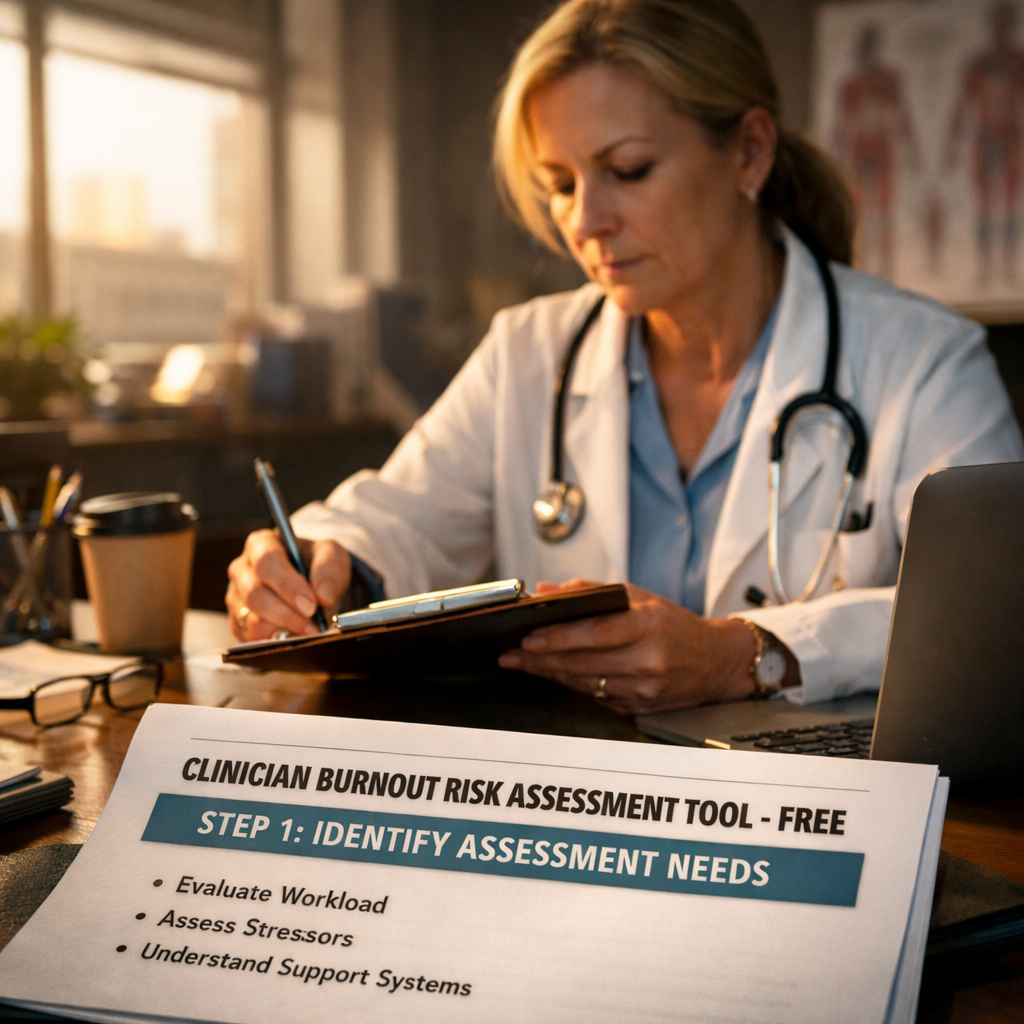
Burnout is hitting clinicians hard. One quick survey can show if you’re at risk before it gets worse. In this guide you’ll learn how to pick the right free assessment, collect solid data, and turn the numbers into a plan that keeps you healthy at work.
Step 1: Identify Assessment Needs
First, you have to know why you are measuring burnout. Are you looking for early warning signs for yourself, or do you need a snapshot for a whole department? Write down the exact question you want answered. For example, “Do my nurses feel overwhelmed during night shifts?” or “Am I showing signs of emotional exhaustion after the latest policy change?” Having a clear question keeps the rest of the work focused.
Next, think about the parts of burnout you care about. The classic Maslach model looks at emotional exhaustion, depersonalization, and personal accomplishment. The newer job‑demands‑resources model adds things like lack of control and poor support. Decide which of these fit your setting. A small clinic may only need to track exhaustion and support, while a large hospital might add depersonalization and workload metrics.
And consider who will fill out the survey. Front‑line nurses, physicians, residents, and even support staff may see burnout differently. If you mix groups, you may need separate forms or at least separate sections so the data stay meaningful.
Here’s what I mean: imagine a busy emergency department that wants to know if shift length is causing fatigue. The team writes down the goal , “measure fatigue after each 12‑hour shift” , then chooses a tool that asks about sleep, energy, and mood. The result is a clear set of numbers that point to the exact time of day the staff feel worst.
"Understanding the why behind the assessment is the first step to fixing the problem," says a recent systems‑approach chapter on clinician well‑being.
Once you have the goal, you can match it to a tool. Look for questionnaires that ask the exact things you need. Some tools are long (30‑plus items) and give a deep view; others are short (5‑10 items) and are easy to fit into a busy shift. The choice depends on how much time you can give staff and how detailed you want the picture to be.
Pro tip: Write the assessment goal on a sticky note and keep it on your desk while you research tools. If the tool doesn’t answer that goal, walk away.
When you know the goal, you can also decide how you’ll use the data. Will you report it to leadership? Will you share it with the whole team? Will you track changes over months? Planning the next step now saves you a lot of extra work later.
Below is a quick checklist you can print and fill out before you start hunting for a tool:
What specific burnout question am I trying to answer?
Which burnout dimensions matter most for my setting?
Who will complete the survey and how often?
How will I use the results (report, action plan, monitoring)?
What time and resources can I devote to data collection?
And remember, the assessment you pick should be easy for busy clinicians to finish in under ten minutes. If it feels like a homework assignment, people will skip it.
To see an example of a well‑written burnout goal, check out the How to Understand and Use a Compassion Fatigue Test article. It walks through a real‑world goal and shows how a short survey can fit into a hectic schedule.
Below is a short video that explains why defining clear goals matters before you pick any tool.
After you have your goal sheet, you can move on to the next step: finding a free tool that matches what you wrote down.
Key Takeaway:A clear, written assessment goal keeps your burnout survey focused and useful.
Bottom line:Write down exactly what you need to know before you pick any tool.
Step 2: Choose a Free Tool & Gather Baseline Data
Now that you know what you want to measure, look for a free questionnaire that fits. A quick search shows many options, but only a few are truly free and easy to use. The most clinician‑specific free tool is the Confidential Wellbeing Self‑Assessment offered by e7D‑Wellness. It asks about exhaustion, control, and support, and it’s designed for doctors, nurses, and allied staff.
One problem you’ll see across the board is validation. Only half of the free tools list any published validation. The e7D‑Wellness self‑assessment does not list validation either, which mirrors the broader trend. That doesn’t mean it can’t be useful; it just means you should treat the scores as a starting point, not a final diagnosis.
Another free option is the Burnout Assessment Tool (BAT). It has 33 items, which is a lot, but it is free to use. If you have time for a longer survey, BAT can give a richer picture of the three burnout dimensions.
Here’s a quick comparison you can copy into a spreadsheet:
Tool | Items | Target Audience | Free? | Validation |
Confidential Wellbeing Self‑Assessment (e7D‑Wellness) | — | Physicians, nurses, allied staff | Yes | Not listed |
Burnout Assessment Tool (BAT) | 33 | All health workers | Yes | Partial |
Oldenburg Burnout Inventory (OLBI) | 16 | General workers | Free download | Published |
Maslach Burnout Inventory‑HSS | 22 | Human services | Paid | Published |
Notice how the clinician‑focused tool is the only one that mentions doctors and nurses directly. That makes it the best first choice for a quick check‑in.
When you pick a tool, download the PDF or open the online form. Test the flow yourself first , you don’t want any broken links or confusing wording. Then share the link with a small pilot group. Ask them to fill it out in a quiet moment, not during a crisis.
After the pilot, look at the raw scores. Most tools give a numeric range for each dimension. For example, a score of 3‑4 on a 1‑5 exhaustion scale suggests moderate risk. Keep a simple spreadsheet: date, respondent role, each dimension score, and any comments.
Pro tip: Add a column for “Action needed” and fill it in right after you see the numbers. If a nurse scores high on exhaustion, note “review shift length” right away. This makes the next step (planning) much faster.
To understand how the data can drive change, read the Healthcare Wellness: Prevent Burnout article. It shows how a hospital turned survey numbers into a new scheduling policy.
Now you have the baseline. The next part , turning scores into action , will be covered in a later guide, but here’s a quick tip: set a threshold for each dimension. Anything above that threshold triggers a follow‑up interview or a team meeting.
50%of free burnout screens lack published validation
Even without perfect validation, a free tool can still flag risk early. The key is to use the numbers as conversation starters, not final verdicts.
Finally, keep the data safe. Store the spreadsheet on a secure, password‑protected drive. If you collect personal identifiers, follow your institution’s privacy policy.
For a deeper look at how primary‑care clinics handle burnout data, see the AHRQ guide on burnout in primary care . It explains how to protect patient‑level data while still learning from staff surveys.
And if you ever wonder how a large system tracks burnout over time, the No‑Nonsense Tips for Healthcare Pros page shares real‑world examples of ongoing monitoring.
Key Takeaway:Choose a free, clinician‑focused tool, run a pilot, record scores, and set thresholds for action.
Bottom line:Pick the right free tool, collect clear data, and keep it safe for the next steps.
FAQ
What makes a burnout assessment tool “free”?
A free tool is one that does not require a subscription or payment to access the questionnaire and scoring guide. Many academic institutions publish PDFs that anyone can download, and some nonprofit groups host online forms at no cost. Free tools are great for quick checks, but you should verify whether they have any hidden licensing requirements before you share them widely.
How often should clinicians take a burnout risk assessment?
It depends on workload and stress spikes. A good rule of thumb is to run a short check‑in every three months, and a deeper survey after a major change such as a new EMR rollout or a shift schedule overhaul. Regular testing helps you spot trends before they become crises.
Can I use the same tool for physicians and nurses?
Many tools are designed for all health‑care workers, but the Confidential Wellbeing Self‑Assessment is built specifically for clinicians, so it works well for both doctors and nurses. If you need a tool that distinguishes between clinical and non‑clinical staff, look for one that separates questions by role or includes role‑specific items.
What if my team is reluctant to fill out a burnout survey?
Start with transparency. Explain why you are collecting the data, how it will be used, and how you will protect privacy. Keep the questionnaire short, and consider offering a small incentive like a coffee voucher. Sharing early results and showing concrete changes can also boost participation over time.
How do I interpret the scores from a free burnout tool?
Most tools provide cut‑off ranges: low, moderate, and high risk. Compare your team’s average scores to those ranges. If a large portion lands in the moderate or high zone, it’s time to plan interventions such as workload adjustments, peer support groups, or resilience training.
Are free tools reliable enough for hospital administration?
Free tools can give a solid snapshot, especially when paired with qualitative feedback. While they may lack full psychometric validation, they still highlight problem areas. Administrators can combine free survey data with other metrics like turnover rates and sick leave to build a stronger case for change.
Conclusion
Assessing burnout risk doesn’t have to be expensive or complicated. By first writing down a clear goal, you give the whole process direction. Then you can pick a free, clinician‑focused questionnaire , the Confidential Wellbeing Self‑Assessment is the top free option , run a pilot, collect numbers, and set thresholds that trigger action. Keep the data secure, share the findings openly, and turn the scores into concrete steps like adjusting shift length or adding peer support.
Remember, the goal is early warning, not diagnosis. Use the results to start conversations, to test small changes, and to measure improvement over time. When you need more depth, you can always add a validated instrument later.
If you want a guided, evidence‑based way to track your own wellbeing, try the e7D‑Wellness self‑assessment and join the community of clinicians who are taking control of burnout risk.
Take the first step today: define your question, pick the free tool, and start gathering data. Your future self will thank you for the clarity and the healthier work life you build now.
For more practical tips on building resilience, check out the How Healthcare Professional Wellbeing Can Be Measured and Improved article.
And don’t forget to explore relaxation techniques like the Progressive Muscle Relaxation Script PDF to keep stress levels low while you work on burnout prevention.
Bottom line:A clear goal, a free clinician‑focused tool, and simple data steps give you a powerful way to catch burnout early and act fast.


Comments