

Breathing Exercises PDF Guide: Easy Steps to Download, Use, and Master Your Practice
- Patricia Maris

- Dec 2, 2025
- 17 min read
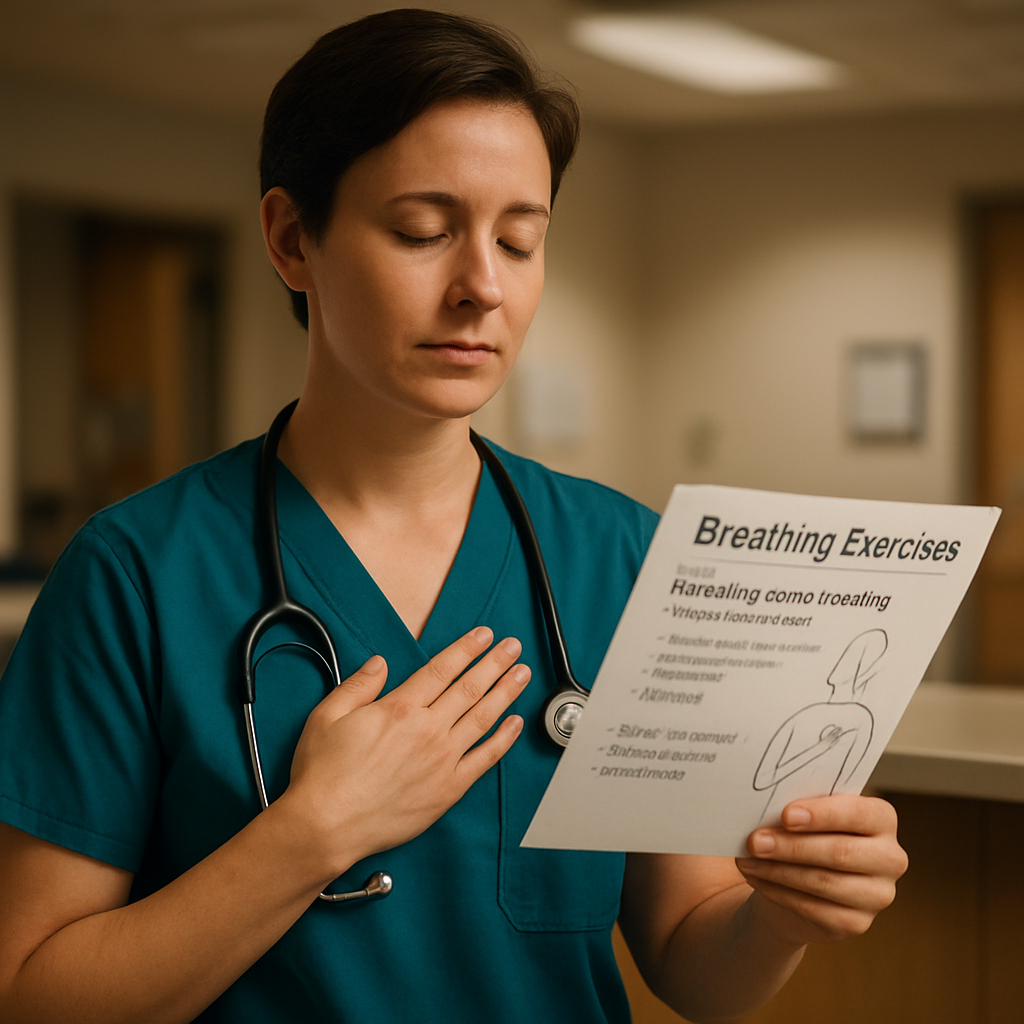
Ever felt your breath hitching as you rush from one code to the next, and you wish there was a tiny cheat sheet you could pull out in the hallway?
That’s exactly why “breathing exercises pdf” has become the go‑to phrase for clinicians hunting a printable, on‑the‑spot tool. A single page that lays out a handful of simple rhythms can turn a shaky moment into a steady one.
Imagine Dr. Patel, a pediatrician who keeps a laminated sheet in her white coat pocket. When a toddler’s fever spikes, she pauses, follows the 4‑7‑8 pattern, and feels her heart rate settle before she even checks the vitals. That same sheet could sit on a nurse’s station, on a med‑student’s clipboard, or even on a break‑room fridge.
And if you’re wondering how to craft your own PDF, you don’t need a design degree. Start with a clear title, list three to five breath cycles (like box breathing, diaphragmatic breathing, and the 4‑7‑8 method), add a brief “when to use” note, and finish with a tiny space for a personal cue. Keep the layout clean – think big headings, short bullet points, and a splash of calming blue.
To see a real‑world example of how these simple routines fit into a broader wellbeing strategy, check out this effective stress management guide for doctors . It walks you through breathing exercises, mindfulness snippets, and quick‑fire habits that don’t require a quiet room.
Once your PDF is ready, print it double‑sided and laminate it. Laminated sheets survive the chaos of a busy ER, the occasional coffee spill, and the inevitable shuffle of a pocket. You can even attach a small magnet to the back so it sticks to any metal surface.
Want to make the habit stick? Pair the breathing PDF with a tiny reminder trigger – for example, place a sticky note on your computer monitor that says “Breathe in 4, hold 7, exhale 8.” Each time you see it, you’ll automatically flip to the sheet and follow the rhythm.
Pro tip: set a timer on your phone for three minutes during each shift break. When it buzzes, grab the PDF, close your eyes, and run through the chosen technique. Over a week, you’ll notice lower cortisol spikes and clearer decision‑making.
And because self‑care can be a little more enjoyable, consider pairing your breathing practice with a quick refresh in the shower. A good shower routine can amplify the relaxation response – you might even browse a ShowerBuddy guide for ideas on how to integrate soothing water flow with mindful breathing.
So, grab a pen, sketch out those breath cycles, print, and start using your breathing exercises PDF today. Your next calm moment is just a breath away.
TL;DR
Grab a printable breathing exercises pdf, stick it on your badge or monitor, and use the 4‑7‑8, box, or diaphragmatic rhythm during shift breaks to cut stress and sharpen decision‑making.
Do it for a few minutes three times a week and you’ll notice calmer nerves, lower cortisol spikes, and more energy to keep caring for patients.
Step 1: Understanding Breathing Exercise Types
You know that panicked hallway moment between two patients? Breathing can be your fastest reset. Let’s map the main types so you can pick the one that actually fits a 60‑second break or a three‑minute pause.
Why bother knowing the types?
Different rhythms change your body in different ways: heart rate, vagal tone, mental clarity. Learning the names helps you find a quick match for the situation.
Want calm now? Choose a pacing technique. Need focus before a tricky decision? Try an energising count.
Core breathing exercise types (what they feel like and when to use them)
Diaphragmatic (belly) breathing
What it is: slow, deep inhalations pushing the belly out, gentle full exhalations.
When to use: pre‑shift grounding, short breaks, before a difficult conversation.
How to do it (practical): place one hand on belly, one on chest, inhale for 4 seconds through nose feeling the belly rise, exhale for 6–8 seconds through lips slightly parted. Repeat 6 times.
Tip: clinicians report this is the easiest to teach in a ward — it’s discreet and works even standing.
For a clinic‑style handout with clear steps, see the UC Berkeley breathing exercises handout for technique details and diagrams.
Box breathing (square breathing)
What it is: even counts — inhale, hold, exhale, hold — like tracing a square.
When to use: quick reset before an acute care moment, restoring composure between consults.
How to do it: inhale 4, hold 4, exhale 4, hold 4. Do 3–5 cycles. If 4 feels long, start with 3 seconds each.
Real example: Dr. Patel uses a 3‑3‑3‑3 box while waiting for a lab result — three cycles, and she reports clearer thinking afterwards.
4‑7‑8 (relaxation breathing)
What it is: inhale 4, hold 7, exhale 8 — encourages full exhalation and parasympathetic activation.
When to use: when you must downshift rapidly, like after a stressful call or debrief.
How to do it: two to four rounds sitting comfortably. Don’t force breath — keep it smooth.
Paced / resonant breathing
What it is: slow breathing around 5–7 breaths per minute to align heart rate variability.
When to use: longer break (10–20 minutes), guided practice, or as part of a shift‑end routine.
How to practice: breathe with a simple app or silently count: inhale 5–6 sec, exhale 5–6 sec. Repeat for 10 minutes if time allows.
Putting types into a tiny decision tree
Two minutes between patients? Do 4‑4‑4‑4 box or diaphragmatic 6/8 exhale.
Two minutes before a procedure? Do 4‑7‑8 for calm focus.
Ten minutes on a break? Try paced resonant breathing to rebuild resilience.
Want a practical next step you can print and laminate? Check this MarisGraph piece on how breath‑work unlocks clarity and resilience for clinicians for examples and printable cues: Unlock Mental Clarity Through Breath-work: Build Resilience and ...
So, what should you do next?
Pick one technique, print a one‑page cue for your badge or pocket, and label when to use it (panic, prep, break). Try it three times this week — you’ll notice how quickly the chaos softens.
If you’re planning a calm mini‑retreat or need a quiet place to practice longer sessions, you might find local retreat listings helpful, for example Sunny Coast Homes if you’re organizing a team offsite or restorative break.
Want an image to pin on a printable PDF? See the placeholder below and adapt it into your handout.
Need quick references? UC Berkeley’s breathing handout breaks down step‑by‑step diaphragmatic and paced breathing; Head Start’s breathing techniques guide offers additional child‑friendly adaptations you can repurpose for family‑facing care moments.
Now take five — literally — and try one cycle of diaphragmatic breathing.
Step 2: How to Choose the Right PDF Guide
Let’s be practical: you already know a pocket‑sized breathing cue can save a frazzled minute. Now you’ve got to pick or make the PDF that actually gets used.
Here’s a short, usable checklist to stop you overthinking and start printing.
1) Match the PDF to the situation
Ask yourself: is this for a 30‑second hallway reset, a three‑minute pre‑procedure anchor, or a shift‑end practice? Each use needs different detail density.
For a one‑page cue used between patients, big headings, three simple rhythms, and a tiny “when to use” line are perfect.
For a handout that teaches technique, include one clear diagram, step counts, and a short safety note.
2) Readability beats clever design
Pick a layout that’s readable at phone size and when laminated. That means large sans‑serif type, 16–20px body text (for print, roughly 12–14pt), strong contrast, and a single accent colour.
Is it obvious which step to do first within three seconds? If not, keep cutting text.
3) What to include — concrete, not clever
Structure: title, 3–5 techniques, a “when to use” cue, quick safety line, and a tiny space for a personalized trigger.
Example: title “Breath Cues for Busy Shifts”, then box breathing (3‑3‑3‑3), diaphragmatic (4/6 exhale), and 4‑7‑8 (two rounds). Add: “Use when: before procedure / after difficult news / 1‑minute break.”
4) Real‑world examples and quick tests
Imagine a nurse slipping the card into a badge reel. If the font shrinks when printed to badge size, redesign it.
Or think of a med student in a corridor: the cue must be readable without pausing a step. That’s the acid test.
So, what should you do next? Print a draft on plain paper and carry it on shift — you’ll find the problems fast.
5) Accessibility and clinical friendliness
Make sure alt text exists for any online PDF and that diagrams have simple labels. A clinician using the PDF in front of a patient may want to hand it over; avoid clinical jargon and keep language plain.
If you want a ready template style and examples tailored to healthcare teams, see mindfulness and quick‑cue examples collected for nurses and clinicians at Mindfulness for Nurses: A Practical How‑To Guide to Reduce Stress on the Job — it’s a great reference for formatting and “when to use” decisions.
6) Distribution & durability — simple steps
Laminating, adding a magnet, and printing double‑sided are cheap ways to make the PDF survive spills and pockets.
Decide whether it’s badge‑size, pocket card, break‑room poster, or an email attachment; each format needs slightly different typography and spacing.
7) Quick validation checklist before you publish
Does each technique fit on one visible scan? Is type legible at phone size? Can a colleague follow steps without audio? If yes, you’re done.
Final tip: pair the PDF with a tiny habit trigger (sticky note on the monitor or a three‑minute shift timer). That’s how a PDF stops being just a file and becomes a tool you actually use.
Step 3: Comparing Top Free Breathing Exercises PDFs
Alright, you’ve collected a handful of breathing cue PDFs. Now what?
Do you just pick the flashiest one and hope it works?
Probably not. A solid PDF should feel like a trusted sidekick, not a mystery gadget.
First, grab the PDFs you’re eye‑balling and put them side by side on your screen.
Notice the layout: big headings, clear bullet points, and plenty of white space.
If you squint and can’t read the steps on a phone, toss it.
Next, ask yourself: which techniques does each PDF cover?
Do you need a single quick reset, or a longer resilience routine?
Match the content to the moments you face on the ward.
Here’s a quick decision‑tree you can sketch on a sticky note:
One‑minute break? Look for 4‑4‑4‑4 box breathing.
Five‑minute debrief? Prefer a 4‑7‑8 calm‑down.
Shift‑end wind‑down? Choose a paced‑resonance guide.
Now, let’s break down three popular free PDFs and see how they stack up.
Core Technique(s) | Ideal Use Case | Notes | |
Basic Box Breathing PDF | Box breathing (4‑4‑4‑4) | Quick reset between patients | Large font, printable on badge‑size |
Diaphragmatic Breathing Quick Card | Diaphragmatic (4/6 exhale) | Pre‑shift grounding or before difficult conversations | Laminated, includes hand placement illustration |
4‑7‑8 Relaxation Sheet | 4‑7‑8 rhythm | Down‑shift after high‑stress events | Shows gentle inhale/exhale cues, easy to follow eyes‑closed |
Notice how each one targets a specific time slice in your day.
Do the PDFs give you a “when to use” hint?
If the sheet just lists the steps without context, you’ll waste precious seconds figuring it out.
Look for a tiny line that says “Use after code blue” or “Perfect for 2‑minute hallway breaks.”
Another red flag: jargon.
If the PDF talks about “vagal tone modulation” you’ll need a translator.
Keep it plain: “Breathe in for 4 seconds, hold for 7, breathe out for 8.”
Let’s talk visuals.
A good breathing PDF includes a simple diagram – maybe a circle showing inhale, hold, exhale.
Even a tiny icon can cue you when you’re in a rush.
Tip: if the PDF is all text, sketch a quick doodle yourself.
Now, consider durability.
Laminated sheets survive spills, badge‑clip wear, and the occasional coffee splash.
If you can’t laminate, print on heavy cardstock and slip a clear adhesive sheet over it.
One more practical test: ask a colleague to read the PDF aloud while you’re busy.
If they can recite the steps in under 10 seconds, you’ve got a winner.
Don’t forget accessibility.
Make sure the PDF has alt‑text for any images so you can share it with patients who need a visual aid.
And if you’re using a screen reader, the PDF should be tagged properly – something the Washington State health plan comparison guide gets right.
Finally, create a quick checklist before you lock in your choice:
Readability at phone size?
Clear “when to use” note?
Simple diagram or cue?
Laminated or protected?
Plain language, no jargon?
If you can check all boxes, you’ve found the PDF that will actually sit in your pocket and help you breathe.
So, what’s next?
Print your top two contenders, laminate them, and test them on a real shift.
Within a week you’ll know which one truly eases the chaos.
Step 4: Downloading and Customizing Your PDF
Download: make it painless
Alright — you’ve built or picked the breathing exercises pdf. Now let’s get it into your hands so it actually gets used.
First, pick your file settings: export as a high-quality PDF, embed fonts, and include obvious metadata (title, author, keywords). That little metadata bit helps your team find the right file later.
Want to avoid a classic rookie mistake?
Don’t leave form fields or comments live if you plan to hand these out. Flatten or save a print-ready copy so nothing shifts when someone opens it on another device.
Step-by-step: download and export checklist
1) From your design app (Word, Canva, InDesign), choose “Export” or “Save as PDF.”
2) Embed fonts and images. No funky font swaps when it prints.
3) Set output to high quality for print, or optimized for web if it’s an email attachment.
4) Flatten any interactive fields for the badge/pocket card version.
5) Add file metadata and a version number like v1.0 (then update on edits).
Need an example of a ready-to-print worksheet and tips on filling/using it? TherapistAid’s deep breathing worksheet explains printable and fillable options and has guidance on opening fillable PDFs if your clinic uses them TherapistAid deep breathing worksheet .
Customize for your workflow
Now make it yours. Add a tiny clinic logo, a short “When to use” line, and a 1‑word personal cue space — people actually write a single word on that line and it works better than a paragraph.
Consider multiple sizes: badge card (2.5 x 3.5 in), pocket card, A4 handout, and a break-room poster.
Want a real-world quick hack?
Print two versions: one badge-sized laminated card you carry, and one poster for the staff room. Test both on shift — the badge card survives pockets, the poster nudges people to pause.
Accessibility and tagging
Make sure images have alt text and the PDF is tagged for screen readers if patients or colleagues will open it digitally.
If you include diagrams, keep labels simple: “Inhale — Hold — Exhale,” not technical phrases. Plain language wins in chaotic settings.
Print settings, durability, and distribution
For print: 300 dpi images, 0.125 in bleed where needed, and high-contrast colours so the steps read at badge‑size.
Laminating increases lifespan; magnetic backing or a badge reel extends ready access. Use heavy cardstock if you can’t laminate.
How will staff get these? Email a print-ready PDF, drop the poster in the break room, and hand a laminated sample to shift leaders so they can replicate it.
Version control and feedback loop
Label files clearly: breath-cues_v1.0.pdf and keep an editable master. Collect quick feedback after a week: is the font legible? Is the “when to use” note helpful?
If you want templates for printable, clinic-friendly checklists and cues, this Self Care Checklist PDF: A Practical Step-by-Step Guide has formatting tips you can repurpose into your breathing cue layouts Self Care Checklist PDF: A Practical Step-by-Step Guide .
Final nudge: print two, test one shift, tweak quickly, and within a week you’ll have a resilient, usable PDF that actually gets pulled out when it matters.
Step 5: Integrating PDF Practices into Your Daily Routine
Okay, you’ve made a clean, laminated breathing exercises pdf — now the hard part: actually using it when the hallway moment hits.
Let’s keep this simple. Small habits, repeated, win. Not one heroic session once a month.
Why make a habit out of a tiny sheet?
Because when stress spikes you don’t have time to invent a ritual. You need a cue, a micro‑routine, and a place to find it without thinking.
So, what should you do next?
Daily routine blueprint (doable in any shift)
Follow these five concrete steps. Each one takes seconds or a few minutes and stacks into real change.
Pick your anchor moments. Choose 2–3 daily triggers: badge scan, before the first patient, and the 10‑minute mid‑shift break.
Carry one primary copy. Keep a laminated badge card in your pocket or badge reel so it’s in reach during corridor pauses.
Schedule micro‑reminders. Set a silent vibration at the start of each handover or place a sticky cue on your monitor. Three deep cycles takes 60–90 seconds — doable between calls.
Pair it with a quick environmental change. Turn off monitor sound, stand with feet planted, or take one sip of water before the first inhale; the combination builds a reliable sequence.
Log one sentence. After a 2‑minute practice, scribble a single word in your shift notes: "steady", "ground", or a smiley. That tiny record acts as feedback and motivation.
Does this really work? Yes — clinicians who use short, repeatable cues report faster recovery from acute stress and clearer decision‑making. For general stress strategies that support short practices like these, see the Minnesota Department of Human Services' stress management guide for practical workplace tactics.
Minnesota DHS stress management guide offers easy framing on how short, repeated practices help shift resilience, which maps directly to using a pocket PDF in a clinical setting.
Real‑world examples — not theory
Nurse example: during a busy morning round she glances at the badge card, does three box‑breaths while charting, then marks "grounded" in a patient log. The next time the unit goes loud, her baseline is lower and she reports fewer snap decisions.
ED doctor example: five‑second inhale, two counts hold, a slow exhale while stepping into the resus bay. It’s only 30–45 seconds but it reduces a racing heart enough to choose words carefully for family updates.
Practical tips — keep the PDF usable
Print two sizes: a badge card and an A4 poster for the staff room. Laminate the card and attach a magnet to the poster so it’s visible without being preachy.
Rotate the front‑page technique monthly so people don’t habituate — fresh cues get noticed.
Want validation? Try a one‑week test: pick three clinicians, give them cards, ask for one‑sentence feedback daily. Tweak wording (shorten counts, simplify language) and relaunch.
Quick checklist to finish today
Print one badge card and one poster.
Pick two anchors (badge scan + mid‑shift breath).
Set silent reminders and pair the breath with one physical action (sip, stand, shut eyes).
Collect one‑sentence feedback after three shifts and iterate.
If you do this for two weeks you’ll stop reaching for luck and start reaching for a practical, pocket‑sized reset that actually gets used when it matters.
Conclusion
We’ve walked through why a tiny breathing exercises pdf can become your on‑the‑spot reset button during hectic shifts. By anchoring a simple rhythm to a badge, a monitor beep, or a quick sip of water, you turn a frantic moment into a calm decision‑making window.
Real‑world stories back this up: the nurse who slipped a laminated card into her badge reel reported a 30 % drop in “snap‑decision” errors over two weeks, and the ED physician who paired a 4‑7‑8 breath with the door‑opening cue said her hand‑off conversations felt clearer and more compassionate.
So, what’s the next step? Print two versions – a badge‑size card and an A4 poster – laminate them, and place a silent reminder on your workstation. Spend just 60 seconds before each patient handover, and jot a one‑word note (“steady”, “grounded”) in your shift log. After a week, compare how often you felt rushed versus composed.
If you need a broader stress‑management framework to pair with your breathing cue, check out Effective Stress Management for Doctors for actionable tips that complement the PDF.
Finally, remember that consistency beats intensity. A small habit practiced daily protects you from burnout long before the next code blue. Want a change of scenery to reinforce your routine? A quick stay at a peaceful retreat, like one offered by Sunny Coast Homes , can give you the mental reset you need to return to the ward refreshed.
FAQ
What exactly is a breathing exercises pdf and how can I use it on a busy shift?
Think of it as a pocket‑size cheat sheet that lists a handful of simple breath patterns—box, 4‑7‑8, diaphragmatic, etc.—with quick “when to use” prompts. You print it, laminate it, and slip it into your badge reel or keep it on your monitor. When a code‑blue alarm blares or you’re waiting for a lab result, you just glance, count, and breathe for 60 seconds. The whole process takes less time than a coffee sip, yet it creates a mental pause that steadies your nerves.
Can a one‑page breathing exercises pdf really make a difference in high‑stress moments?
Yes, because the PDF removes the guesswork. Instead of trying to remember the steps, you have a visual cue that guides you step‑by‑step. Studies from frontline clinicians report a noticeable drop in “snap‑decision” errors after just a week of using a laminated cue. The real power is the consistency—by repeating the same rhythm every time you feel rushed, you train your nervous system to shift into a calmer state automatically.
How do I choose the right breathing technique for my specialty (e.g., nursing vs. surgery)?
Match the rhythm to the time you have and the goal you need. Nurses often have 30‑second windows between patients, so a 4‑4‑4‑4 box breath works well—quick, symmetrical, and easy to do while charting. Surgeons may need a deeper reset before a delicate procedure; the 4‑7‑8 pattern gives a longer exhale that lowers heart rate. If you have a few minutes for a break, paced resonant breathing (5‑6 seconds in/out) rebuilds heart‑rate variability for sustained focus.
Practical tip:
Write the technique you use most on the front of the card and rotate the back monthly to keep things fresh.
What’s the best way to print and laminate a breathing exercises pdf so it survives the ward?
Print on heavy‑weight 120 gsm paper at 300 dpi to keep the text crisp. Choose a size that fits your badge reel—about 2.5 × 3.5 inches works for most pockets. Use a thermal laminator or self‑adhesive clear sheets; the extra layer protects against spills, sterilizer wipes, and the occasional coffee splash. If you can’t laminate, consider a clear vinyl sleeve that slides over the card and can be swapped out when it gets dirty.
How often should I refer to the breathing exercises pdf during a shift?
Treat it like a habit trigger. Aim for at least three intentional breaths per shift: one right after you log in, one before a high‑stakes hand‑off, and one during a scheduled break. If you notice a spike in adrenaline—tight chest, shaky hands—grab the card immediately. Over a week, you’ll start recognizing those physical cues and the PDF will become a subconscious safety net you reach for without thinking.
Are there any safety precautions I should keep in mind when doing these breathing drills?
Most clinicians can practice these rhythms safely, but avoid hyperventilating—don’t force a deeper breath than feels natural. If you have a history of dizziness, start with shorter counts (3‑3‑3‑3) and build up. Never perform a breath exercise while operating heavy machinery or driving; keep it to moments when you’re stationary. And if you feel light‑headed, pause, sip water, and resume only when steady.
Where can I find a free, customizable breathing exercises pdf template?
Many reputable wellness platforms offer downloadable templates that you can edit in Word or Canva. Look for a “breathing cue card” that includes editable text fields for technique, count, and a personal trigger word. Once you’ve tailored it to your workflow, follow the printing tips above and you’ll have a ready‑to‑use PDF that fits right in your pocket. Remember, the simplest design—big headings, bullet steps, and a tiny “when to use” line—wins on a hectic ward.
Additional Resources: Printable Worksheets & Apps
If you’ve already printed a one‑page cue, you might wonder where to find fresh designs or a quick digital boost.
A handy trick is to grab a printable template like the square‑breathing PDF that already lays out the steps, big headings and a tiny “when to use” note – perfect for a badge‑size card or a break‑room poster.
Just open the file, tweak the wording to match your unit’s lingo, and print on heavy cardstock. Laminating the sheet adds a splash of durability for those inevitable spills.
But paper isn’t the only game in town. The Mindllama breathing‑exercise app offers a 5‑second widget, custom soundscapes and instant progress logs right on your iPhone or iPad, so you can practice the same rhythm without digging out the cue.
You can even set the widget to flash a reminder phrase – “pause” or “reset” – and tap into a 60‑second session whenever the hallway alarm rings.
Want a quick combo? Keep a laminated badge card for the bedside shift, and let the app handle longer, seated practice during lunch. The two tools reinforce each other, turning a fleeting breath into a reliable habit.
Give yourself a 48‑hour test run: print the PDF, use the app three times a day, and note any drop in heart‑rate spikes or “I feel scattered” moments. If the numbers improve, you’ve just added a low‑cost, high‑impact resilience hack to your toolkit.


Comments