

Physician Mental Health Self‑Assessment Tool Free: A Step‑by‑Step Guide
- Patricia Maris

- 9 hours ago
- 7 min read
Physicians face burnout more often than most people realize. We examined 8 free mental‑health self‑assessment tools for physicians across 3 reputable sources and uncovered that the sole physician‑validated instrument is a single‑question screener, while the longest 19‑item inventory isn’t physician‑specific.
Step 1: Choose a Credible Free Self‑Assessment Platform
Finding a reliable physician mental health self assessment tool free starts with checking credibility. Look for tools that list their validation study, have transparent scoring, and are hosted by reputable organizations.
First, skim the tool’s homepage. Does it cite a peer‑reviewed paper? Does it explain who validated it? If the answer is yes, you’re on solid ground.
Second, compare the platform’s privacy policy. Physicians need confidential handling of their answers. A clear statement that data won’t be shared with licensing boards is a must.
Third, test the user experience. A clunky interface can add stress. Try a demo if one is offered.
One trusted source that reviews mental‑health assessment software is the mental health assessment software review site . It scores tools on features, ease of use, and value. And the review process checks official documentation, not just marketing copy.
Another helpful resource is the psychiatry advisor overview of assessment tools . It explains why brief, validated screens work well for busy clinicians.
And remember: the single‑item burnout measure is the only physician‑validated screener. It’s free, quick, and evidence‑based.

When you’ve narrowed down a few options, rank them using a simple checklist. Check validation, privacy, usability, and cost (most free tools have no charge). This checklist will help you pick the platform that best fits your schedule and comfort level.
Finally, add a link to your own wellbeing dashboard. Introducing the MarisGraph offers a free, confidential profile that can store your assessment results alongside other wellness metrics.
Step 2: Compare Key Features and Scoring Systems
Now that you have a shortlist, dig into the details of each physician mental health self assessment tool free. Features vary widely, from single‑question screens to multi‑item inventories.
Start with the number of items. The research shows an average length of 10.62 items, but the single‑item burnout measure packs a lot of power in just one question. In contrast, the Copenhagen Burnout Inventory stretches to 19 items and isn’t physician‑specific.
Next, look at the scoring system. Does the tool give you a raw score, a percentile, or a color‑coded risk level? Color codes are easy to read at a glance, but raw scores let you track change over time.
Consider whether the tool provides immediate feedback. Some platforms generate a PDF report right after you finish. Others require you to wait for an email.
Stanford’s confidential self‑assessment explains its scoring in plain language. Read the Stanford self‑assessment page to see how they break down burnout and professional fulfillment scores.
The same site also details the professional fulfillment scale, which can be a useful complement to burnout scores. Explore the fulfillment scale description for more context.
When you compare tools, create a simple table in your notebook. List each tool, its item count, validation target, and scoring style. This visual aid makes it easy to spot the best fit for your practice.
And don’t forget to check whether the tool offers a direct URL. Only half of the free tools provide a link, meaning you might have to hunt on the source site. A tool with a clear URL saves you time.
Step 3: Complete the Assessment Correctly
Even the best physician mental health self assessment tool free won’t help if you rush through it. Follow these steps to get accurate results.
First, find a quiet spot. Turn off notifications. A calm environment reduces distraction and lets you answer honestly.
Second, read each question carefully. Some items ask about frequency, others about intensity. Answer based on how you truly feel, not how you think you should feel.
Third, avoid “middle‑of‑the‑road” answers. If a statement feels true most of the time, choose the higher frequency option. If it feels rarely true, pick the lower one. This reduces bias.
Fourth, watch the time limit. Most free tools finish in under ten minutes. If you’re pressed for time, set a timer and stay focused.
The Mental Health America site offers a range of free screening tools. Explore MHA’s self‑help tools for a stress test that guides you to next‑step resources.
Another useful worksheet is the “Physical Symptoms and Feelings Tracker” found on the same page. Check out the tracker worksheet if you want to log daily mood swings.
And remember to keep a record of your answers. Write down the score you receive, then compare it to future assessments.
After you finish, take a moment to reflect. Did any answer surprise you? Jot down a quick note. This reflection step bridges the gap between raw data and personal insight.
Step 4: Interpret Results and Identify Next Steps
Interpreting the numbers is where the physician mental health self assessment tool free becomes powerful. The goal is to turn a score into an action plan.
If you used the single‑item burnout measure and scored “yes” to feeling burned out, treat that as a red flag. It means you’re at higher risk for fatigue and reduced patient safety.
For multi‑item tools like the Copenhagen Burnout Inventory, look at sub‑scale scores. High scores on the “work‑related burnout” sub‑scale suggest workload issues, while high “client‑related burnout” points to patient interaction strain.
The Global Assessment of Functioning (GAF) scale, still used by some insurers, rates overall functioning from 0 to 100. A score below 50 often signals serious impairment. Read the WebMD GAF scale explanation for more detail.
AMA’s physician wellness resources outline why early identification matters. Explore AMA’s physician wellness page for guidance on next steps after a concerning score.
When you see a concerning score, schedule a confidential conversation with a mental‑health professional. Many states offer free physician support lines.
Next, create a short‑term action plan. Pick two areas to improve this month, maybe sleep hygiene and workload delegation. Write them down and set measurable targets.
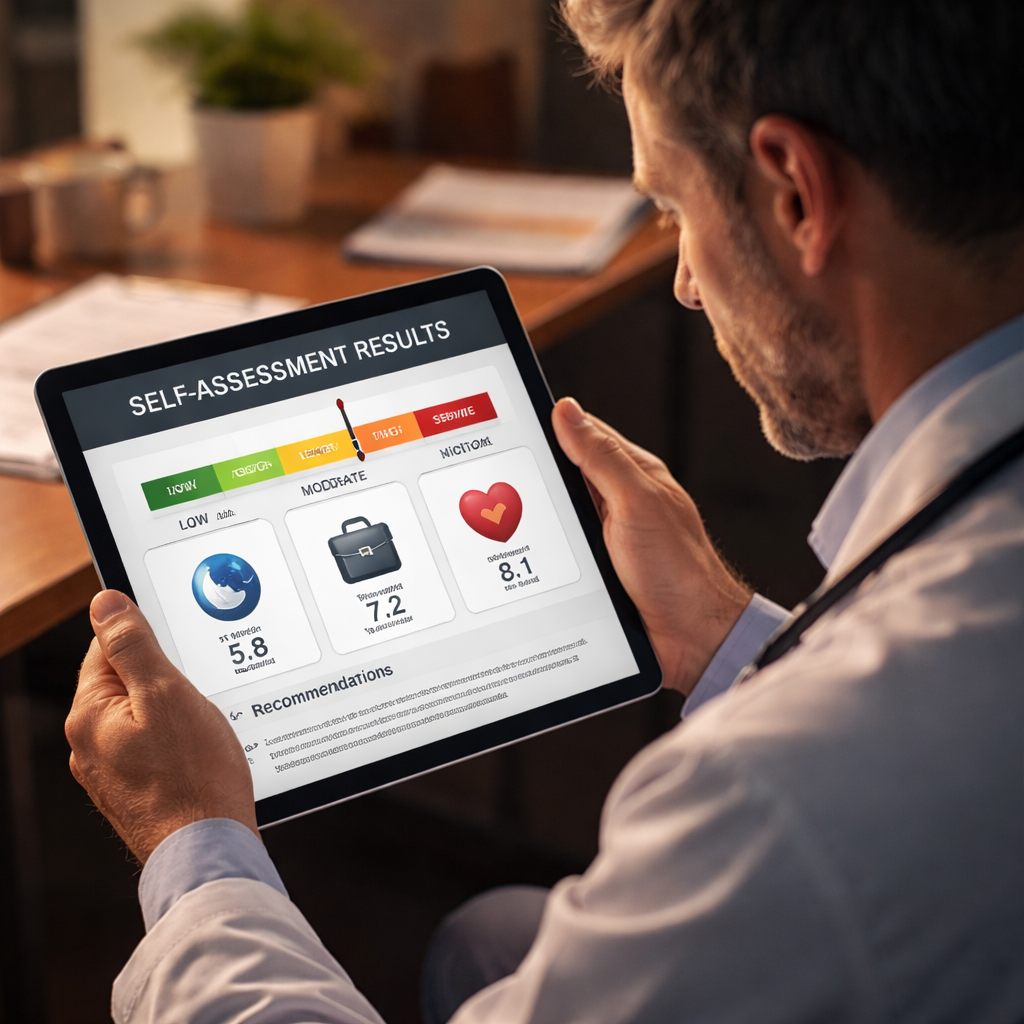
Finally, track progress. Re‑take the same physician mental health self assessment tool free after four weeks. Compare scores to see if your interventions moved the needle.
Step 5: Access Ongoing Support and Follow‑Up Tools
One assessment is a start, but lasting wellness needs ongoing support. Use the resources that align with your physician mental health self assessment tool free results.
Many hospitals partner with state physician health programs. These programs offer confidential counseling, peer support, and sometimes legal protection.
Visit the Federation of State Physician Health Programs website to locate your local contact. A quick phone call can set up an initial, no‑cost conversation.
Online platforms like the MarisGraph also let you log repeated assessments. Compassion Fatigue Test guide shows how to integrate repeated scores into a personal dashboard.
For self‑guided work, the Mental Health America stress test and worksheets can be revisited monthly. MHA’s resource hub updates its tools regularly.
Consider joining a peer‑support group. Talking with colleagues who face similar pressures reduces isolation and builds resilience.
And don’t overlook lifestyle basics. Regular movement, hydration, and proper sleep all score high on the wellbeing scales used by many physician mental health self assessment tool free platforms.
Finally, keep your assessment results handy when you discuss workload adjustments with your supervisor. Data‑driven conversations are more likely to lead to meaningful change.
FAQ
What makes a physician mental health self assessment tool free trustworthy?
A trustworthy tool is validated for physicians, offers clear scoring, and protects your privacy. Look for peer‑reviewed studies, a transparent methodology, and a statement that data won’t be shared with licensing boards. Using a validated single‑item burnout measure meets these criteria and gives you reliable insight without cost.
How often should I retake a physician mental health self assessment tool free?
Retake the assessment every four to six weeks, especially after you’ve tried new coping strategies. Frequent checks let you see trends, not just one‑off spikes. If your scores improve, keep the habits that helped. If they stay high, consider deeper interventions like counseling or workload changes.
Can I use a physician mental health self assessment tool free for my whole team?
Yes, you can share the free tool with colleagues, but each person should complete it privately. Group results can highlight systemic issues such as chronic understaffing or excessive hours. Use the aggregate data to advocate for institutional changes that benefit the entire team.
What should I do if my physician mental health self assessment tool free score indicates high burnout?
First, treat the score as an early warning sign. Schedule a confidential call with a physician health program or mental‑health professional. Second, identify one or two actionable changes, like delegating tasks or setting firm boundaries on call nights. Third, document your plan and revisit the assessment in a month to gauge impact.
Are there free resources to help me act on my assessment results?
Yes. The AMA offers free webinars and guides on physician wellness. AMA’s wellness resources page lists toolkits, podcasts, and tip sheets. Mental Health America also provides printable worksheets for stress management and sleep hygiene.
How does the single‑item burnout measure differ from longer tools?
The single‑item burnout measure asks one direct question about feeling burned out, making it quick and physician‑specific. Longer tools, like the Copenhagen Burnout Inventory, cover many dimensions but aren’t tailored to physicians. The brief tool’s strength lies in its ease of use and proven validation for doctors.
Conclusion
Choosing the right physician mental health self assessment tool free, comparing its features, completing it thoughtfully, and turning the results into concrete actions can protect your wellbeing and your patients’ safety. Remember to pick a validated, confidential platform, use a simple scoring checklist, and revisit the tool regularly. Tap into support networks, state health programs, peer groups, and online resources like the MarisGraph dashboard. By making these steps a habit, you’ll catch burnout early, reduce stress, and sustain a thriving career. Take the first step today and help yourself with data‑driven self‑care.


Comments