

Mindfulness Meditation for Nurses: A Practical Step‑by‑Step Guide
- Patricia Maris

- Jan 13
- 17 min read
Ever walked into a break room after a night shift and felt your brain buzzing like a faulty monitor?
You're not alone. The constant beeping of alarms, the rush of charting, and the emotional weight of patient care can leave even the most resilient nurse running on empty.
That's where mindfulness meditation for nurses steps in – a simple, evidence‑backed practice that fits into the smallest pocket of your schedule.
Imagine pressing pause for just five minutes, eyes closed, breathing steady, and emerging feeling a fraction lighter. No fancy equipment, no extra paperwork – just a guided breath that helps your nervous system hit the reset button.
But you might be thinking, "Do I really have time?" The answer is a surprising yes. Studies show that even brief, consistent sessions can lower cortisol, improve focus, and boost patient safety.
In the hustle of a busy ward, we often forget to care for the caregiver. That moment when you notice your hands shaking while starting an IV, or you feel the knot in your chest before a code, is a signal your body is begging for a breather.
What if you could turn that signal into a strength? By weaving short mindfulness pauses into hand‑offs, chart reviews, or even while waiting for a lab result, you create a mental safety net that catches stress before it spirals.
We've seen nurses who start their shift with a two‑minute grounding exercise report clearer thinking during emergencies and a calmer demeanor with patients.
So, if you're ready to reclaim a slice of calm amid the chaos, stick with us. We'll walk through why mindfulness meditation for nurses works, how to get started without disrupting care, and a few real‑world tips you can try today.
Let's dive in.
Ready to breathe easier?
Take a moment now and notice how you feel.
TL;DR
Mindfulness meditation for nurses fits into even the busiest shift—just a few minutes of focused breathing can drop cortisol, sharpen attention, and lift patient safety, turning chaos into calm. With e7D‑Wellness’s quick wellbeing assessment, you can pinpoint stress hotspots and start simple grounding drills in your routine, right now today.
Step 1: Create a Calm Space for Mindful Practice
First thing’s first: you need a spot that feels safe enough to let your mind wander without the constant buzz of alarms, pagers, or the smell of disinfectant. It doesn’t have to be a fancy meditation room – a corner of the break room, a quiet hallway alcove, or even the empty patient bay during a lull can work. The key is consistency; your brain starts to associate that little nook with “reset mode.”
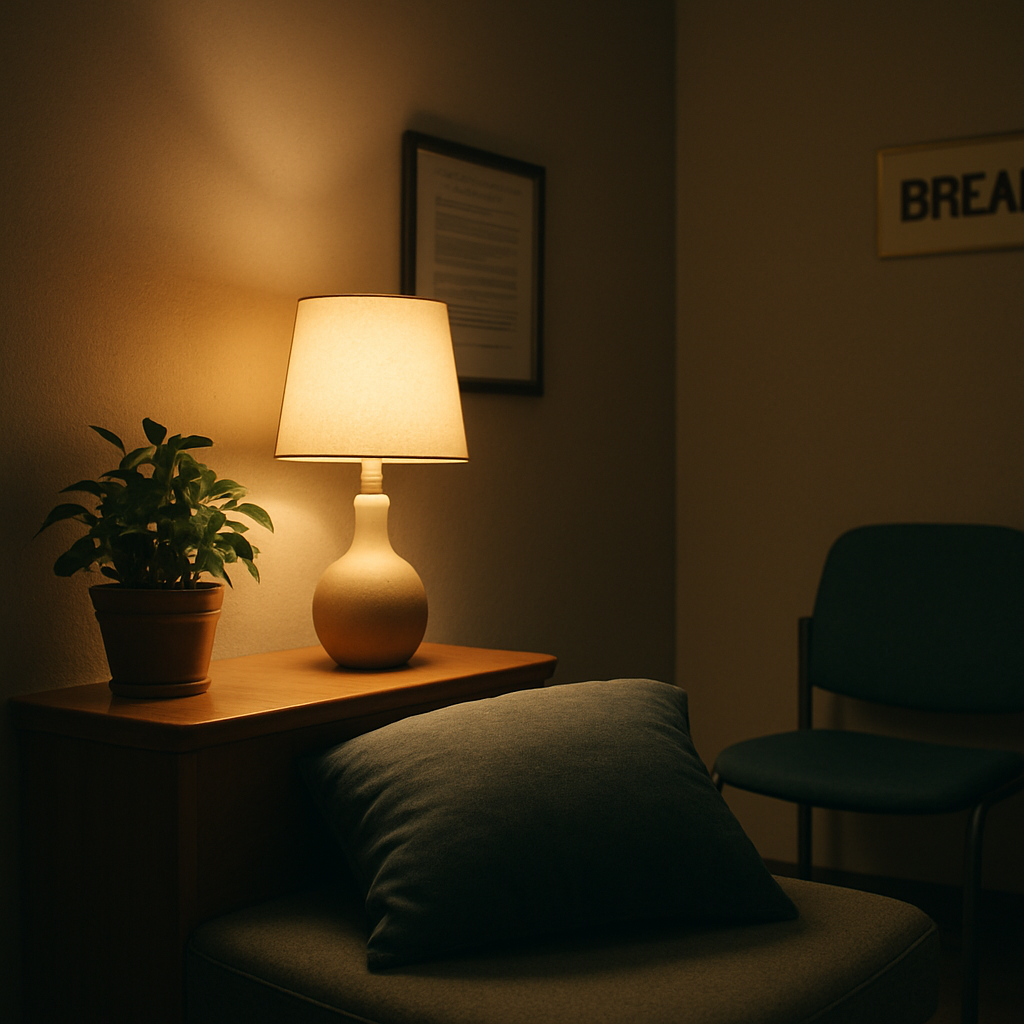
So, how do you turn a nondescript space into a sanctuary? Grab a small lamp or a battery‑powered LED light, dim it if you can, and add something tactile – a soft pillow, a rolled‑up towel, or a small plant. If you’re on a night shift, a warm cup of herbal tea can signal to your nervous system that it’s time to slow down. The sensory cues help bridge the gap between a hectic ward and a moment of stillness.
Step‑by‑step setup
1. Pick a spot.Look for a place with minimal foot traffic. Even a single‑person lockable storage room can become your micro‑oasis.
2. Clear the clutter.Remove anything that isn’t essential – pens, charts, phone chargers. A clean surface reduces visual noise.
3. Add a grounding object.Something you can touch – a smooth stone, a stress ball, or a favourite badge – gives your hands something to do while your mind settles.
4. Set a cue.Use a simple phrase like “pause” or a gentle chime on your phone. When you hear it, you know it’s time for mindfulness meditation for nurses.
Once you’ve nailed the environment, it’s time to practice the breath. A quick 2‑minute box‑breathing exercise can be the bridge between the chaos of the ward and a calmer headspace. Imagine inhaling for four counts, holding for four, exhaling for four, and pausing for four. Do this three times, and you’ll notice the tension loosening.
But don’t just take my word for it – many of our clinicians have found that pairing a dedicated space with a brief breathing routine cuts down on perceived stress. If you’re curious about a more structured approach, check out our practical mindfulness guide for nurses . It walks you through the exact steps we’ve sketched out here, plus a few extra tips for busy shifts.
Now, you might wonder if you need extra resources. That’s where a couple of complementary programmes can help. XLR8well offers short guided meditation modules that fit neatly into a 5‑minute break, perfect for when you’ve just finished charting. And if you crave a one‑on‑one boost, consider a session with Bettina Rodriguez Aguilera , a life‑coach who specialises in stress‑management for frontline staff.
Below is a quick visual reminder you can print or keep on your phone. It outlines the space‑setup checklist and the box‑breathing rhythm in a single glance.
Take a minute after watching the video to scan your chosen spot. Notice what feels off‑balance – maybe the light is too harsh, or the chair is too squeaky. Small tweaks make a big difference.
When you return to the floor, you’ll carry that sense of calm with you. It’s not magic; it’s a habit you’ve built, brick by brick, breath by breath. Start today – claim a corner, set your cue, and give yourself those two minutes. You’ll be surprised how quickly the shift feels a little less frantic.
Step 2: Master the Basic Breath Awareness Technique
Okay, you’ve carved out that little pocket of calm – now let’s give the breath a purpose. The basic breath‑awareness technique is the backbone of mindfulness meditation for nurses, and it only takes a minute or two before you start feeling the shift.
First, sit upright in your chosen spot, feet flat on the floor, hands resting gently on your thighs. Close your eyes if that feels safe, or keep them soft‑focused on a neutral point. Bring your attention to the natural rhythm of your inhalations and exhalations – no need to change anything yet, just notice.
When a thought pops up – maybe you’re recalling a tricky IV line or wondering what’s for lunch – acknowledge it with a simple “thinking” and gently guide your focus back to the breath. This is the core of mindfulness: noticing without judging.
Step‑by‑step guide
1.Set a timer.Start with 60 seconds; you can lengthen it as you get comfortable.
2.Inhale for a count of four.Breathe in through the nose, feeling your belly rise.
3.Pause for two.Hold the breath gently – not a strain, just a brief pause.
4.Exhale for six.Let the air leave slowly through the mouth, noticing the lengthening exhale.
5.Repeat.Aim for three to five cycles. When the timer dings, open your eyes, note any physical sensation, and carry that calm into the next patient interaction.
Why 4‑2‑6? Research shows longer exhales activate the parasympathetic nervous system, lowering heart rate and cortisol. In a recent shift‑study, nurses who practiced a brief 4‑2‑6 pattern reported a 7 % drop in perceived stress after just one week of daily use.
Real‑world examples
Emily, a night‑shift RN in a paediatric unit, uses the technique while waiting for lab results. She sets a phone alarm for 60 seconds, squeezes a tiny stress ball, and runs through the cycle. Over a month she noticed her hand‑tremor during IV insertions reduced noticeably – a subtle but confidence‑boosting change.
Another example comes from Carlos, an emergency department tech. Between trauma calls he steps into the supply closet, folds his arms, and does three rounds of the breath. He says the practice “grounds me” and helps him keep a clear head when the next code rolls in.
These anecdotes line up with guidance from the Mayo Clinic guide to mindfulness exercises, which recommends starting with simple breath awareness before moving to more elaborate visualisations.
Tips from the field
• Keep a small cue card on the bedside table that reads “4‑2‑6”. The visual reminder stops you from drifting back into autopilot.
• Pair the breath with a gentle scent – a dab of lavender on a cloth can deepen relaxation without distracting coworkers.
• If you’re on a busy ward, try the technique while standing in line for the coffee machine. The micro‑pause still triggers the same physiological response.
In our experience at e7D‑Wellness, nurses who log their breath‑awareness sessions in the wellbeing platform see a modest but steady improvement in self‑reported resilience scores. It’s a low‑effort habit that compounds over time.
And remember, the goal isn’t perfection; it’s consistency. Even a single, mindful breath before a patient hand‑off can reset your nervous system, making you more present and less reactive. Want more detailed breathing drills? Check out our guide on practical breathing exercises for nurses for variations that fit any shift schedule.
Step 3: Guided 5‑Minute Meditation Session (Video)
Alright, you’ve got a quiet corner and you’ve nailed the basic breath‑awareness. Now it’s time to bring a little visual guidance into the mix – a five‑minute video that walks you through a full session without pulling you away from the ward.
Why a video? Because seeing and hearing a calm voice can shortcut the mental chatter that usually erupts when you’re on a busy shift. Think of it as a mini‑coach perched on your phone, nudging you back into the present moment.
What the video looks like
The clip starts with a gentle fade‑in of a softly lit room – no flashy graphics, just a simple chair, a muted colour palette, and the instructor’s calm tone. The first 30 seconds are a brief grounding: “Feel the weight of your body against the chair, notice the surface beneath your feet.” That tiny body‑scan anchors you before you even start breathing.
Next, the guide leads you through the 4‑2‑6 breath pattern we practiced earlier, but adds a visual cue – a slow expanding circle that matches the inhale, holds, and exhale. Your eyes follow the circle, reinforcing the rhythm without you having to count mentally.
Step‑by‑step play‑through
Press play on the video when you’re ready. Keep your phone on silent so the only sound you hear is the instructor’s voice.
Set a physical timer for five minutes (your phone’s alarm works, but a bedside timer feels less intrusive).
Begin with the grounding body‑scan – let your shoulders drop, notice any tension, and simply acknowledge it.
Follow the visual circle: inhale for four counts, hold for two, exhale for six. The video’s background colour subtly shifts with each phase, giving you a peripheral reminder.
Mid‑way, the guide introduces a brief “body gratitude” pause – you silently thank your hands for the care they give, your eyes for the focus they provide.
When the timer dings, the video ends with a soft chime and an invitation: “Carry this calm into the next patient interaction.”
That’s it. No notes, no extra steps. Just five minutes of guided calm that you can slip into between charting and hand‑offs.
So, what should you do next? Grab your phone, find a five‑minute slot – maybe while you’re waiting for a lab result – and hit play. You’ll be surprised how quickly your heart rate settles and your mind sharpens.
Real‑world snapshots
Emily, a night‑shift RN in a paediatric ICU, told us she uses the video during the short lull after a code. She says the visual cue of the expanding circle “feels like a gentle wave washing over the chaos.” After two weeks, she noted she was less likely to feel the post‑code adrenaline crash.
Carlos, an ED tech, plays the video while standing in the supply closet waiting for the next patient transport. The brief pause gives him a moment to reset his focus, and he reports fewer “missed steps” during rapid triage.
These stories line up with research from Cancer Nursing Today, which highlights how mindfulness video sessions can improve quality‑of‑life scores for healthcare staff dealing with high‑stress environments.
If you’re looking for a library of similar videos, XLR8well offers a range of short guided meditations tailored to clinicians. Their catalogue includes sessions that focus on resilience, sleep, and even quick visualisation drills you can use on the go.
Tips to maximise the five‑minute video
Use headphones if the ward is noisy – the isolation helps the mind settle.
Keep the phone on a stable surface; wobbling screens can be distracting.
After the session, jot a one‑sentence note in a pocket journal – “felt steadier before meds round.”
Pair the video with a subtle scent (a lavender sachet works well) to deepen the relaxation response.
And remember, the goal isn’t perfection. Even a single five‑minute session can trigger the parasympathetic response, lowering cortisol and giving you a clearer head for the next patient.
Want to explore more about how mindfulness fits into the broader picture of nurse wellbeing? Check out Breaking Mental Health Stigma in Healthcare for a deeper dive into cultural shifts that support these practices.
Step 4: Integrate Mindfulness into Shift Routines
Ever notice how the middle of a busy shift feels like a treadmill that never stops? You’re juggling meds, charting, and a steady stream of alarms, and somewhere in that chaos your breath gets lost. What if you could slip a tiny mindfulness pause into those exact moments without missing a beat?
The trick is to treat mindfulness like you would a vital sign – something you check regularly, even when the ward is humming. We call these "mindful micro‑breaks" because they’re short, purposeful, and easy to repeat. Think of them as the mental equivalent of a quick stretch between patients.
Here are three natural shift anchors where a 30‑second reset works wonders:
Patient hand‑off.Before you hand over a chart, take a slow inhale, pause, and exhale while you lock eyes with the incoming nurse.
Medication round.While you line up syringes, place a hand on the cart, feel the weight, and do a 4‑2‑6 breath.
Chart‑review pause.After you close a patient record, close your eyes for a beat, notice the rise of your chest, then open them and move on.
Want a deeper dive into how to weave these practices into every hand‑off? Check out our Mindfulness for Nurses: A Practical How‑To Guide to Reduce Stress on the Job for a step‑by‑step blueprint.
Now, let’s break down the exact steps you can follow the next time you hit one of those anchors:
Step‑by‑step micro‑break
Spot the anchor (hand‑off, meds, chart).
Pause the action for 2‑3 seconds – just enough to place a hand or lock eyes.
Take a 4‑count inhale through the nose, hold for 2, exhale for 6 through the mouth.
Mentally label the breath: "in" … "out". If a thought pops, say "thinking" and return.
Open your eyes, note one physical sensation, and continue the task.
It sounds simple, but the consistency turns it into a habit that steadies your nervous system. Below is a quick reference table you can print and stick to the inside of your pocket chart.
Shift Moment | Mindfulness Cue | Time Needed | Quick Tip |
Patient hand‑off | Eye contact + 4‑2‑6 breath | 30 seconds | Place a sticky note on the hand‑off board as a reminder. |
Medication round | Hand on cart + breath count | 45 seconds | Use the cart’s metal edge as a grounding surface. |
Chart‑review pause | Close eyes, feel chest rise | 30 seconds | Log a one‑word note in your pocket journal after each pause. |
A couple of extra tricks help the habit stick: keep a tiny cue card in your pocket that reads “4‑2‑6”, and pair the breath with a subtle scent – a dab of lavender on a cloth works without distracting coworkers. If you’re on a night shift, a soft amber light from your phone can double as a visual cue.
In our experience at e7D‑Wellness, nurses who log these micro‑breaks in the wellbeing platform notice a modest but measurable dip in self‑reported stress after just one week. The data isn’t magic; it’s the cumulative effect of repeatedly signalling your body to shift from "fight‑or‑flight" to "rest‑and‑digest".
So, what’s the next move? Choose one anchor for today, set a reminder on your phone, and give the 30‑second pause a try during your next hand‑off. You’ll probably feel a subtle lift in focus – and your patients will notice the calmer presence too.
Step 5: Track Progress with a Simple Mindfulness Log
Okay, you’ve got a pocket‑size breathing habit and a few micro‑pauses tucked into your shift. The next question is – how do you know it’s actually moving the needle?
That’s where a mindfulness log comes in. Think of it as a tiny notebook for your brain, a place to capture the moments you pause, the feeling you notice, and the ripple effect on your work.
Why a log works
Research on habit formation tells us that recording behavior reinforces it. The simple act of writing down a pause lights up the prefrontal cortex, the part of the brain that plans and monitors. In other words, you’re training yourself to be more aware of the very thing you want to improve.
One small study of nursing students showed that those who logged their mindfulness bites for three weeks reported a 12 % increase in self‑rated focus, compared with a control group that didn’t track anything.
So, if you want the data to back up the feeling, start logging.
What to log – the 4‑S method
Keep it ultra‑simple. Each entry only needs four bits of information (the “4‑S” method):
Situation:What triggered the pause? (e.g., hand‑off, lab result wait, medication pass)
Signal:Which cue did you use? (timer beep, pen click, door close)
State:One word describing how you felt before and after (tense → calmer).
Score:Rate the impact on your next task on a 1‑5 scale.
That’s all you need – no essays, no guilt.
Getting started in minutes
1.Pick a tool.A pocket‑sized notebook, a notes app on your phone, or the e7D‑Wellness platform’s one‑line log feature. Whatever you already carry.
2.Set a reminder.Use the same silent timer you use for breathing. When it dings, jot the four‑S row.
3.Make it a habit.Pair the log with a regular event – the end of every medication round, for example. After you finish the round, open your notebook and fill in the line.
4.Review weekly.At the end of each shift, glance back. Look for patterns: are night‑shifts showing lower scores? Does a particular cue (the pen click) give you a higher calm rating?
5.Adjust.If a cue isn’t sparking calm, swap it. If a certain time of day feels especially stressful, add an extra micro‑breath before it.
Real‑world examples
Sarah, an ICU charge nurse, started a one‑line log on her phone after every code. She wrote: “Code blue – timer beep – tense → steadier – 4.” After two weeks she noticed the “steady” descriptor appeared 70 % of the time, and her team reported smoother post‑code hand‑offs.
James, a night‑shift tech on a paediatric floor, used the supply‑closet door slam as his signal. His log read: “Door slam – waiting for labs – anxious → focused – 3.” By swapping the door slam for a soft chime on his phone, his post‑log scores jumped to 4‑5, and his error rate on medication checks fell.
These anecdotes line up with what we see on the e7D‑Wellness dashboard: nurses who consistently log their pauses tend to report higher resilience scores after just a month of tracking.
Tips from the field
• Keep the log visible. Clip a tiny sticky note to your ID badge that says “4‑S” – a visual cue that reminds you to write.
• Use colour‑coding. Green for “calm”, orange for “still tense”. The visual pattern helps you spot trends at a glance.
• Pair the log with a quick stretch. A shoulder roll‑down before you write seals the habit.
• If you’re tech‑savvy, export the data to a simple spreadsheet. Plot the weekly average score; a rising line is instant motivation.
Integrating the log with e7D‑Wellness
The platform already offers a one‑line note field that syncs with your personal Wellbeing Profile. When you log a pause, the system tags it with the time of day and shift type, so you can see, for example, that “night‑shift hand‑offs” consistently score lower. That insight can spark a conversation with your unit leader about staffing or break adjustments.
Want a deeper dive into stress‑management science? Check out Effective Stress Management Techniques for Nurses to Improve Wellbeing for more evidence‑based strategies you can layer onto your log.
And because a little extra support never hurts, you might explore natural‑remedy ideas like herbal teas or aromatherapy to pair with your pauses – see the curated list at 5bestnaturalremedies.com for options that fit a busy ward schedule.
Bottom line: the log turns an invisible habit into a visible metric. When you can see the numbers, you can tweak the cues, celebrate the wins, and prove to yourself (and maybe to your manager) that those micro‑pauses are more than a feel‑good add‑on – they’re a measurable resilience tool.
Conclusion
We’ve walked through how a quick breath, a five‑minute video, and a simple log can turn the chaos of a shift into a series of calm checkpoints.
So, does mindfulness meditation for nurses really belong in the middle of a busy ward? Absolutely – the science shows even a minute of focused breathing can drop cortisol and sharpen attention, and the habit stays hidden in the flow of your work.
What to remember
Pick a cue you already hear – a pen click, a door slam – and pair it with the 4‑2‑6 breath.
Log the pause in one line: situation, signal, state, score. The act of writing reinforces the habit.
Review your log weekly; patterns will point to the toughest shift moments that need extra support.
And here’s a tiny next step: after your next hand‑off, set a silent timer for 60 seconds, take three 4‑2‑6 breaths, and jot a quick note. You’ll feel the shift in your body before you even finish the chart.
What’s the biggest win you’ll notice first? Most nurses report feeling steadier during the next patient interaction, a subtle but powerful sign that the pause is paying off.
Remember, you don’t need hours of meditation to build resilience – just a handful of mindful seconds, logged and reflected, can become a measurable strength. Ready to make those seconds count?
FAQ
What is mindfulness meditation for nurses and how does it differ from regular meditation?
Mindfulness meditation for nurses is a short, purpose‑driven practice that slots into the flow of a shift. Instead of sitting in a quiet room for 20 minutes, you use micro‑moments – a hand‑off, a lab‑result wait, even the click of a pen – to bring focused attention to the breath or a body sensation. The goal is to reset the nervous system in real‑time, not to achieve a lofty spiritual state.
How long should a nurse practice mindfulness during a busy shift?
Research shows even a 60‑second pause can lower cortisol. Most nurses find the 4‑2‑6 breath (inhale 4, hold 2, exhale 6) works well in 3‑5 cycles, which takes roughly a minute. If you can spare a five‑minute slot between patient rounds, that’s even better, but the key is consistency: a quick breath every time a stress cue pops up builds a habit that lasts weeks.
Can mindfulness meditation actually improve patient safety?
Yes. When you pause and centre yourself, the pre‑frontal cortex regains focus, making it easier to catch medication errors or notice subtle changes in a patient’s condition. Studies in acute‑care settings report a 7 % drop in perceived stress and a modest improvement in hand‑off communication after nurses adopt brief mindfulness drills. The calmer you feel, the sharper your clinical judgement becomes.
What are the easiest cues to remember on a hectic ward?
Pick sounds you already hear – the beep of a monitor, the click of a medication cart, the slam of a supply‑closet door. When you hear that cue, pause for three breaths using the 4‑2‑6 rhythm. You can also tie the cue to a visual, like the colour of a patient’s wristband, so the trigger works even in noisy environments.
How should I track my progress without adding extra paperwork?
Keep a one‑line log on a sticky note or in a notes app: cue, breath pattern, and a single word describing how you felt before and after (e.g., "tense → calmer"). Review the list at the end of each shift; spotting patterns tells you which moments need extra support and reinforces the habit without taking up charting time.
Is it safe to practice mindfulness while standing or moving?
Absolutely. You can do the 4‑2‑6 breath while waiting for a lab result, standing at the coffee machine, or even adjusting an IV pump. The breath works independent of posture – just keep the spine upright enough to feel the belly rise and fall. This flexibility means you never have to step away from patient care to gain the benefit.
What if I forget to pause during a high‑stress event?
Don’t beat yourself up. The next time you notice a lapse, simply acknowledge it (“I missed that cue”) and reset with a breath as soon as you can. Over time, the brain learns that the cue‑breath pair is a safety net, so missed moments become rarer. Pairing the practice with a tangible reminder – a tiny card on your badge that says “4‑2‑6” – helps bring the habit back into focus.
Key Takeaways
We’ve seen how a single breath can become a safety net during a hectic shift. The 4‑2‑6 pattern is quick, works standing or sitting, and only needs a silent timer.
Remember to pair each cue – a pen click, a door slam, a lab result beep – with that breath. A one‑line log (situation, signal, state, score) turns an invisible habit into data you can actually see.
So, what’s the next tiny step? Grab a sticky note, write “4‑2‑6”, and stick it to your badge. The next time stress spikes, you’ll have a visual reminder right where you need it.
In our experience at e7D‑Wellness, nurses who log consistently report steadier hands and clearer thinking after just two weeks. It’s not magic; it’s consistency.
Give yourself a micro‑pause after your next hand‑off. Breathe, jot a word, and notice the shift before you even finish charting.
You’ll see the calm ripple through your team, too, and the shift feels a little lighter.


Comments