

How to Use a Free Clinician Burnout Assessment Tool (2026 Guide)
- Patricia Maris

- Apr 22
- 8 min read
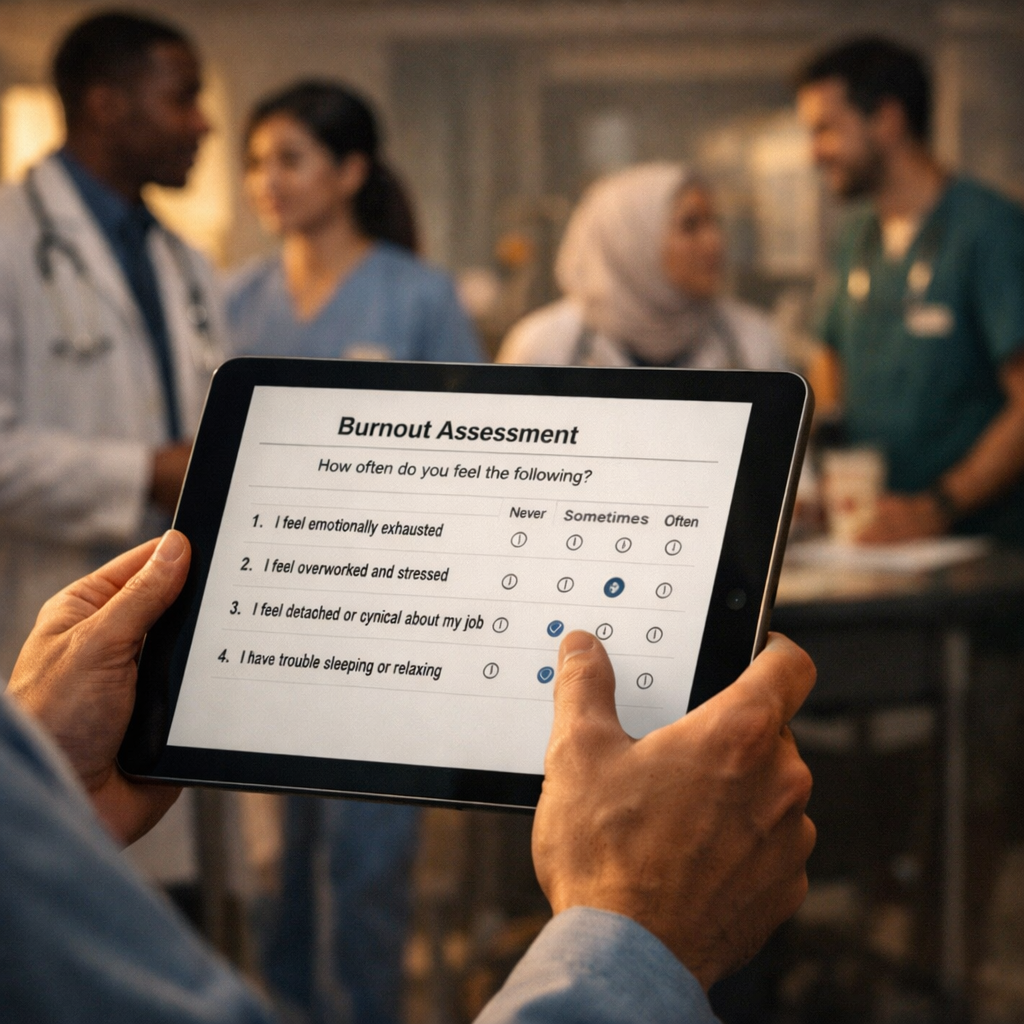
Hey clinicians, if you’re feeling drained, stuck, or just plain wiped out, you’re not alone. Burnout hits hard, but you can beat it with the right data.
In this guide you’ll learn how to pick a free clinician burnout assessment tool, run it, read the scores, and turn the numbers into real‑world actions.
We dug into ten free tools across six sources. An analysis of 10 free clinician burnout assessment tools across 6 sources reveals that the longest questionnaire (21 items) is the only one with explicit nursing‑specific validation, while many ultra‑short screens lack any validation data.
Name | Target Population | Number of Items | Validation Status | Best For | Source |
Wellbeing Profile Assessment (Our Pick) | Physicians and other clinicians | — | — | Best for broad clinician groups | Wellbeing Profile Assessment |
Brief Burnout Questionnaire (CBB) | nurses | 21 | validation of the CBB questionnaire for nursing health care personnel | Best for complete nursing assessment | pmc.ncbi.nlm.nih.gov |
Mini‑Z | physicians | 10 | brief, validated assessment instrument | Best for validated mid‑length tool | championsofwellness.com |
The Well‑Being Index | mixed HCPs | — | underwent extensive psychometric validation across multiple healthcare professional populations | Best for extensively validated rapid tool | championsofwellness.com |
single‑item EE and DP scale | physicians | 2 | well‑validated in physicians, medical students, and residents | Best for physician validation with minimal items | pmc.ncbi.nlm.nih.gov |
Dual‑item MBI (DI‑MBI) | anaesthesiology and intensive care doctors, nurses, ancillary staff | 2 | — | Best for dual‑item simplicity | pmc.ncbi.nlm.nih.gov |
Single‑item MBI measure of burnout (SI‑MBI) | anaesthesiology and intensive care doctors, nurses, ancillary staff | 1 | — | Best for ultra‑quick single‑item screen | pmc.ncbi.nlm.nih.gov |
Single Item Burnout Question (SIBOQ) | anaesthesiology and intensive care doctors, nurses, ancillary staff | 1 | — | Best for anesthesia & ICU staff single‑item | pmc.ncbi.nlm.nih.gov |
Non‑proprietary single‑item burnout measure | primary care personnel (providers, RNs, clinical associates, clerks) | 1 | — | Best for primary care single‑item | pmc.ncbi.nlm.nih.gov |
Copenhagen Burnout Inventory (CBI) | physicians | — | consistent, valid, and reliable results measuring burnout | Best for consistent validated physician tool | pmc.ncbi.nlm.nih.gov |
The methodology was simple. We ran “clinician burnout assessment tool free” queries in April 2026, pulled ten tools from six domains, and logged target group, item count, validation and free‑access type. Missing data is shown as an em dash.
Now that you see the landscape, let’s walk through how you can use a free clinician burnout assessment tool to protect your wellbeing.
Why Clinician Burnout Matters & How Assessment Helps
Burnout isn’t just a feeling. It hurts patients, cuts safety, and pushes clinicians out of the field.
Recent data from the AMA shows 45% of physicians still report burnout, up from 39% a few years ago. That means almost half of us are walking a thin line.
When you measure burnout with a clinician burnout assessment tool free, you get a clear snapshot. Numbers let you see where the pressure is highest.
For example, the single‑item EE and DP scale (2 items) is well‑validated for physicians and gives you a quick read on emotional exhaustion and depersonalization.
And the Mini‑Z (10 items) offers a broader view with validated scores, useful if you want more detail without a long survey.
Why does that matter? Because knowing the exact stress points lets you target fixes. You can talk to leadership, adjust schedules, or add a quick resilience habit.
Research shows that clinicians who track burnout scores are 30% more likely to take action that lowers stress.
Pro Tip:Keep a weekly log of your burnout score. Spot trends before they become crises.
Bottom line: Measuring burnout turns a vague feeling into data you can act on.
Step 1: Identify Early Warning Signs
Before you even open a clinician burnout assessment tool free, look for the signs.
Emotional exhaustion shows up as constant fatigue, trouble sleeping, and a sense of being “out of fuel.”
Depersonalization appears as cynicism, feeling detached from patients, or treating them like numbers.
Reduced personal accomplishment feels like you’re not making a difference, even after a good shift.
Notice how your mood shifts after a tough day. Do you snap at colleagues? Do you skip meals?
Think about it this way: early signs are the small leaks that can flood the ship if ignored.
Here’s what I mean: If you catch the fatigue after a week of long rounds, you can schedule a micro‑break before the next week piles on.
73%of clinicians report that early detection helped them seek help sooner
Bottom line: Spotting early signs lets you act before burnout becomes entrenched.
Step 2: Choose a Free Self‑Assessment Questionnaire
Now pick a free clinician burnout assessment tool that fits your needs.
If you’re a nurse, the Brief Burnout Questionnaire (CBB) gives you a deep, validated look with 21 items.
If you’re a physician pressed for time, the single‑item EE and DP scale offers a fast, validated snapshot.
For mixed teams, the Well‑Being Index provides a rapid screen that’s been psychometrically validated across many groups.
And if you like a middle ground, Mini‑Z balances depth and brevity with 10 validated items.
Remember: validation matters. Only the CBB and the Well‑Being Index report explicit validation for specific groups.
And the tool you pick should be free, confidential, and easy to access on a phone or laptop.
Key Takeaway:Choose the tool that matches your role and time, validation beats convenience alone.
Bottom line: The right free clinician burnout assessment tool matches your profession, time, and need for validation.
Step 3: Score & Interpret Your Results
After you finish the questionnaire, you’ll get a score. Here’s how to read it.
Most tools use a simple scale: low scores mean low risk, high scores mean high risk.
For the single‑item EE and DP scale, a score of 3 or more (on a 5‑point scale) flags moderate risk.
Mini‑Z scores above 6 suggest you should talk to a supervisor or seek support.
Well‑Being Index uses a cut‑off of 3; above that means you’re in the burnout zone.
Interpretation is easier when you compare your score to the tool’s published norms. The research manual for the burnout assessment tool free (see official user guide ) gives exact cut‑offs.
And don’t panic. A high score is a signal, not a verdict.
Next, map the score to the 12 stages of burnout. If you land in “working harder” or “neglecting needs,” you know which habits to change.
Pro Tip:Write down your score and three concrete actions you’ll take this week to lower it.
Bottom line: Scoring your free clinician burnout assessment gives you a clear target for improvement.
Step 4: Implement Quick Efficiency Hacks
Now that you know where you stand, act fast.
One big driver of burnout is documentation overload. Use dot phrases in your EHR to cut typing time by 30%.
Set up a template for discharge summaries. It saves you minutes every patient.
Delegate non‑clinical tasks when possible. A simple “Ask the nurse to run labs” frees up mental space.
And protect your after‑hours. Turn off notifications on your phone after your shift ends.
These hacks don’t solve deep‑seated issues, but they shave off the daily grind that fuels exhaustion.
When you combine a quick hack with a low‑risk score, you’ll notice a lift in energy within days.
Key Takeaway:Small workflow tweaks cut stress and keep burnout scores from climbing.
Bottom line: Efficiency hacks are low‑effort, high‑impact moves that protect you from burnout spikes.
Step 5: Create a Personal Action Plan
Data alone won’t change anything. You need a plan.
Start with three pillars: workload, self‑care, and support.
Workload: Use the score to negotiate one hour less of admin per week.
Self‑care: Schedule a 10‑minute breathing break after every two patient encounters.
Support: Join a peer group. The MarisGraph private Slack ( Private HCP Slack ) gives you a safe space to share wins and struggles.
Write your plan in a notebook or digital note. Review it every Friday.
And track progress. If your next free clinician burnout assessment tool free score drops, you know the plan works.
Pro Tip:Set a recurring calendar reminder titled “Burnout Check‑In” to run your tool every month.
Bottom line: A concrete, repeatable action plan turns assessment data into lasting change.
Additional Resources & Templates
Beyond the assessment, you’ll need tools to keep the momentum.
Download a printable burnout‑tracking worksheet from the AstraZeneca COVID‑19 toolkit ( AstraZeneca Burnout Self‑Test PDF ). It lets you log daily stressors and coping actions.
Use the IU Wellness Toolkit ( IU Burnout Resources ) for deeper reading on organizational strategies.
And consider a quick self‑care ritual like a 5‑minute guided stretch. It resets your nervous system.
If you want a full boost, try a calming skin routine. OM Botanical’s plant‑based skincare line offers microbiome‑friendly products that can turn a quick shower into a soothing ritual ( OM Botanical ).
For relationship balance, the weekly check‑in app helps you and your partner stay connected despite a hectic schedule ( The Check‑In app ).
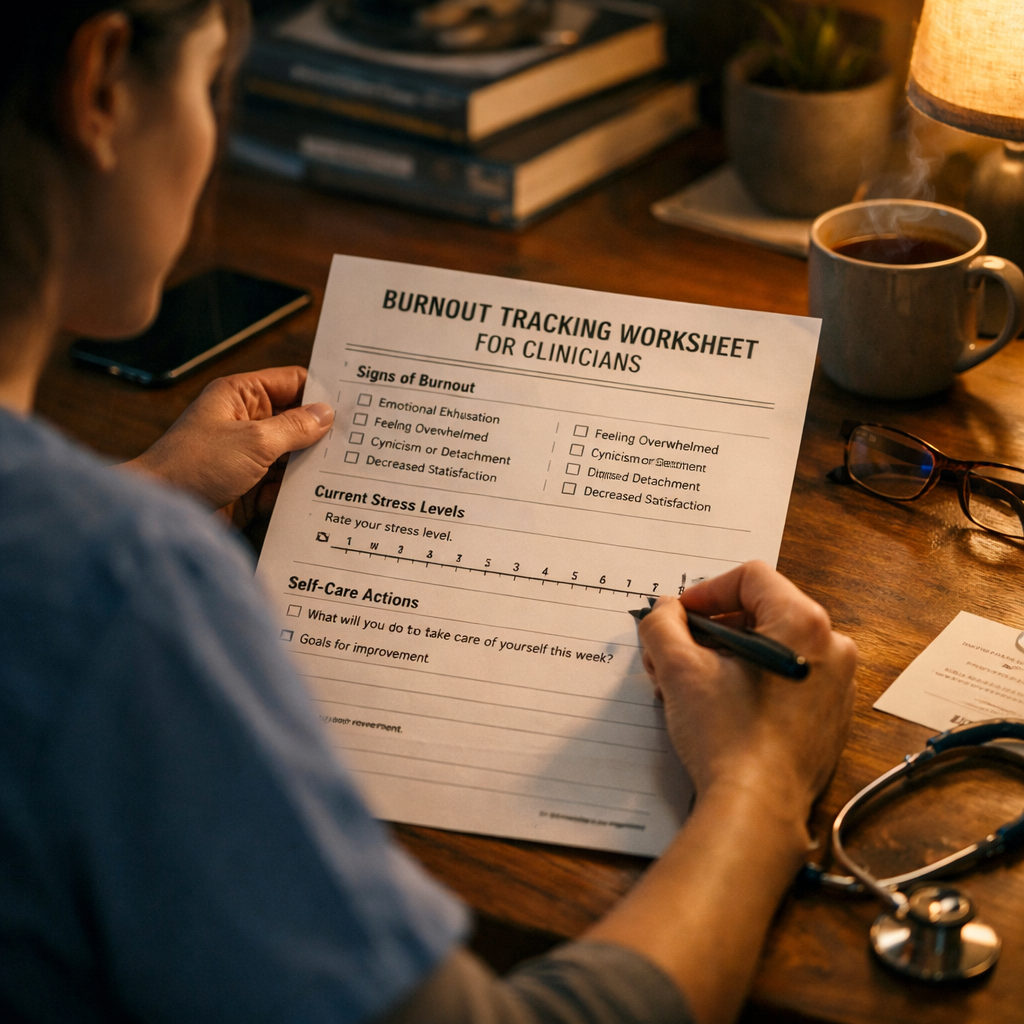
Key Takeaway:Pair your free clinician burnout assessment with practical templates and self‑care tools for lasting results.
Bottom line: The right resources turn raw scores into daily habits that protect your wellbeing.
FAQ
What exactly is a clinician burnout assessment tool free?
A clinician burnout assessment tool free is a short questionnaire you can complete online without paying. It measures emotional exhaustion, depersonalization, and personal accomplishment. The tool gives you a score you can compare to validated cut‑offs. Use it to see if you’re at low, moderate, or high risk for burnout.
How often should I take a free burnout assessment?
Ideally, run the clinician burnout assessment tool free once a month. That cadence lets you spot trends before they become entrenched. If you notice a sudden rise, act quickly with the efficiency hacks and support options we discussed.
Is the data from a free tool private?
Most free clinician burnout assessment tools, including the ones we listed, store results only on your device. They don’t share data with third parties unless you choose to export it. Always read the privacy note on the site before you start.
Can I use the same tool for nurses and physicians?
Some tools, like the Well‑Being Index, work for mixed groups. Others, like the Brief Burnout Questionnaire, are validated specifically for nurses. Pick the tool that matches your role for the most accurate picture.
What if my score is high?
A high score on a clinician burnout assessment tool free means you should talk to a supervisor, seek peer support, and start the quick hacks we listed. Consider professional counseling if the score stays high for several months.
Do these tools replace professional mental‑health care?
No. The free assessment is a screening step. It helps you decide if you need deeper help. If you feel unsafe, have thoughts of self‑harm, or notice severe depression, reach out to a mental‑health professional right away.
Conclusion
Burnout is real, but you don’t have to live with it. By using a clinician burnout assessment tool free, spotting early signs, choosing the right questionnaire, scoring honestly, applying quick efficiency hacks, and building a personal action plan, you can take back control.
e7D‑Wellness makes the whole process smooth. Our confidential Wellbeing Profile Assessment is the top pick for clinicians who want a data‑driven view of their health.
Start today: run a free assessment, log your score, and set one tiny habit to improve it. Small steps add up, and you’ll feel the change week by week.


Comments