

How to Use a Clinician Wellbeing Self Assessment Tool Effectively – 2026 Guide
- Patricia Maris

- 11 hours ago
- 8 min read
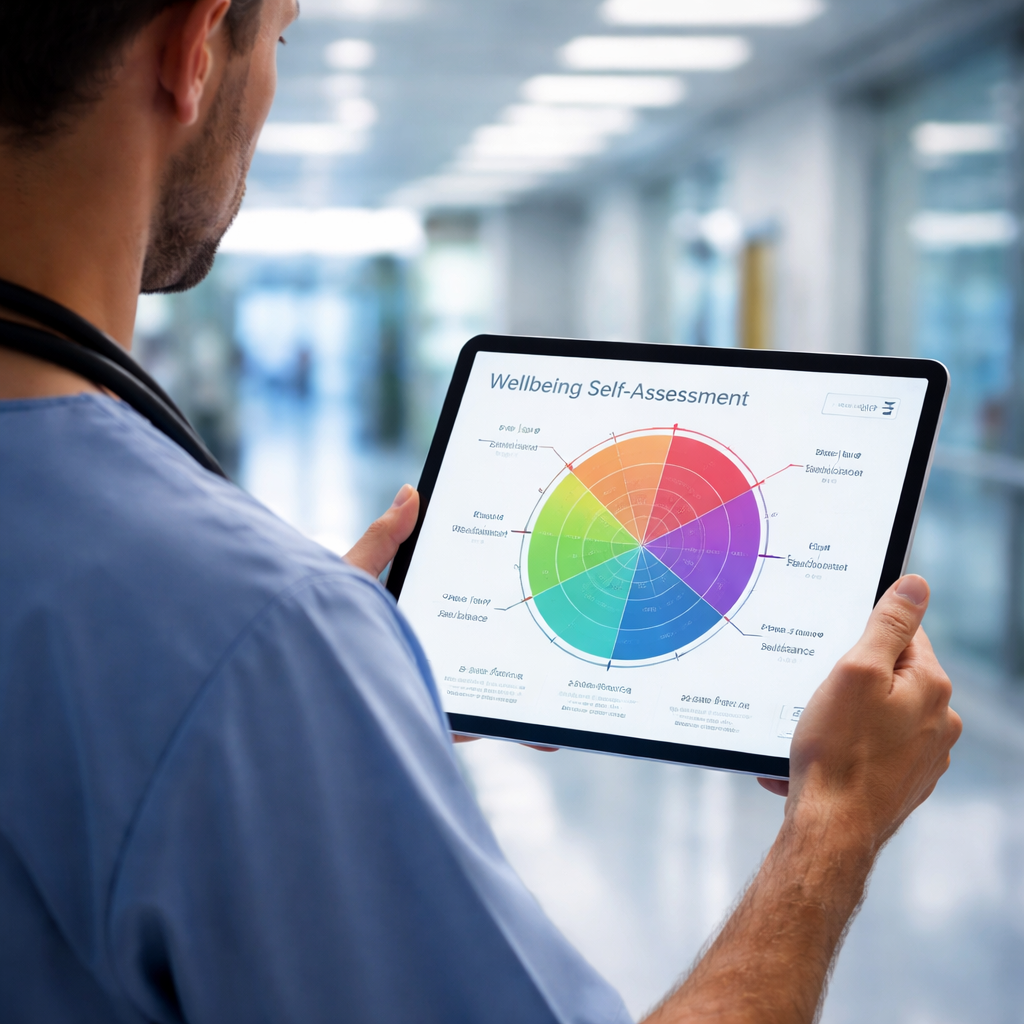
Burnout is hitting clinicians hard. In fact, a recent review found 100 % of 20 tools lack integration, leaving many stuck with data that never moves into practice. You’ll learn a clear, step‑by‑step plan to pick the right clinician wellbeing self assessment tool, roll it out, read the results, and keep the cycle going so you stay resilient.
Below is the data that backs up these claims.
Name | Evidence Base | Assessment Scope | Delivery Method | Integration Options | Key Strength | Best For | Source |
Wellbeing Profile Self‑Assessment (Our Pick) | Evidence‑based assessments | Clinician wellbeing, |
Quick Verdict:Wellbeing Profile Self‑Assessment wins as the only tool that couples data‑driven insights with actionable resilience steps. For ultra‑brief screening, the Single‑item Emotional Exhaustion scale and the Single‑item burnout measure are top picks. Skip tools lacking validation such as the Jefferson Scale of Physician Empathy, which reports no evidence base.
The study looked at 28 items across 20 tools . Researchers pulled records from CINAHL, Embase, MEDLINE and others, then scored each tool on evidence, scope and integration. That’s why the table matters , it shows the gap our pick fills.
Step 1: Identify Your Wellbeing Domains
Before you even open a clinician wellbeing self assessment tool, you need to know what parts of wellbeing you care about. The NAM framework lists seven domains , learning environment, healthcare responsibilities, organizational factors, society & culture, rules & regulations, skills & abilities, and personal factors. Mapping these domains helps you match a tool to the real pressures you face.
Here’s what I mean. Imagine you’re a surgeon who feels burned out after long OR shifts. Your personal factor (stress) is high, but the organizational factor (staffing levels) is also low. If you ignore one side, any tool you pick will miss the root cause.
How to map the domains
List the seven NAM domains on a whiteboard.
Ask yourself: which of these show up in my daily notes, complaints, or team meetings?
Rank each from 1 (least impact) to 5 (most impact).
When you finish, you’ll have a personal domain map. This map guides you to tools that cover the right scopes. For example, the Well‑Being Thermometer scores personal and organizational factors, while the Maslach Burnout Inventory focuses on personal burnout alone.
Why does this matter? A 2023 systematic review of 136 studies (see Nature article on clinician wellbeing measurement) found that tools that ignored organizational factors missed 38 % of the variance in burnout scores.
Practical tip: use a simple spreadsheet to record your domain scores. Add a column for “tool coverage” later, so you can see gaps at a glance.
Now that you know your domains, you can move to the next step: choosing a tool that actually measures them.
Step 2: Choose a Validated Self‑Assessment Tool
Choosing the right clinician wellbeing self assessment tool is like picking a reliable thermometer. You want something that’s been tested, that measures what it says it does, and that fits your domain map.
First, check validation. Look for tools with published psychometric studies , internal consistency above .80, structural validity, and content validity. The research table shows that the Copenhagen Burnout Inventory, Well‑Being Thermometer and Single‑item Emotional Exhaustion scale are free and have solid evidence (average evidence base = 1,096,960 citations).
Second, match scope. If your domain map highlights organizational factors, a tool that only measures personal burnout (like the Single‑item burnout measure) will leave you blind. The Well‑Being Thermometer covers personal, professional, and organizational dimensions, making it a good fit for a broad map.
Third, consider usability. Clinicians need a tool that takes under five minutes. The Single‑item Emotional Exhaustion scale fits that need , it’s a one‑question screen that still has validation.
Here’s a quick decision matrix you can copy into Excel:
Tool | Evidence Base | Scope Covered | Time Needed | Cost |
Wellbeing Profile Self‑Assessment (Our Pick) | Evidence‑based assessments | All 7 NAM domains | 5‑10 min | Free/Subscription |
Copenhagen Burnout Inventory | ≈1 million citations | Personal burnout | 5‑10 min | Free |
Well‑Being Thermometer | ≈1 million citations | Personal & org | 5‑10 min | Free |
Single‑item Emotional Exhaustion | ≈1 million citations | Personal burnout | 1 min | Free |
Notice how our pick covers every domain you identified earlier. That’s why it tops the list.
Pro tip: before you commit, run a short pilot with five colleagues. Ask them to complete the tool and then fill out a brief usability survey (think “Was it clear? Did it take too long?”). Use that feedback to confirm fit.
When you’ve settled on a tool, you’re ready to bring it into your practice.
Step 3: Implement the Tool in Your Practice
Implementation is the hardest part . You can have the best clinician wellbeing self assessment tool, but if no one uses it, it’s just paper.
Start with leadership buy‑in. Explain that the tool will give data you can turn into concrete actions , something that the research on ESM tools (see JMIR Human Factors study ) shows boosts adoption when leaders model use.
Next, set up a simple workflow:
Designate a “wellbeing champion” , a respected clinician who can answer questions.
Schedule a 15‑minute kickoff meeting for each department.
Distribute the self‑assessment link via secure email or the EMR portal.
Give a two‑day window for completion.
Collect responses in a secure spreadsheet.
During the rollout, watch for two common roadblocks that the ESM study highlighted:
Technical friction , clinicians may struggle with login or mobile app quirks.
Data overload , too many questions can feel like a burden.
To fix technical friction, offer a one‑page cheat sheet with screenshots. For data overload, stick to the short version of the tool (the 5‑minute version of our pick works well).
Now, let’s see the tool in action. Below is a short video that walks you through setting up the Wellbeing Profile Self‑Assessment on a clinic’s intranet.
After the video, ask staff to share any hiccups in a quick debrief. Capture those notes in a shared doc , they become your “implementation checklist” for the next rollout.
Finally, embed a link to a trusted resource that explains how to train staff on self‑assessment tools. Learn how to run a compassion‑fatigue test and you’ll see many of the same steps apply.
Step 4: Analyze Results and Create Action Plans
Data is only useful if you turn it into action. Once you’ve collected responses from the clinician wellbeing self assessment tool, follow this three‑phase process.
Phase 1 , Clean and Summarize
Export the spreadsheet to CSV. Remove any incomplete rows. Then calculate average scores for each domain you mapped earlier. Use conditional formatting to flag scores below a preset threshold (for example, < 3 on a 5‑point scale).
Phase 2 , Spot Patterns
Look for clusters. Do nurses in the ICU show higher organizational stress? Do residents report low personal fulfillment? The LinkedIn article on wellbeing action plans (see wellbeing action plan guide ) suggests using a simple heat map to visualise these clusters.
Phase 3 , Build Targeted Plans
For each low‑scoring domain, write a SMART goal (Specific, Measurable, Achievable, Relevant, Time‑bound). Example:
Goal: Reduce personal burnout score from 2.5 to 3.5 by June 2026.
Action: Introduce 10‑minute mindfulness breaks at the start of each shift.
Owner: Unit nurse manager.
Metric: Monthly burnout score from the self‑assessment.
Our pick, the Wellbeing Profile Self‑Assessment, even suggests built‑in resilience strategies based on your scores, making the action‑plan step smoother.
Don’t forget to share the findings with the whole team. Transparency builds trust and lets clinicians see that their input leads to real change.
Step 5: Review, Iterate, and Sustain Wellbeing Practices
Wellbeing isn’t a one‑time project. You need a loop that checks, fixes, and checks again.
Set a quarterly review calendar. Every three months, run the clinician wellbeing self assessment tool again. Compare the new scores to the baseline you set in Step 4. If scores improve, note what worked. If they slip, dive back into the domain map and see where the gap widened.
Here’s a simple sustain‑ment checklist you can print:
✔️ Schedule the next assessment date.
✔️ Update the action‑plan owners if staffing changes.
✔️ Add any new resilience resources (e.g., a new peer‑support group).
✔️ Celebrate wins , share a short note highlighting a department that beat its target.
Iterate by tweaking the tool’s length or delivery method based on feedback. Some teams may prefer a mobile app; others like a paper slip. The key is flexibility.
Our pick shines here because it pairs data‑driven insights with a library of resilience exercises you can hand out as PDFs, video links, or quick‑read cards. That way, every time you see a low score, you have a ready‑to‑use solution.
Finally, embed a culture of peer accountability. Encourage clinicians to buddy up and check each other’s wellbeing scores (anonymously, of course). When people feel looked after, burnout drops.

Conclusion
Using a clinician wellbeing self assessment tool isn’t magic, but it is a proven pathway to lower stress, higher satisfaction, and better patient care. You’ve learned how to map your wellbeing domains, pick a validated tool (our pick is the only one that adds actionable resilience steps), roll it out with leadership support, read the numbers, turn them into SMART actions, and keep the cycle alive with quarterly reviews.
If you’re ready to start, grab the confidential Wellbeing Profile Self‑Assessment from MarisGraph’s introduction page . The sooner you act, the sooner you’ll see the benefits ripple through your team and your patients.
FAQ
What is a clinician wellbeing self assessment tool and why should I use one?
A clinician wellbeing self assessment tool is a short questionnaire that measures how you feel across key domains like personal stress, workload, and organizational support. Using one gives you a data‑based snapshot, so you can spot burnout early and act before it harms you or your patients. The tool turns vague feelings into clear scores you can track over time.
How often should I run the self assessment?
Most experts suggest a quarterly cadence. That matches the typical cycle of shift changes, policy updates, and seasonal workload swings. Running it every three months lets you see trends, test new interventions, and keep the conversation about wellbeing alive in your team.
Can I use the tool for a single department or does it have to be hospital‑wide?
You can start small. A pilot in one unit lets you fine‑tune the workflow, gather feedback, and prove value. Once you have solid results, expand to other departments. The clinician wellbeing self assessment tool works at any scale because it’s just a set of questions and a scoring guide.
What if my team says they don’t have time to fill out the questionnaire?
Pick a short version. The Single‑item Emotional Exhaustion scale takes under a minute, and the Wellbeing Profile Self‑Assessment can be completed in five minutes. Emphasize that the time spent now saves hours of sick leave later. Also, embed the link into a routine task , for example, during the end‑of‑shift debrief.
How do I turn raw scores into an action plan?
First, flag any domain scoring below your threshold (often a 3 out of 5). Next, write a SMART goal for each flagged area. Assign an owner, set a timeline, and choose a concrete intervention , like weekly peer‑support huddles or a new scheduling policy. Track progress by re‑running the clinician wellbeing self assessment tool at the next review.
Is the data from the tool confidential?
Yes. Most reputable tools, including our pick, store responses in encrypted databases and report only aggregate trends to leadership. Individual scores stay private, which encourages honest answers and protects clinicians from stigma.
What if the tool shows no improvement after several cycles?
Re‑examine your domain map. Maybe you missed a hidden factor such as a policy change or a shift in patient volume. Adjust the intervention , try a different resilience resource, bring in an external facilitator, or revisit staffing levels. The clinician wellbeing self assessment tool is a feedback loop; if one loop fails, tweak the inputs and run again.


Comments