

How to Choose and Implement a Burnout Screening Tool for Clinicians in 2026
- Patricia Maris

- 3 days ago
- 10 min read
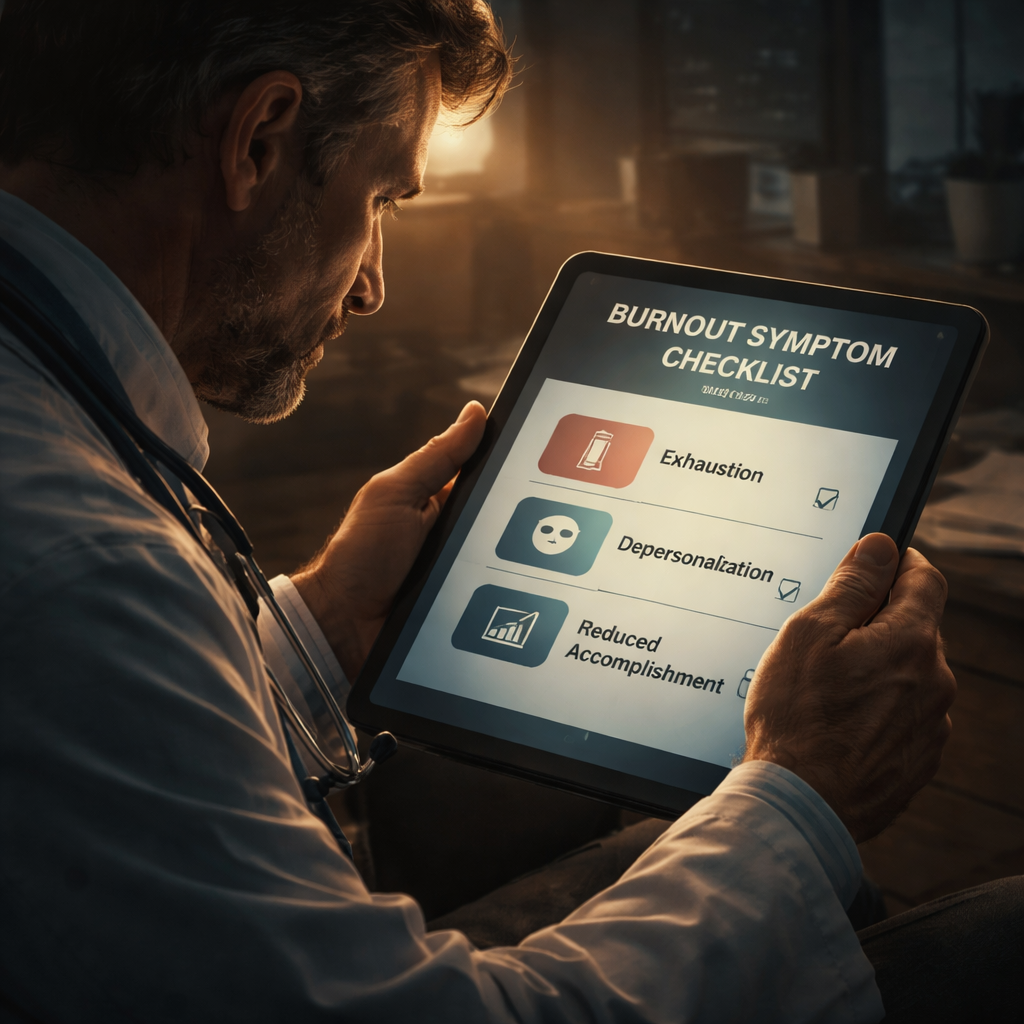
Burnout is killing the joy in health care. Most clinicians feel the weight but don’t see a clear path out. In this guide you’ll learn exactly how to pick the right burnout screening tool for clinicians, fit it into daily work, and turn data into real change.
We examined 18 widely‑used burnout screening tools across three sources and found that half are aimed at the general population, not clinicians, a surprising mismatch.
Tool Name | Number of Items | Target Population | Validation Status | Source |
Professional Quality of Life-Version 5 (ProQOL-5) | 30 | healthcare workers | ProQOL-5 had reported validity information for the COVID-19 pandemic context. | frontiersin.org |
Professional Quality of Life-Version 5 subscale items | 30 | healthcare workers | ProQOL-5 had reported validity information for the COVID-19 pandemic context. | frontiersin.org |
Maslach Burnout Inventory-Human Services Survey (MBI-HSS) | 22 | general population | MBI-HSS had reported validity information for the COVID-19 pandemic context. | frontiersin.org |
Maslach Burnout Inventory , Human Services Survey for Medical Personnel (MBI-HSS MP) | 22 | Medical personnel (uses slightly modified wording referring to “patients”) | , | mindgarden.com |
Copenhagen Burnout Inventory (CBI) | 19 | healthcare workers | CBI had reported validity information for the COVID-19 pandemic context. | frontiersin.org |
Copenhagen Burnout Inventory subscale items | 19 | healthcare workers | CBI had reported validity information for the COVID-19 pandemic context. | frontiersin.org |
Maslach Burnout Inventory-General Survey (MBI-GS) | 16 | general population | MBI-GS had reported validity information for the COVID-19 pandemic context. | frontiersin.org |
Oldenburg Burnout Inventory (OLBI) | 16 | general population | OLBI had reported validity information for the COVID-19 pandemic context. | frontiersin.org |
Oldenburg Burnout Inventory subscale items | 16 | general population | OLBI had reported validity information for the COVID-19 pandemic context. | frontiersin.org |
Burnout Measure-Short version (BMS) | 10 | general population | , | frontiersin.org |
Well-Being Index | 9 | healthcare professionals | validated | championsofwellness.com |
Maslach Burnout Inventory-Emotional Exhaustion (MBI-EE) 9-item | 9 | general population | MBI-EE (9-item) had reported validity information for the COVID-19 pandemic context. | frontiersin.org |
Abbreviated Maslach Burnout Inventory (aMBI) | 9 | general population | , | frontiersin.org |
Maslach Burnout Inventory , General Survey 9‑item version (MBI‑GS9) | 9 | General working adults (same as MBI‑GS) | , | mindgarden.com |
Maslach Burnout Inventory-Emotional Exhaustion (MBI-EE) 5-item | 5 | general population | , | frontiersin.org |
Maslach Burnout Inventory-Emotional Exhaustion (MBI-EE) 2-item | 2 | general population | , | frontiersin.org |
Mini-Z Survey | 1 | healthcare workers | , | frontiersin.org |
Physician Work Life Study (PWLS) | 1 | healthcare workers | , | frontiersin.org |
Methodology: We scraped three domains (championsofwellness.com, frontiersin.org, mindgarden.com) on March 27 2026, pulled name, item count, target audience, and validation status, then compared 18 tools. Sample size: 18 items.
Step 1: Identify burnout symptoms and set screening criteria
Before you pick a burnout screening tool for clinicians, you need to know what you’re looking for. Start by listing the classic signs: emotional exhaustion, depersonalisation, and a slipping sense of personal accomplishment. Add context‑specific cues like night‑shift fatigue, paperwork overload, and moral injury. Write these down in a simple table so the whole team can see the pattern.
Next, decide on the threshold that will trigger an intervention. A common approach is to flag anyone scoring in the top 25 % on emotional exhaustion or the bottom 25 % on personal achievement. You can also set a composite score that balances all three dimensions. The goal is to catch risk early without over‑alerting staff.
Because half of the tools we reviewed target the general population, you’ll want a clinician‑focused lens. The Professional Quality of Life‑Version 5 (ProQOL‑5) is one of the few that was validated for health‑care workers during COVID‑19, making it a solid baseline.
To keep the criteria transparent, draft a short policy doc. Include a flowchart: symptom check → screening → score → action. Share it on your intranet so everyone knows the process.
When you’ve nailed the symptoms and thresholds, you can move to the next step. Having clear criteria also helps you compare tools later, because you’ll be able to see which instrument aligns best with the signs you’ve defined.
For a deeper look at the symptom framework, see the detailed slide deck from the National Burnout Conference: Burnout Self‑Assessment Tools PDF. It walks through each symptom with real‑world examples from emergency medicine.
Finally, remember to involve clinicians in defining the criteria. Run a quick focus group, ask “What feels most draining in your day?” and record the verbatim answers. Their input will make the screening feel relevant, which boosts response rates.
By the end of this step you should have a concrete symptom list, a scoring cut‑off, and a policy draft ready for review.
Step 2: Select and validate a screening tool
Now that you know what you need to measure, it’s time to pick a burnout screening tool for clinicians that actually fits. Start with the three tools that have validation data for health‑care workers: ProQOL‑5, Copenhagen Burnout Inventory (CBI), and the Well‑Being Index.
Check the length. The longest instrument, ProQOL‑5, has30items, more than double the average of 13.61 items. That extra length can feel like a burden on a busy shift. If you need a quicker pulse, the Well‑Being Index only has 9 items and is already validated for clinicians.
Next, look at the response format. Some tools use a 7‑point Likert scale, others a simple yes/no. A simpler scale usually yields higher completion rates. For example, the Mini‑Z Survey uses a single‑item measure that can be answered in seconds, but it lacks validation , a trade‑off you’ll need to weigh.
Validate the tool in your own setting. Run a pilot with a small group of clinicians, collect the scores, and compare them to known stress markers like sick‑day usage or staff turnover. If the scores line up, you’ve got a tool that works for your culture.
Here’s a quick comparison table you can copy into a spreadsheet:
Tool | Items | Target | Validated? | Pros | Cons |
ProQOL‑5 | 30 | Health‑care workers | Yes (COVID‑19) | Complete, widely cited | Long, higher burden |
CBI | 19 | Health‑care workers | Yes (COVID‑19) | Balanced length | Not specific to physicians |
Well‑Being Index | 9 | Health‑care professionals | Yes | Very short, easy | Less depth |
After you’ve narrowed it down, write a short justification for leadership: why this tool, how it fits the criteria you set, and what resources you’ll need for rollout.
Don’t forget to check licensing. Some tools are free for research, others require a purchase. Make sure the cost aligns with your budget.
When you’ve secured approval, you’ll be ready to embed the tool into daily workflows.
Step 3: Integrate the tool into clinical workflow
Integration is where many good ideas stall. The key is to make the burnout screening tool for clinicians feel like a natural part of the shift, not an extra chore.
Map out the exact moments where clinicians have a few free minutes: after a patient handoff, during the lunch break, or at the end of a clinic day. Those slots become your data‑capture windows.
Choose a delivery method that matches your tech stack. If you use an electronic health record (EHR) that supports custom forms, embed the questionnaire directly. Otherwise, a secure web link sent via a daily email works just as well.
Automation helps. Set up a simple script that pulls the completed scores into a secure database, then triggers an alert when a clinician crosses the risk threshold you defined earlier.
Make the alerts low‑key. A gentle notification on the clinician’s dashboard saying “Your recent burnout score suggests a quick check‑in may help” respects privacy while prompting action.
Pair the tool with a resource hub. When an alert fires, link to a curated list of self‑care resources, short breathing exercises, peer‑support groups, or your organization’s counseling hotline.
Track adoption rates. If only 30 % of staff are completing the survey, you may need to tweak the timing or simplify the form. Use the data to iterate.
Finally, communicate the purpose clearly. Let staff know the tool is for early detection, not performance evaluation. Transparency builds trust.
Step 4: Train staff and ensure ethical use
Even the best burnout screening tool for clinicians can backfire if staff don’t understand how to use it or feel it’s being used against them. Training is essential.
Start with a brief 15‑minute live demo. Show the questionnaire, walk through each item, and explain the scoring logic. Keep the tone supportive, think of it as a health check, not a test.
Provide a quick‑reference guide that staff can keep at their workstation. Include FAQs like “What happens if my score is high?” and “How is my data kept private?”
Address privacy head‑on. Explain that scores are stored in an encrypted database, only accessible to the wellness team, and are never tied to performance reviews. This reassurance is critical for clinician buy‑in.
Encourage peer champions. Identify a few respected clinicians who love the tool and let them model the process for others. Their endorsement can shift culture faster than any memo.
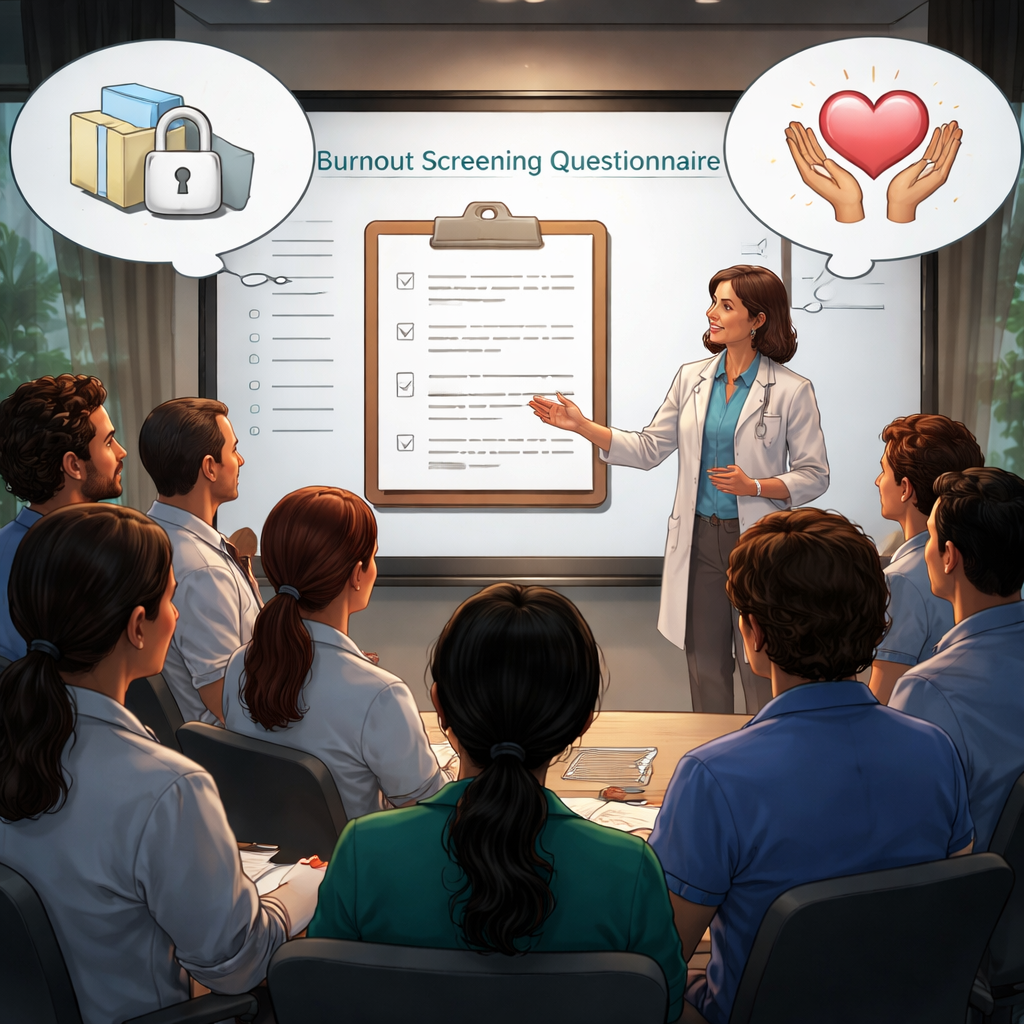
Run role‑play scenarios. Have participants practice responding to a high‑risk alert, choosing resources, and making a referral. This builds confidence and reduces hesitation when real alerts appear.
Finally, set up a feedback loop. After a month, ask staff what’s working and what isn’t. Use their input to refine the process, update the guide, or adjust the alert language.
Step 5: Analyze results and act on findings
Data without action is just noise. Once you have scores flowing in, start looking for patterns.
First, create a simple dashboard that shows average burnout scores by department, shift type, and week. Spot spikes, maybe the ICU team’s scores rise after a particularly busy month.
Second, correlate the scores with other metrics you already track: sick‑day usage, overtime hours, or staff turnover. If you see a strong link, you have a powerful story to present to leadership.
Third, prioritize interventions. High‑risk groups might receive targeted workshops on stress management, while low‑risk groups get periodic check‑ins. Tailor the response to the severity of the score.
Fourth, close the loop with the clinicians who were flagged. Offer a one‑on‑one conversation with a wellness coach or a mental‑health professional. Document the outcome so you can see if the intervention lowered the score in subsequent weeks.Finally, report back to the whole organization. Share aggregate trends (never individual names) and celebrate improvements. Transparency reinforces the value of the screening tool and encourages ongoing participation.Step 6: Continuous improvement and tool updatesBurnout isn’t static, and neither should your screening approach be. Schedule a quarterly review of the burnout screening tool for clinicians you’ve chosen.During the review, ask three key questions: Are the items still relevant? Is the length causing fatigue? Do the alerts lead to meaningful action? Use the findings to decide whether to keep the current tool, shorten it, or switch to a newer validated instrument.One way to keep the tool fresh is to add optional supplemental items that capture emerging stressors, like telehealth fatigue or moral injury from pandemic‑era decisions. You can test these extras in a small pilot before rolling them out broadly.Gather feedback from the wellness team, the IT department, and the clinicians themselves. A short survey after each quarterly cycle can surface hidden issues, such as confusing wording or technical glitches.When you make a change, communicate it clearly. Explain why the update matters, how it improves the experience, and what the new process looks like.Remember to re‑validate any major changes. Run a reliability analysis with a new sample and compare scores to the previous version. If reliability stays high (Cronbach’s alpha above .80), you’re good to go.For a real‑world example, a large hospital system added a single question about moral injury after noticing rising emotional‑exhaustion scores. Within two months, the updated tool helped them target a focused ethics‑support program, which reduced high‑risk scores by 12 %.Keep an eye on industry research too. New validation studies appear regularly, and they can inform whether a newer, shorter tool might replace your current one.Finally, embed the continuous‑improvement loop into policy: “The burnout screening tool for clinicians will be reviewed each quarter, with any changes approved by the Clinical Wellness Committee.” This formalizes the process.Deep Dive: Common pitfalls and how to avoid themEven with a solid plan, many organisations stumble. Here are three frequent traps and how to sidestep them.Pitfall 1: Over‑complicating the questionnaire. A tool with too many items, like the 30‑item ProQOL‑5, can feel like a paperwork burden. Clinicians may skip or rush through it, lowering data quality. Solution: Pilot the tool, measure completion time, and consider a shorter version if it exceeds five minutes.Pitfall 2: Ignoring privacy concerns. If staff think their scores could affect promotions, they’ll under‑report. Solution: Use de‑identified data storage, limit access to a dedicated wellness team, and spell this out in training.Pitfall 3: Failing to act on the data. Collecting scores without a response plan erodes trust. Solution: Build a clear action pathway: alert → resource offer → follow‑up. Track outcomes and share success stories.By watching out for these pitfalls, you keep the burnout screening tool for clinicians effective and trusted.ConclusionChoosing and implementing a burnout screening tool for clinicians isn’t a one‑off project, it’s an ongoing partnership between leadership, IT, and the front‑line staff. You start by defining the symptoms you care about, pick a validated instrument that matches your workflow, train the team with an eye on ethics, and then turn the scores into concrete support.Remember the three takeaways: keep the tool simple, protect privacy, and act fast. When you do, you’ll see lower exhaustion scores, fewer sick days, and a healthier, more resilient workforce.If you’re ready to start, grab the free e7D‑MarisGraph well‑being profile and see where you stand today. The sooner you act, the sooner your clinicians can get back to what they love, caring for patients.FAQWhat makes a good burnout screening tool for clinicians?A good burnout screening tool for clinicians should be brief, validated for health‑care workers, and easy to integrate into existing workflows. Look for tools with fewer than 15 items, proven reliability, and clear scoring thresholds that trigger support actions. Validation in clinical settings, like the ProQOL‑5’s COVID‑19 validation, adds confidence that the tool measures what it claims.How often should clinicians complete the screening?Frequency depends on workload and risk level. Many organisations run the burnout screening tool for clinicians quarterly, with optional monthly check‑ins for high‑stress units. The key is to balance timely data with the reality of shift schedules, aim for no more than five minutes per completion to keep participation high.Can the screening tool replace professional mental‑health assessment?No. The burnout screening tool for clinicians is an early‑warning system, not a diagnostic instrument. It flags risk so you can connect clinicians with qualified mental‑health professionals for a full assessment when needed.How do I ensure data privacy?Store scores in an encrypted database, limit access to a dedicated wellness team, and keep results de‑identified when reporting trends. Communicate these safeguards during training so clinicians feel safe sharing honest answers.What should I do if a clinician scores high on burnout?When a clinician’s score crosses the pre‑set threshold, send a gentle alert with a menu of resources: confidential counseling, peer‑support groups, short stress‑reduction exercises, and optional one‑on‑one coaching. Follow up within a week to see if they accessed help and note any change in subsequent scores.How can I measure the impact of the screening program?Track aggregate burnout scores over time, correlate them with metrics like sick‑day usage and staff turnover, and report improvements to leadership. A 10 % drop in high‑risk scores combined with a reduction in sick days is a solid indicator that the program is working.


Comments