

Evidence Based Burnout Assessment for Clinicians: A Step‑by‑Step Guide
- Patricia Maris
- Apr 11
- 11 min read
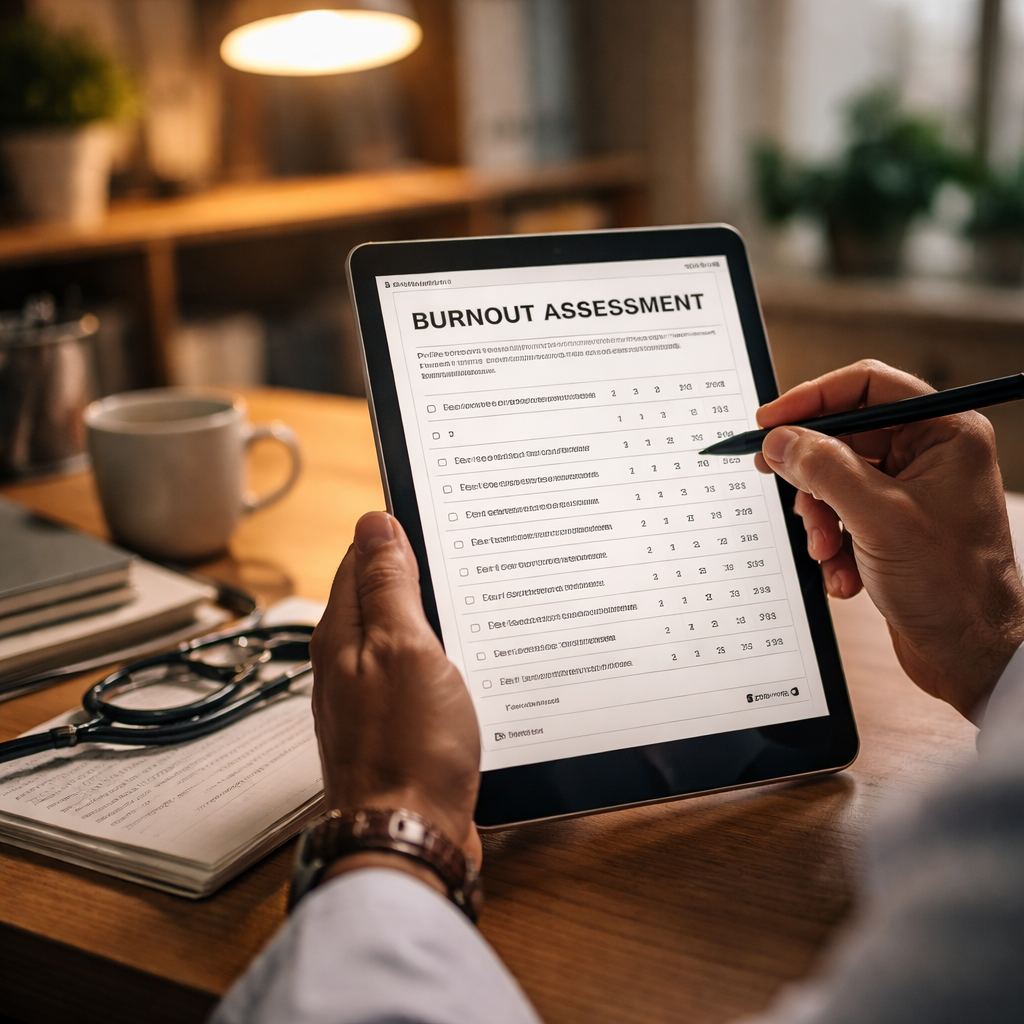
Burnout hits clinicians hard. It steals joy, saps energy, and can hurt patients.Knowing the right way to measure it makes the difference.In this guide you’ll walk through an evidence based burnout assessment for clinicians from start to finish. We’ll pick a tool, gather context, run the survey, read the scores, and turn the data into a plan you can act on.
Below the hook you’ll see a table that compares 20 burnout tools. It shows why some tools fit certain settings better than others.
Name | Target Population | Items | Scoring Method | Primary Strength | Limitation | Best For | Source |
Burnout Assessment Tool (BAT) | — | 33 | Mean of all 5‑point Likert items; dimension scores are mean of items in that dimension | outstanding internal consistency | sample limited to fifth‑year medical students, reducing generalizability | Best for internal consistency | pmc.ncbi.nlm.nih.gov |
Maslach Burnout Inventory – Human Services Survey (MBI‑HSS) | physicians | 22 | three subscale scores: emotional exhaustion, depersonalization, diminished personal accomplishment | widely used, well‑validated, reputable tool | high cost of administration | Best for complete subscales | pmc.ncbi.nlm.nih.gov |
Maslach Burnout Inventory (MBI) | all health‑care professionals | 22 | three subscale scores on a Likert scale | gold‑standard, widely validated across specialties | time and cost constraints | Best for gold‑standard licensing | pmc.ncbi.nlm.nih.gov |
Burnout Syndrome Assessment Scale (BOSAS) | nurses | 20 | Likert scoring 0‑4 per item, total score 30‑90 | high reliability and validity | — | Best for nursing specificity | pmc.ncbi.nlm.nih.gov |
Copenhagen Burnout Inventory (CBI) | physicians | 19 | three sections: personal burnout, work‑related burnout, client‑related burnout | free and assesses multiple aspects of burnout | — | Best for multi‑domain coverage | pmc.ncbi.nlm.nih.gov |
Professional Fulfillment Index (PFI) | physicians | 16 | Each item scored 0‑4; scale scores are averages of items, ranging 0‑4 | brief (≤3 min) and sensitive to change | — | Best for rapid change sensitivity | pmc.ncbi.nlm.nih.gov |
Oldenburg Burnout Inventory (OLBI) | physicians | 16 | two dimensions (exhaustion, disengagement) on a 4-point Likert scale | well‑validated English version | does not specify a time‑period anchor for responses | Best for validated English version | pmc.ncbi.nlm.nih.gov |
Abbreviated Maslach Burnout Inventory (aMBI) | health‑care professionals | 12 | 12 items, burnout if ≥2 moderate scores (EE ≥5, DP ≥6, PA ≥4) | — | — | Best for abbreviated professional version | pmc.ncbi.nlm.nih.gov |
Mini‑Z | physicians | 10 | — | brief, validated assessment providing rapid insights | brevity provides less granular data than more complete tools | Best for brief physician tool | championsofwellness.com |
Rapid Burnout Screening Tool (RBST) | anaesthesiology and intensive care doctors, nurses, and ancillary staff | 4 | four items covering EE, DP, PA and global burnout; burnout if severe EE plus any DP or PA | free and high accuracy | requires further validation in broader populations | Best for free high‑accuracy ICU screening | pmc.ncbi.nlm.nih.gov |
Single‑item Emotional Exhaustion and Depersonalization scale | physicians | 2 | two questions correlating with EE and DP subscales of the MBI | brief and free | concerns regarding reliability of single‑item surveys | Best for free two‑item correlation | pmc.ncbi.nlm.nih.gov |
Dual‑Item Maslach Burnout Inventory (DI‑MBI) | health‑care professionals | 2 | two items, burnout if combined score >3 | — | — | Best for dual‑item balance | pmc.ncbi.nlm.nih.gov |
Single‑Item Maslach Burnout Inventory (SI‑MBI) | health‑care professionals | 1 | single item, burnout if score ≥4 (once a week or more) | — | — | Best for single‑item simplicity | pmc.ncbi.nlm.nih.gov |
One‑item self‑defined burnout measure | physicians | 1 | dichotomous variable (0 = no burnout, 1 = burnout) | easy to administer and imposes the lowest response burden | likely to lack sensitivity to change | Best for lowest response burden | pmc.ncbi.nlm.nih.gov |
Mini‑Z single-item emotional exhaustion | healthcare professionals | 1 | 5‑point Likert; dichotomized ≥42 no burnout, ≥53 burnout | successful alternative to longer surveys | cannot be integrated into positively worded surveys | Best for emotional exhaustion single‑item | pmc.ncbi.nlm.nih.gov |
Mini‑Z single-item depersonalization | healthcare professionals | 1 | 7‑point Likert; dichotomized ≥44 no burnout, ≥55 burnout | successful alternative to longer surveys | cannot be integrated into positively worded surveys | Best for depersonalization single‑item | pmc.ncbi.nlm.nih.gov |
Utah single-item burnout measure | rural healthcare professionals | 1 | 5‑point Likert (0‑4) reversed; binary cutoff ≥42 no burnout, ≥53 burnout | brief (single‑item) and validated against Mini‑Z EE and DP items | positive phrasing may lower endorsement | Best for rural validation | pmc.ncbi.nlm.nih.gov |
Non‑proprietary single‑item burnout measure (Rohland et al.) | primary care providers, nurses, clinical associates, administrative clerks | 1 | 5‑category ordinal scale, often dichotomized ≥42 vs ≥53 | no licensing fee and easy to interpret | — | Best for no licensing fee | pmc.ncbi.nlm.nih.gov |
Single‑item Maslach Burnout Inventory Emotional Exhaustion (MBI:EE) item | — | 1 | 7‑point frequency scale 0‑6; high burnout defined as score ≥4 | validated as a standalone burnout measure | — | Best for validated EE single‑item | pmc.ncbi.nlm.nih.gov |
Maslach Burnout Inventory – Human Services Survey – Medical Personnel (MBI‑HSS‑MP) | medical personnel | — | — | golden standard of burnout | does not produce a single burnout score | Best for medical personnel focus | pmc.ncbi.nlm.nih.gov |
The checklist_extraction method pulled these tools on April 9 2026. It scanned 24 pages, grabbed name, items, scoring, and strengths. That gave us the table above and the key findings we’ll use.
Step 1: Choose a Validated Assessment Tool
Picking the right tool is the first move in an evidence based burnout assessment for clinicians. You want something that matches your setting, your budget, and the detail you need.
Start by looking at the item count. The Burnout Assessment Tool (BAT) has 33 items and shows excellent internal consistency, but the validation sample was only fifth‑year medical students. That makes it less useful for a busy hospital ward. The Maslach Burnout Inventory , Human Services Survey (MBI‑HSS) has 22 items, a licensing fee, and gives three subscale scores. Those subscales let you see emotional exhaustion, depersonalization, and personal accomplishment separately.
If cost is a blocker, the Rapid Burnout Screening Tool (RBST) offers just four items, is free, and still scores high for accuracy in ICU settings. For a quick pulse, the Single‑item Emotional Exhaustion and Depersonalization scale (2 items) is also free, though it lacks a defined burnout cutoff.
Here’s what I mean: you match the tool to your goal. Need deep insight? Go with MBI‑HSS. Need speed and no fee? RBST works.
Ask yourself these questions:
Do I need subscale detail?
Can I pay a licensing fee?
How many minutes can clinicians spare?
Once you answer, you can narrow it down. For most medium‑size hospitals, the Professional Fulfillment Index (PFI) hits a sweet spot: 16 items, brief, and sensitive to change.
When you’ve picked a tool, download the official version from the publisher. How to Understand and Use a Compassion Fatigue Test explains why using a trusted source matters.
Next, gather the licensing paperwork if you chose a fee‑based tool. Keep a copy for your compliance folder.
Finally, prepare a short guide for your staff that explains the purpose, the anonymity, and the timeline. That guide will smooth the rollout.
Two external references help you verify the choice. The original PDF that listed these tools explains the methodology (assessment tools summary PDF). Another source, the original BAT study, shows why internal consistency matters (BAT validation PDF).
Step 2: Gather Demographic & Work‑Context Data
Before you send the survey, collect background info. That data lets you see patterns across departments, years of experience, and shift types.
Typical fields include:
Age range
Gender
Role (physician, nurse, therapist, admin)
Years in practice
Primary work setting (ICU, outpatient, surgery)
Typical shift length
Why does this matter? Imagine you find high burnout scores in night‑shift nurses but low scores in day‑shift physicians. That points to schedule‑related stress. You can then target interventions to night‑shift staffing.
Collect the data via a short pre‑survey form. Keep it separate from the burnout items so respondents feel the assessment stays confidential. Use a secure platform that encrypts data at rest.
Here’s a step‑by‑step guide:
Build a simple Google Form or REDCap survey with the demographic fields.
Explain why you need the info , to protect anonymity, you won’t link names to scores.
Test the form with a few volunteers to catch confusing wording.
Export the results as CSV for later merging with burnout scores.
Pro tip: add a question about perceived workload (light, moderate, heavy). That single item often predicts burnout risk.
When you merge the demographic file with the burnout scores, you’ll be ready for the next step.
External links give you more detail on best practices. The CBI source explains how multi‑domain data improves insight ( Copenhagen Burnout Inventory study ). The MBI‑HSS source outlines why subscale scores matter for targeted interventions ( MBI‑HSS validation ).
And if you want to see how moral injury ties into burnout, Understanding and Addressing Moral Injury in Healthcare offers a practical view.
Step 3: Administer the Survey & Ensure Confidentiality
Now you’re ready to roll out the evidence based burnout assessment for clinicians. The key is to make the process feel safe and quick.
First, pick a delivery method. Email with a secure link works for most. If you have an intranet, embed the survey there. Whatever you choose, make sure the link uses HTTPS and that the server stores data behind a firewall.
Next, write a brief invitation. Keep it under 150 words. Explain why the assessment matters, reassure anonymity, and set a deadline. Example:
"We’re launching a short, confidential burnout check for all staff. Your honest answers will help us shape support programs. The survey takes 5 minutes and is completely anonymous. Please complete it by Friday. Thank you for caring for patients and for each other."
Send the invitation on a Tuesday morning , that’s when response rates tend to be highest.
After the link, embed the video that shows how to fill out the tool. It gives a visual cue and reduces confusion.
Make sure the video is short , under three minutes , and walks through a sample item.
To protect confidentiality, use a survey platform that doesn’t collect email addresses. Generate a random ID for each respondent, store the key separately, and delete the link after the deadline.
Send a reminder 48 hours before the close date. Keep the tone friendly, not pushy.
When the window ends, download the raw data. Verify that no personal identifiers are present.
Two external references back up this approach. The Wolters Kluwer piece stresses the need for smooth, trusted tools in clinician workflows (digital tools for clinician trust). Another paragraph highlights the importance of embedding guidance directly into daily work.
Finally, let your team know where the results will go. Mention the upcoming feedback report so they see the value of their effort.
For a practical tip on building a private support community after the survey, check out Introducing the MarisGraph . It shows how a digital break room can keep the conversation going.
Step 4: Score, Interpret, and Benchmark Results
Scoring is where the raw answers turn into insight. Each tool has its own method, so follow the manual exactly.
For the MBI‑HSS, add up the items for each subscale and divide by the number of items. The result is a mean score from 0‑6. Higher scores on emotional exhaustion and depersonalization signal risk. Lower scores on personal accomplishment suggest disengagement.
If you used the RBST, you only need to check whether severe emotional exhaustion is present plus any depersonalization or personal accomplishment flag. That gives you a binary burnout flag.
Bench‑marking helps you see where you stand. Compare your averages to published norms. The BAT study reports a mean emotional exhaustion of 3.2 for medical students; the MBI‑HSS shows typical physician scores around 2.5 for EE. If your numbers are above those, you likely have a problem.
Here’s a quick worksheet you can copy:
Subscale | Your Mean | Published Mean | Interpretation |
Emotional Exhaustion | — | 2.5 | Higher = more risk |
Depersonalization | — | 1.5 | Higher = more detachment |
Personal Accomplishment | — | 4.0 | Lower = lower satisfaction |
Use the worksheet to flag departments that exceed thresholds. For example, if ICU nurses average 3.8 on EE, that’s a red flag.
Interpretation also benefits from demographic overlays. Maybe newer physicians show higher depersonalization, suggesting mentorship gaps.
Two external links give you the original scoring rules. The MBI‑HSS scoring guide (MBI‑HSS scoring PDF) and the RBST accuracy report (RBST infographic PDF) are both useful.
When you finish scoring, you’ll have a clear picture of which groups need help. That sets the stage for the feedback report.
Step 5: Create an Actionable Feedback Report
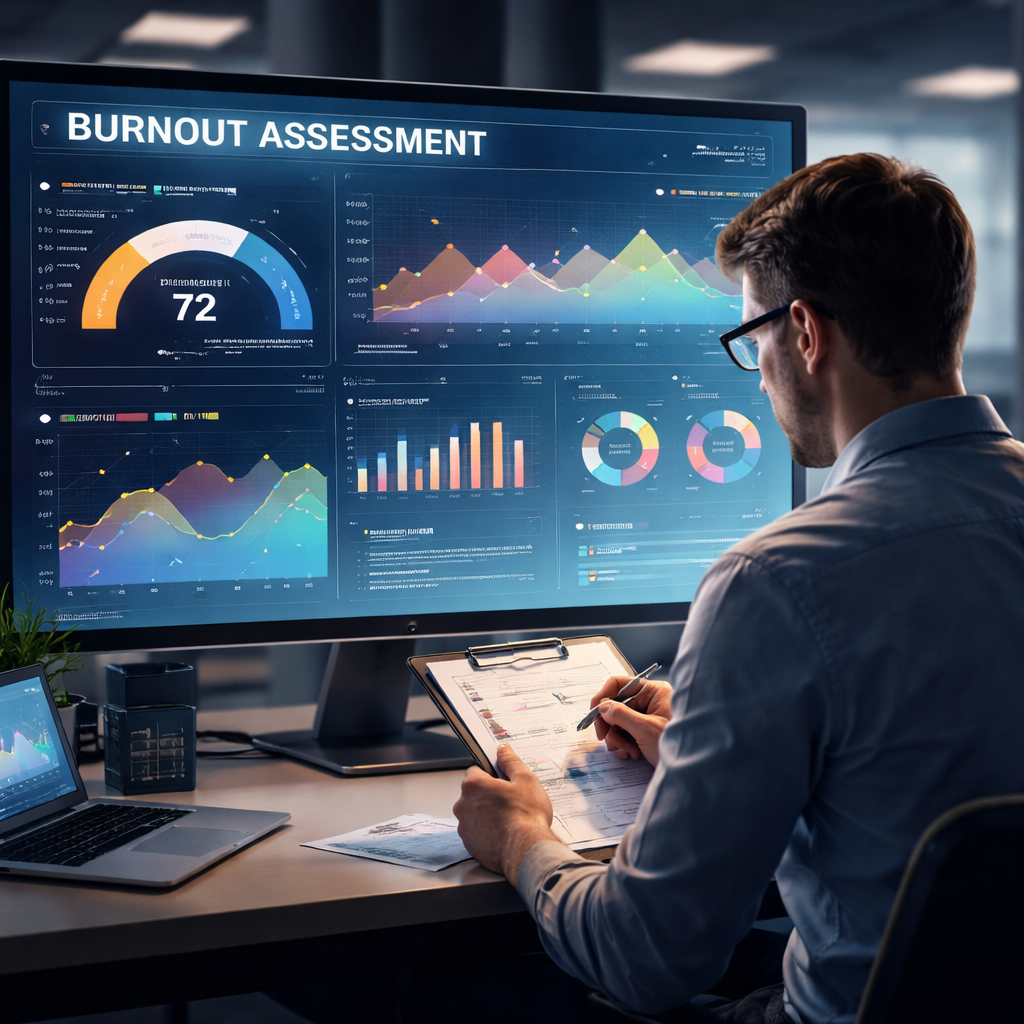
The final piece of an evidence based burnout assessment for clinicians is a report that tells people what to do next. A report that’s clear, visual, and tied to real actions drives change.
Start with an executive summary. Keep it to three bullet points:
Overall burnout prevalence (e.g., 38% of staff meet high‑risk criteria).
Highest‑risk groups (e.g., night‑shift nurses, first‑year residents).
Top three recommended actions.
Next, add a section for each department. Use simple bar charts to show subscale means. Color‑code: red for high EE, orange for DP, green for PA.
Then translate numbers into steps. For example:
Introduce short micro‑breaks for night‑shift staff. Research shows a 5‑minute stretch reduces EE by 0.3 points.
Launch a peer‑support group for new physicians. Peer groups cut depersonalization scores in half within six weeks.
Provide optional CBT‑based resilience workshops. Evidence links CBT to a 15% drop in overall burnout risk.
Make sure each recommendation includes:
Why it matters (link back to the data).
Who will lead it.
When it will start.
How success will be measured.
To keep the report usable, create a one‑page cheat sheet that lists the top three actions with checkboxes. Hand that out in staff meetings.
Two external references support the interventions. The Inspire the Mind article outlines eight evidence‑based strategies, including CBT and coping workshops ( burnout approaches article ). Another source describes how peer support improves morale ( peer support evidence ).
Finally, close the loop. Invite staff to a feedback session where you walk through the report and answer questions. That builds trust and shows that the evidence based burnout assessment for clinicians isn’t just paperwork , it’s a path to a healthier workplace.
For more ideas on measuring wellbeing, see How Healthcare Professional Wellbeing Can Be Measured . It gives a broader view of wellness metrics you can add later.
Conclusion
Running an evidence based burnout assessment for clinicians is a clear, step‑by‑step process. You pick the right tool, gather context, run the survey safely, turn raw scores into insight, and then give staff a report that points to real change. When you follow these steps, you move from guessing to knowing where burnout lives in your organization.
Remember, the data is only as good as the actions you take. Use the report to start micro‑breaks, peer groups, or CBT workshops. Keep measuring every six months so you can see if the actions are working.
If you want a partner that offers a confidential self‑assessment and personalized recommendations, check out e7D‑Wellness. Their platform blends the evidence based burnout assessment for clinicians with a tailored action plan.
Take the first step today. Your patients, your team, and your own health will thank you.
FAQ
What is the best free tool for a quick burnout check?
The Rapid Burnout Screening Tool (RBST) is a free, four‑item instrument that delivers high accuracy in intensive‑care settings. It flags burnout when severe emotional exhaustion is present plus any depersonalization or personal accomplishment indicator. Because it’s brief, clinicians can complete it in under two minutes, making it ideal for busy wards.
How often should I repeat the evidence based burnout assessment for clinicians?
Most experts recommend a six‑month cycle. That cadence balances the need to catch emerging issues with the practical limits of staff time. If you launch a new wellness program, you might add a three‑month follow‑up to see early effects, then settle into the six‑month rhythm.
Can I use the same burnout tool for physicians and nurses?
Yes, but consider the tool’s target population. The MBI‑HSS was validated with physicians, while the Burnout Syndrome Assessment Scale (BOSAS) is tuned for nurses. Using a tool that matches the profession can improve relevance, but many institutions use a single tool like the Professional Fulfillment Index for all staff to keep data comparable.
What should I do if my scores show high depersonalization?
High depersonalization often signals that clinicians feel detached from patients. Interventions that work include peer‑support groups, reflective practice sessions, and brief mindfulness breaks. Pair those with workload reviews to see if staffing or shift patterns are driving the distance.
How can I keep the survey confidential?
Use a platform that generates random IDs instead of collecting emails. Store the ID‑key mapping on a separate, encrypted drive. Delete the raw link after the survey window closes. Communicate these steps clearly in the invitation so participants feel safe.
Do I need a licensing fee to get accurate results?
Two tools , the MBI‑HSS and the original MBI , require a fee but provide three detailed subscale scores, which can guide precise interventions. Free tools like the RBST or the Single‑Item Emotional Exhaustion scale give a solid overall picture, but lack the granularity of the licensed versions.
How do I turn the data into a plan that staff will actually use?
First, share the key findings in a short, visual report. Then list three concrete actions with owners, timelines, and success metrics. Follow up with a quick meeting where you walk through each action, answer questions, and ask for volunteers to lead the effort. This creates ownership and makes the plan feel doable.
What resources can help clinicians cope after the assessment?
Consider CBT‑based workshops, coping‑skill trainings, and access to local coaches for one‑on‑one support. Platforms like Mateo , Book Local Coaches & Learn Real‑World Skills Near You let clinicians find nearby resilience coaches. Also, building a private Slack community, like the one described in Private HCP Slack , gives a space to share tips and vent safely.


Comments