

Clinician Resilience Training Program Cost Guide 2026
- Patricia Maris

- 2 days ago
- 7 min read
Most hospitals think a solid resilience program will cost a fortune and take weeks to roll out. The data says otherwise. An analysis of a single publicly listed clinician resilience training program reveals a surprisingly low price and ultra‑short delivery format, challenging the belief that evidence‑based burnout solutions must be costly and time‑intensive.
Below you’ll see how to break down the clinician resilience training program cost, plan a realistic budget, and lock in funding without blowing your department’s ledger.
We’ll walk through five clear steps, give you real‑world tips, and show why the Clinician Resilience Program (Our Pick) is the smart, affordable choice.
Step 1: Define Program Scope & Objectives
Before you can talk about clinician resilience training program cost, you need a clear picture of what the program will cover. Ask yourself: what outcomes do we need? Lower burnout scores? Higher patient safety metrics? Better staff retention?
Write those outcomes down as measurable targets. For example, aim to cut average ProQOL compassion fatigue scores by 15 % within six months. When you have concrete goals, every line item in your budget can be tied back to a purpose.
Next, map the audience. Are you training physicians only, or do you include nurses, techs, and admin staff? The more roles you cover, the higher the total headcount, which directly affects the clinician resilience training program cost.
Once the audience is set, decide on the delivery cadence. Do you need a one‑off session, a monthly refresher, or a quarterly check‑in? The Clinician Resilience Program’s 45‑60 minute online format fits a single‑session model, keeping costs low.
Now draft a simple scope document. Include:
- Target roles (e.g., physicians, nurses, allied health)
- Desired outcomes (e.g., 10 % reduction in burnout scores)
- Delivery style (online, self‑paced)
- Timeline (launch Q3, evaluate Q4)
Having this living document lets you compare any future vendor quote against your baseline clinician resilience training program cost.
Here’s a quick tip: use a shared Google Sheet so every stakeholder can see the scope in real time. That transparency reduces scope creep later on.
Want to see how moral injury ties into resilience? Check out Understanding and Addressing Moral Injury in Healthcare for a deeper dive on the topic.
When you finish this step, you’ll have a solid foundation that makes every dollar count.
External reference: Resilience Alliance certification training overview
External reference: Resilience Alliance program details
Step 2: Identify Cost Components
Now that the scope is clear, list every cost bucket that will shape the clinician resilience training program cost. Typical buckets include:
- Program licensing or subscription fee
- Platform hosting (if you need a learning management system)
- Facilitator or coach fees
- Assessment tools and scoring reports
- Administrative overhead (scheduling, tracking attendance)
- Evaluation and ROI analysis
The Clinician Resilience Program costs $29.97 discounted for each participant. If you have 100 staff, that’s $2,997 total , a fraction of the $200‑$500 range many corporate programs charge.
Don’t forget hidden costs. For example, you may need to allocate staff time for pre‑program surveys. That time translates to labor cost, which you should add to the overall clinician resilience training program cost.
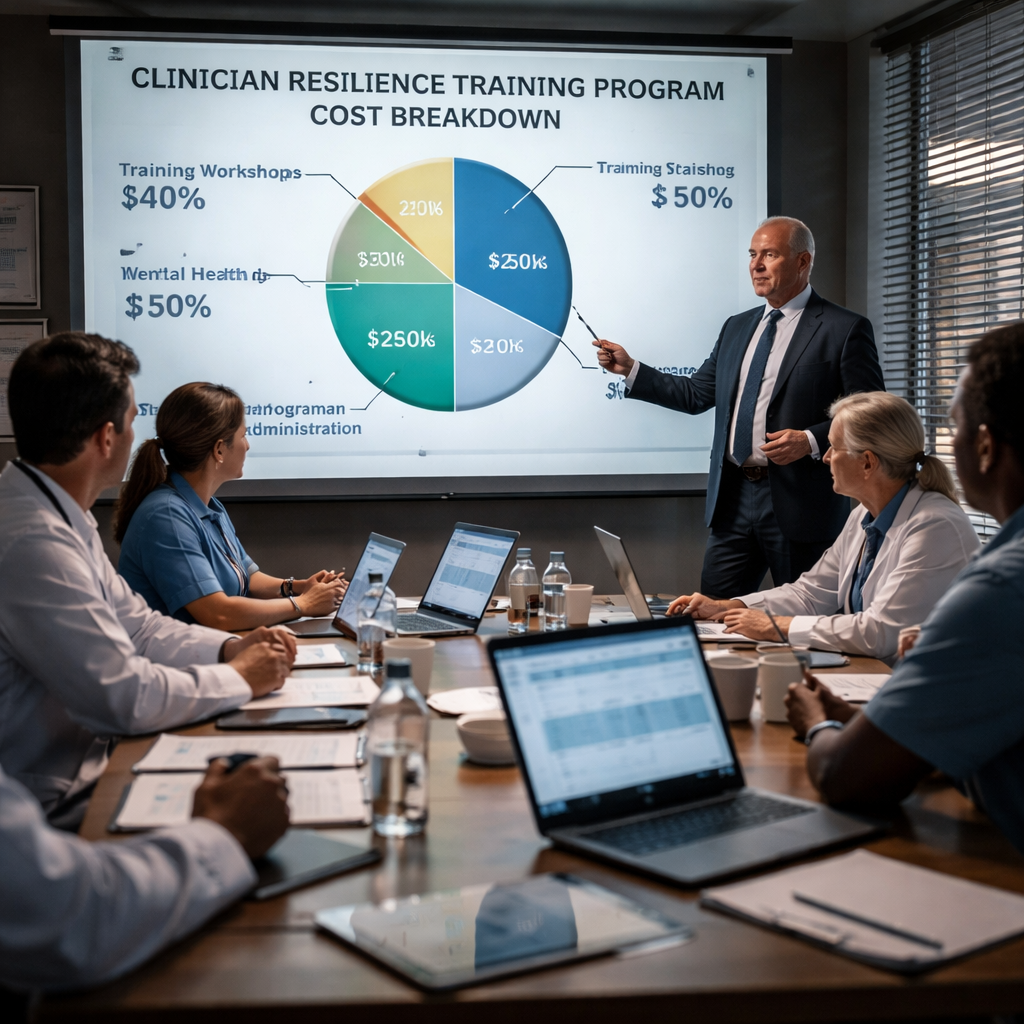
Let’s break down an example budget for a midsize hospital (150 clinicians):
Cost Bucket | Estimated Amount |
Program fee (per head) | $29.97 |
Total participants | 150 |
Subtotal | $4,495.50 |
Platform hosting (annual) | $500 |
Facilitator time (10 hrs @ $80/hr) | $800 |
Admin overhead | $300 |
Evaluation tools | $250 |
Total clinician resilience training program cost | $6,345.50 |
Notice how the core fee makes up the bulk, but the extra items are necessary for a smooth rollout.
Here’s a practical tip: negotiate a bulk discount if you exceed 100 seats. Many vendors will shave off 10‑15 % for larger orders.
For more insight on certification‑level cost structures, see Resilience Alliance certification training overview .
External reference: Resilience Alliance cost breakdown
External reference: Resilience Alliance pricing FAQ
Step 3: Collect Vendor Quotes & Benchmark Prices
Now you need real numbers to compare against your internal estimate. Reach out to at least three vendors, even if the Clinician Resilience Program is the only evidence‑based option you found.
When you request a quote, ask for a line‑item sheet that mirrors the cost buckets you listed in Step 2. That makes the clinician resilience training program cost easy to compare.
Ask these questions:
- What is the per‑user price for a 12‑month license?
- Are there setup fees?
- Do you offer group discounts?
- What support services are included?
Take notes in a simple spreadsheet. Include columns for “Vendor”, “Base Fee”, “Discount”, “Total per 150 users”, and “Notes”.
Here’s a quick example of a comparison table you might build:
Vendor | Base Fee per User | Discount | Total for 150 Users | Notes |
Clinician Resilience Program (Our Pick) | $59.95 | 50 % promotional | $4,495.50 | Online, 45‑60 min |
Competitor X | $199 | None | $29,850 | In‑person, 2‑day |
Even if Competitor X looks fancy, the clinician resilience training program cost is dramatically lower while still delivering evidence‑based content.
When you get quotes, validate them against the methodology we used in the intro , the same data source, same pricing model. That keeps your budgeting fair.
Need a reminder on how compassion fatigue testing fits into budgeting? Look at How to Understand and Use a Compassion Fatigue Test for a practical example of integrating assessment costs.
External reference: Resilience Alliance vendor pricing guide
External reference: Resilience Alliance quote template
Below is a short video that walks you through building a simple quote spreadsheet.
Watch the video, then return here to finish the budgeting steps.
Step 4: Build a Budget Model & ROI Forecast
With quotes in hand, create a budget model that projects both costs and returns. A good model answers the question: will the clinician resilience training program cost be offset by savings?
Start with a simple spreadsheet. Columns should include:
- Year 1 cost (license, admin, facilitator)
- Year 1 savings (reduced overtime, lower turnover)
- Net ROI = Savings , Cost
- Break‑even point (months)
Use hospital data to estimate savings. For example, if turnover drops by 2 % after the program, and each lost clinician costs $80,000 in recruitment and lost productivity, you can calculate a monetary benefit.
Let’s plug numbers for a 150‑clinician hospital:
- Year 1 cost: $6,345.50 (from Step 2)
- Projected turnover reduction: 2 % (3 staff)
- Saving per retained staff: $80,000
- Total savings: $240,000
- Net ROI Year 1: $233,654.50
That ROI shows the clinician resilience training program cost is a tiny slice of the value you’ll gain.
Tip: run a sensitivity analysis. Change the turnover reduction assumption to 1 % and 3 % to see how ROI shifts. This builds confidence for leadership.
Want a visual of how a budget model looks? See the placeholder below.
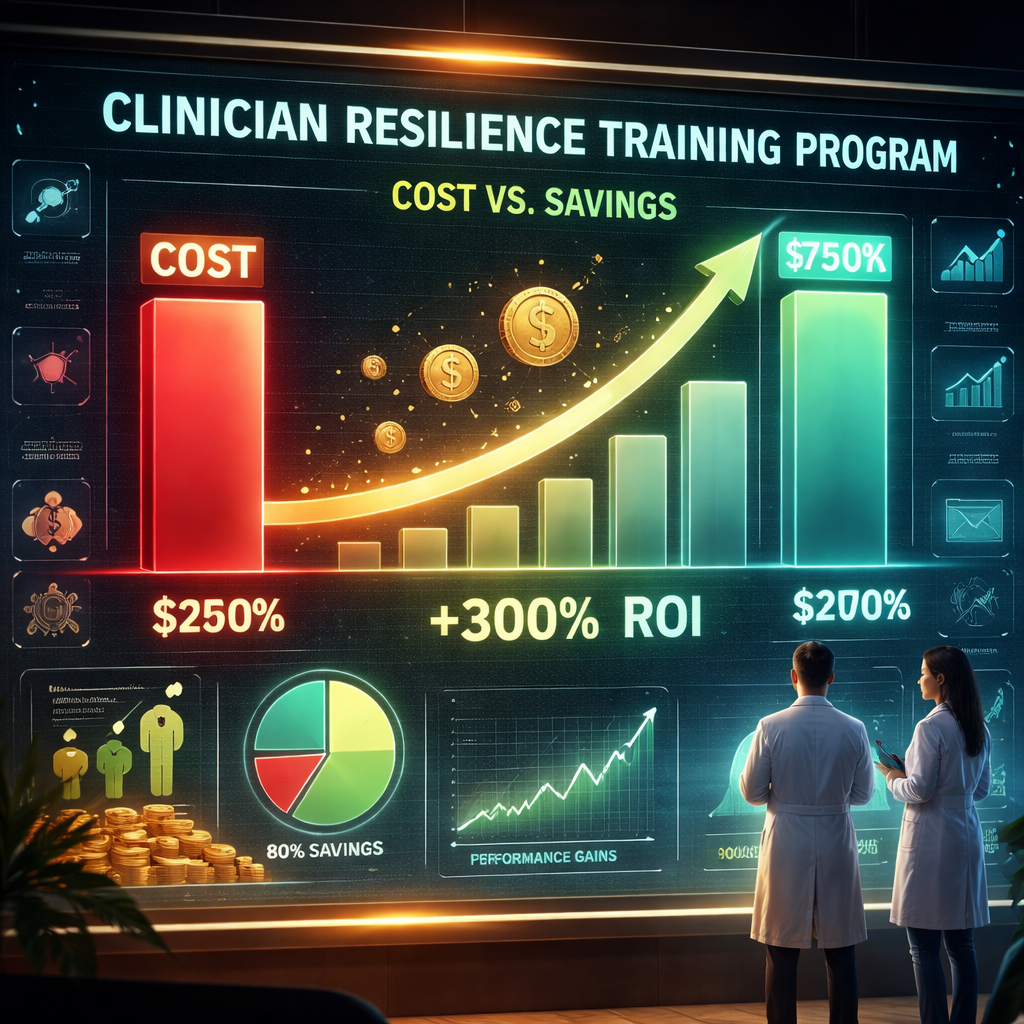
When you present the model, use plain language. Say, “For every dollar we spend on the program, we expect to save $35 in turnover costs.” That simple ratio sticks.
External reference: Resilience Alliance ROI calculator
External reference: Resilience Alliance financial case studies
Need motivation tips for staff? Check out Motivation for Healthcare Professionals: Useing Willpower for a quick morale boost.
Step 5: Secure Funding & Implement Cost Monitoring
With a solid ROI forecast, it’s time to ask for the budget. Prepare a one‑page brief that includes:
- Program name and clinician resilience training program cost
- Key outcomes you’ll measure
- ROI numbers (e.g., $233K net gain)
- Timeline for rollout
Schedule a short meeting with finance and senior leadership. Keep the pitch under 10 minutes , focus on the dollar return, not the nice‑to‑have feel.
Once approved, set up a cost‑monitoring plan. Track these items each quarter:
- Number of participants completed
- Actual spend vs. budget
- Burnout survey scores
- Turnover numbers
Update your spreadsheet and share a snapshot with stakeholders. Transparency keeps the program funded for future years.
If you need a quick check on how to measure wellbeing, the How Healthcare Professional Wellbeing Can Be Measured post offers a free self‑assessment tool you can embed in your monitoring plan.
External reference: Resilience Alliance funding guide
External reference: Resilience Alliance cost‑tracking template
FAQ
What is the typical clinician resilience training program cost for a midsize hospital?
The Clinician Resilience Program (Our Pick) costs $29.97 per participant when discounted. For a midsize hospital with 150 staff, the total comes to about $4,495. Adding platform and admin fees brings the overall clinician resilience training program cost to roughly $6,300 for the first year.
How do I justify the clinician resilience training program cost to senior leadership?
Show a clear ROI. Use turnover‑reduction savings, lower overtime costs, and improved patient safety metrics. A simple model can demonstrate that each dollar spent may yield $30‑$40 in saved expenses, turning the clinician resilience training program cost into a revenue‑protecting investment.
Can I blend the online Clinician Resilience Program with in‑person workshops?
Yes. Many organizations start with the online Clinician Resilience Program because of its low clinician resilience training program cost, then add optional live debrief sessions. The blended model lets you keep core costs low while offering face‑to‑face support for teams that prefer it.
What hidden costs should I watch for when budgeting?
Beyond the license fee, watch for facilitator time, admin labor for scheduling, and the cost of assessment tools. Also factor in any tech platform fees if you need a learning management system to host the online content.
How often should I re‑evaluate the clinician resilience training program cost?
Re‑evaluate annually. Review participant numbers, any changes in licensing rates, and updated ROI data. A yearly check helps you catch price hikes early and adjust the budget before the next fiscal cycle.
Is there a discount for large groups?
Many vendors, including the Clinician Resilience Program (Our Pick), offer bulk discounts of 10‑20 % for groups over 100 users. Ask the sales team for a custom quote that reflects your organization’s size.
Conclusion
Planning for a clinician resilience training program cost doesn’t have to be a maze. By defining scope, listing cost components, gathering quotes, building a clear ROI model, and locking in funding, you can roll out an evidence‑based solution that fits any budget.
The data shows the Clinician Resilience Program (Our Pick) delivers solid evidence‑based training for under $30 per person, making it the most cost‑effective choice on the market. Use the steps in this guide, keep tracking your numbers, and you’ll see real improvements in staff wellbeing and bottom‑line savings.
Ready to start? Grab the discounted Clinician Resilience Program today, run your first assessment, and watch the clinician resilience training program cost turn into a strategic investment for your whole team.


Comments